


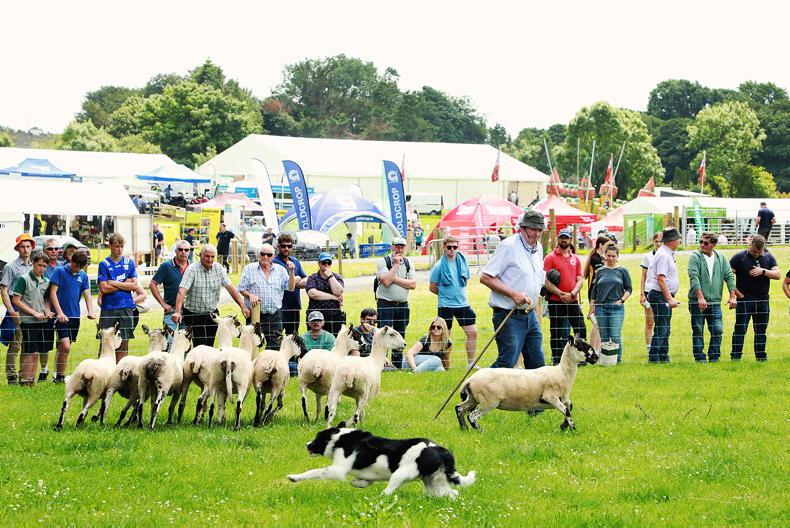
There was a buzz around Athenry in Galway on Saturday last, and the fact Sheep 2025 was on out the road at the Teagasc research centre had a lot to do with it.
In the shadow of the new Dexcom development on the IDA site, sheep farmers gathered from early morning. All the farmers were talking about the scale of the shiny, glass front development of the large Dexcom building and the jobs it would create locally.
Put the farms of all the sheep farmers together and you would have a building over 1,000 times the size of the Dexcom building. As the sheep sector is dispersed to every parish on this island, it can sometimes almost go unnoticed.
Bolstered by better incomes and lower costs, the sheep sector is in a better place in 2025. The final Teagasc National Farm survey figures came out for 2024 this week, and they show an improving positive income picture.
At nearly €600 income per hectare and family farm income near €27,000, the numbers are up significantly on 2023. The likelihood is that 2025 should be even better.
Costs are back a fraction more and lamb price right now relative to 2024 is slightly ahead, although it should be noted that the first quarter was challenging for hogget sales.
On top of that, favourable weather and grass growth should have helped to reduce the inputs required on most farms.
Workload
The one issue that keeps coming up when talking to sheep farmers is the whole area around workload and young people unwilling to put in the effort for the return involved.
Yet if you stood back and looked around the ring at Sheep 2025, there were plenty of young people. If you stood and observed the activity around the handling units on display – again there seemed to be lots of interest.
If the workload piece is such a drag on the sector, surely there should be a big sector push to get excellent handling facilities onto all sheep farms.
Backed up with a generous grant aid, this could form the central plank for an industry effort at underpinning the existing sheep flock. If we are down another 100,000 ewes this year, the sector badly needs a boost.
Currently the situation is that a sheep farmer is able to claim about €2,300 grant aid on a basic sheep handling unit at a DEepartment of Agriculture reference cost of €3,846/unit.
However, a specialised unit with performance recording capabilities can cost up to €10,000. Why not increase the grant aid to reflect what these units actually cost? Give a good incentive to really make positive change.
Give farmers a real carrot to try and nail one of the longstanding issues with the sector. I know handling facilities are not the silver bullet, but it would be a great shot in the arm for the sector.
Discussion groups
The second issue that needs fixing is discussion groups. The number of sheep or mixed cattle discussion groups seems to be at an all time low.
Participation in KT groups fell by 60% in the current CAP and is down to just over 7,000 farmers. Why is this? We know they are a great way for learning, and yet we have no stimulus or drive from Teagasc to get farmers engaged.
Teagasc must lead the charge and the Department must design programmes that encourage participation. They have fallen off in the drive to engage farmers in the basics.
Farmers aren’t free of blame – they need to demand action of the State research and advisory body. There should be the option of attending groups in every parish. Instead of a few thousand livestock farmers in groups, we need 40,000 farmers in groups.
Measurement
The third area that needs special attention is the measurement within and between breeds. Without widespread measurement of genetic performance, the sheep sector will be left behind. The ICBF-led Sheep Ireland is up and going and doing good work, but we need more involvement from commercial farmers. We are involved with our flock in Tullamore Farm, but the industry benefit will only be enhanced with more farmer involvement.
Get handling, discussion groups and more measurement happening on farms and you would have the core for a great sheep sector. There is huge scope for improvement but the next few years are critical in stemming the decline in numbers before it is too late.
I’m not forgetting the crucial role the factories play in returning what the market delivers – but that is a story for another day. Teagasc, the Department and the minister need to lead the sheep charge, driven on by a commercial farmer grouping looking for better performance.



SHARING OPTIONS