Thankfully, we look to have moved past the stage where there was some rain every single day in 2026 and there are even moments when we can revel in the warmth of the strange round object in the sky.
Bad weather is of course an occupational hazard in Ireland and can be classed as a mere inconvenience for most of us, but a sustained spell like we had in January and February can be almost paralysing for outdoor sports organisations.
So few pitches and so many teams wanting to use them – being the man or woman who has to say no is not a role that will have a lot of volunteers at the annual general meeting, but it is becoming an ever more essential part of the administrative make-up of a club.
As part of a series of articles on how various Gaelic units around the country were dealing with the meteorological onslaught, Irish Country Living spoke to a facilities manager in one club who outlined that their two and a half pitches were in constant demand for training, from adult down to U5.
Essentially, seniority was used as the determining factor in dividing up the time slots. And, as they were practising the one-club model, the adult ladies’ teams were given equal billing with their male counterparts in terms of preference, even though they were operating a comparatively lower level in league and championship.
Such an approach may knock some male noses out of joint but it’s an essential mode of operation if the notion of a single unified association is to take root. However, while there are clubs like that one who have taken it upon themselves to move ahead of the curve, the progress at national level remains rather slow, despite the oft-repeated target for integration of the GAA, Camogie Association and LGFA to be in place by 2027.
It was in September of 2022 that we noted in these pages how former President of Ireland Mary McAleese had been recruited to chair the steering group on integration. Given that she had done so much to try to build bridges between nationalism and unionism, surely helping three associations – far more complementary than competitive – to align under the one umbrella wouldn’t be too hard.
At the time, we wrote that her appointment “almost feels like threatening a misbehaving child with the Boogie Man” – if any stakeholders were dragging their feet, they risked being accused of being less reasonable than the DUP.
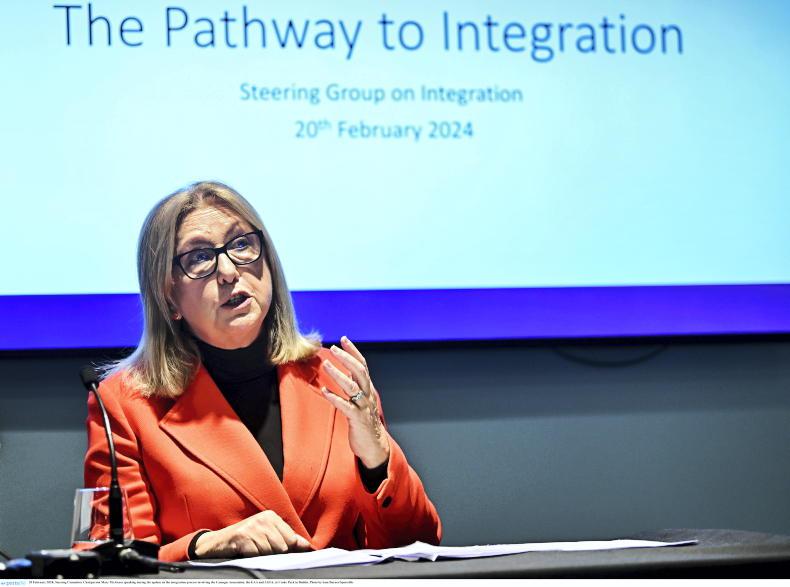
A year on from that, the same steering committee trumpeted the results of a major survey across the three associations that found that 90% of respondents were in favour of integration while seven out of 10 believed that it would be very positive. That was two and a half years ago and yet the open door has still not been properly pushed.
Speaking to Irish Country Living recently, Camogie Association president Brian Molloy highlighted how there were already plenty of items that had been integrated, regarding Garda vetting, child welfare and coaching education and development.
None of the games themselves will have rules altered to be part of the new, unified Gaelic Athletic Association and so it seems that everything should run smoothly, but of course ‘should’ is the most subjective of concepts.
There have been roadshows in each of the provinces in order to engage with people. While media attention was drawn to the fact that the one in SuperValu Páirc Uí Chaoimh had just 70 attendees, it was somewhat misleading in that many more logged in online.
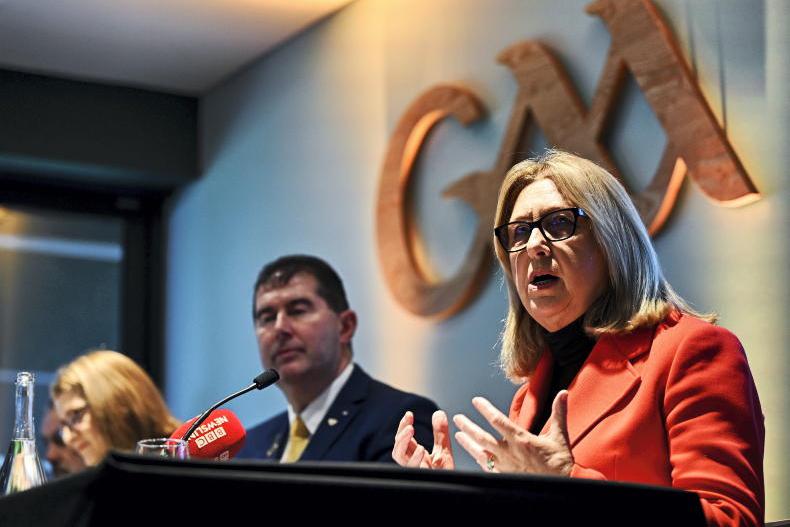
However, a question from the floor to the top table, which included GAA president Jarlath Burns, as to how many counties have formed the requisite integration committees – featuring two from each organisation – could not be answered with clarity. It is believed that the actual answer is in single digits.
Unrealistic target
In January, there were media reports that Mary McAleese had been told that the 2027 target was unrealistic – a view she rejected, it should be said, and special Congresses are still scheduled for the autumn, when each association will seek members’ approval for the merger.
Between now and then, action on the playing fields will be to the fore and few will be thinking about the red tape that needs to be negotiated.
Burns’ time as GAA president will end at next February’s annual Congress, where he will be succeeded by Wexford man Derek Kent. The presidency is on a three-year term but each new incumbent is given a year of a lead-in time – taking that logic, one might suggest that integration would need to be in place in all but name for a period before it is finalised.
Kent himself has suggested that it may take until 2034, the GAA’s 150th anniversary, for the merger to be fully completed. Let’s hope he’s erring on the side of caution.