Oats are a low-input crop well suited to the Irish climate.
The acreage of the crop exceeded 650,000ha in the nineteenth century when the crop was grown in all counties in Ireland.
The acreage of the crop has since dropped (currently 20,000ha to 25,000 ha) but interest in the consumption of oat grains has grown in recent years.
Oat grains have been classified as a functional food and recent studies have demonstrated links between oat consumption and reduced risk of coronary heart disease, diabetes, gastrointestinal problems and some cancers.
Composition
Additionally, the composition of its protein fractions permits oats to be included in gluten-free diets as long as there is no contamination from other cereals. Teagasc has an extensive research programme on oats to optimise yield and quality.
Oat structure
There are similarities between oats and other cereals but also differences. One of the most visible differences is the head of the oat plant, the panicle, which looks visibly different from the compact ears of barley and wheat plants.
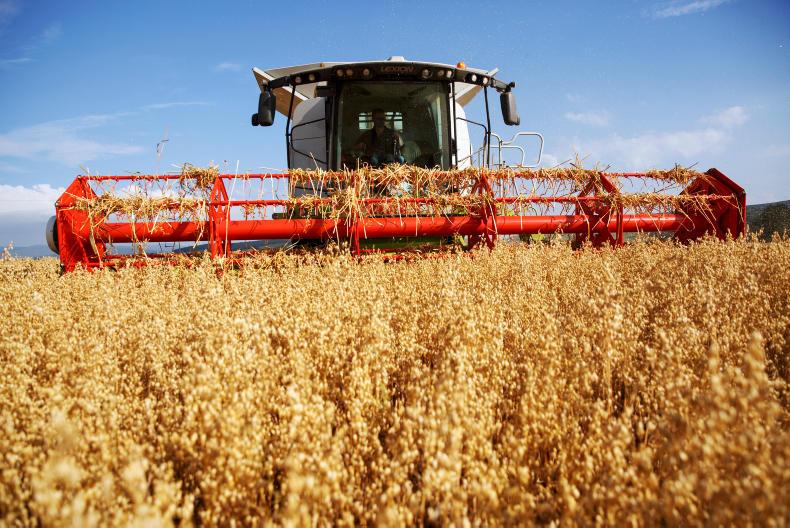
The acreage of the oats once exceeded 650,000ha in the 19th century.
Oats do not produce tillers to the same extent as barley and wheat but oat panicles can have many more grains than the heads of other cereals. The number of grains per panicle can be adjusted by the oat plant across a wide range to suit agronomic and environmental conditions.
Yield in oat crops, as in other cereals, is closely related to the number of grains per square area. However, as tillering capacity in oats is limited, the number of grains per square area in oat crops is closely related to the number of grains per panicle.
The oat panicle is shaped like a pyramid, broad at the bottom and tapering towards the top of the structure.
The panicle is divided into a number of horizontal layers called whorls. Most whorls consist of a number of branches coming from a single point on the upper stem. Oat grains are contained in structures called spikelets. Spikelets generally contain two grains, a larger primary grain and a smaller secondary grain.
Spring varieties sown in the autumn tend to have a lower temperature threshold for growth compared with true winter varieties and usually grow throughout the winter. For these varieties, the switch from leaf production to the development of a panicle tends to occur in early spring. The first sign of panicle development is called the double-ridge stage.
The basic structure of the panicle has been formed by GS30 and grain development is under way by GS32.
As the yield of an oat crop is closely related to the number of grains per square area, the period from GS32 onwards is particularly important for maximising grain numbers in the crop.
In this period, the number of grains formed by the crop is closely related to the amount of radiation absorbed by the crop.
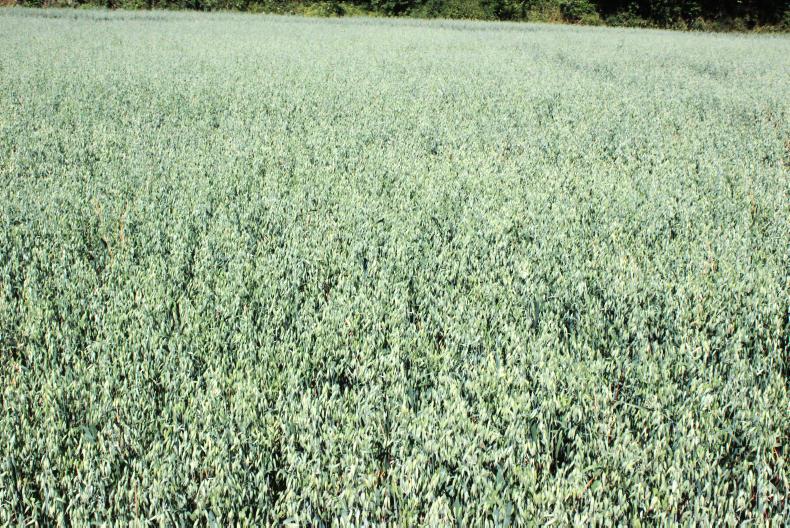
A selection of the oat trial work undertaken in Oak Park.
Hence, nitrogen is needed to expand the plant canopy (leaves) in order to maximise the absorption of radiation during this period and the nitrogen requirements of the crop needs to have been supplied by GS32. Additionally, leaves need to be kept free of disease during this period in order to maximise the interception of radiation.
Grain formation
In forming grains, the oat plant takes an optimistic view of the number of grains which can be formed and brought through to harvest.
However, the period between GS39 and flowering is particularly important in determining the final number of grains which are taken through to harvest.
Stress
Any stress during this period can lead to a reduction in the number of grains which the plant takes through to harvest because of grain abortion.
This period typically occurs during the month of May, during which the crop needs to be free of nutrient and disease stress and any additional stresses.
After flowering, the crop still needs to be kept free of disease stress in order to maximise grain filling and yield.
Read more
Crops & Spreaders event offers something for everyone
Oats are a low-input crop well suited to the Irish climate.
The acreage of the crop exceeded 650,000ha in the nineteenth century when the crop was grown in all counties in Ireland.
The acreage of the crop has since dropped (currently 20,000ha to 25,000 ha) but interest in the consumption of oat grains has grown in recent years.
Oat grains have been classified as a functional food and recent studies have demonstrated links between oat consumption and reduced risk of coronary heart disease, diabetes, gastrointestinal problems and some cancers.
Composition
Additionally, the composition of its protein fractions permits oats to be included in gluten-free diets as long as there is no contamination from other cereals. Teagasc has an extensive research programme on oats to optimise yield and quality.
Oat structure
There are similarities between oats and other cereals but also differences. One of the most visible differences is the head of the oat plant, the panicle, which looks visibly different from the compact ears of barley and wheat plants.
The acreage of the oats once exceeded 650,000ha in the 19th century.
Oats do not produce tillers to the same extent as barley and wheat but oat panicles can have many more grains than the heads of other cereals. The number of grains per panicle can be adjusted by the oat plant across a wide range to suit agronomic and environmental conditions.
Yield in oat crops, as in other cereals, is closely related to the number of grains per square area. However, as tillering capacity in oats is limited, the number of grains per square area in oat crops is closely related to the number of grains per panicle.
The oat panicle is shaped like a pyramid, broad at the bottom and tapering towards the top of the structure.
The panicle is divided into a number of horizontal layers called whorls. Most whorls consist of a number of branches coming from a single point on the upper stem. Oat grains are contained in structures called spikelets. Spikelets generally contain two grains, a larger primary grain and a smaller secondary grain.
Spring varieties sown in the autumn tend to have a lower temperature threshold for growth compared with true winter varieties and usually grow throughout the winter. For these varieties, the switch from leaf production to the development of a panicle tends to occur in early spring. The first sign of panicle development is called the double-ridge stage.
The basic structure of the panicle has been formed by GS30 and grain development is under way by GS32.
As the yield of an oat crop is closely related to the number of grains per square area, the period from GS32 onwards is particularly important for maximising grain numbers in the crop.
In this period, the number of grains formed by the crop is closely related to the amount of radiation absorbed by the crop.
A selection of the oat trial work undertaken in Oak Park.
Hence, nitrogen is needed to expand the plant canopy (leaves) in order to maximise the absorption of radiation during this period and the nitrogen requirements of the crop needs to have been supplied by GS32. Additionally, leaves need to be kept free of disease during this period in order to maximise the interception of radiation.
Grain formation
In forming grains, the oat plant takes an optimistic view of the number of grains which can be formed and brought through to harvest.
However, the period between GS39 and flowering is particularly important in determining the final number of grains which are taken through to harvest.
Stress
Any stress during this period can lead to a reduction in the number of grains which the plant takes through to harvest because of grain abortion.
This period typically occurs during the month of May, during which the crop needs to be free of nutrient and disease stress and any additional stresses.
After flowering, the crop still needs to be kept free of disease stress in order to maximise grain filling and yield.
Read more
Crops & Spreaders event offers something for everyone








SHARING OPTIONS