Our BETTER farm Beef Challenge bull producers group encompasses both those slaughtering bulls on the QPS grid under 16 months of age and those producing older bulls – usually getting a partial second season at grass.
Bull beef can drive a farm’s output in two ways. Research has shown that a bull will grow around 16% faster than a steer under similar conditions. Their increased tendency to grow lean muscle leads to a higher rate of beef output per unit of feed going in – be it grass or concentrates.
The second way that a bull boosts a farm’s output is by freeing up farm resources. While steer systems typically require two full seasons at grass and two winters, bulls require either one or one-and-a-half grazing seasons and almost never need a second winter (apart from animals born shortly before or during the wintering period). Bulls will reach slaughter targets in a fraction of the time that a steer takes. This allows for more room to push cow, or other drystock numbers and achieves more output per hectare.
ADVERTISEMENT
Leaner
However, research also shows that bulls will be around 20% leaner than steers when fed similarly. In order to achieve adequate carcase fatness specifications, bulls must be intensively fed with concentrates prior to slaughter and this makes the system an expensive one. The chart shows how our BETTER farm systems rank in terms of profitability, output and the main input bills. Given that under-16 month bulls see limited or no grass post-weaning, this system’s feed bill is highest at €531/ha, but so are its profits.
The strength of the under 16-month bull system is the combination of a bull’s ability to grow and the premium beef price achieved. The 20 month bull is relying solely on the former here, though a period of cheap grass-based weight gain post-weaning is the key to its success. As it is not considered prime beef, constant communication between processor and producer is a necessity in this system – it is a niche.
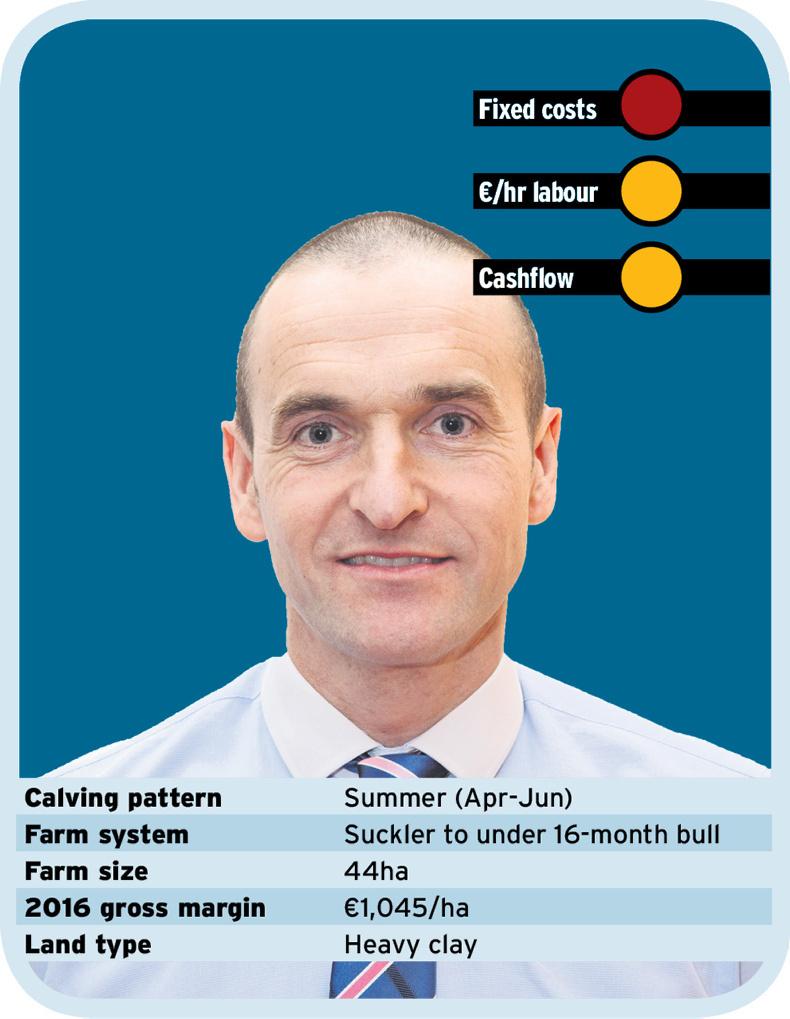
John and Joe Healy are a father and son who farm outside Athboy, Co Meath. Joe has a young family and works full-time off-farm. Since getting out of dairying 10 years ago, they have concentrated on retaining milk within the herd and driving quality through the use of AI, all of which is done by Joe. The farm is 100% grass and the land is moderate-quality for Meath. Joe hopes to improve profit through growing and utilising more grass on the farm and increasing their stocking rate.
Maurice Hearne
Dunmore East, Co Waterford
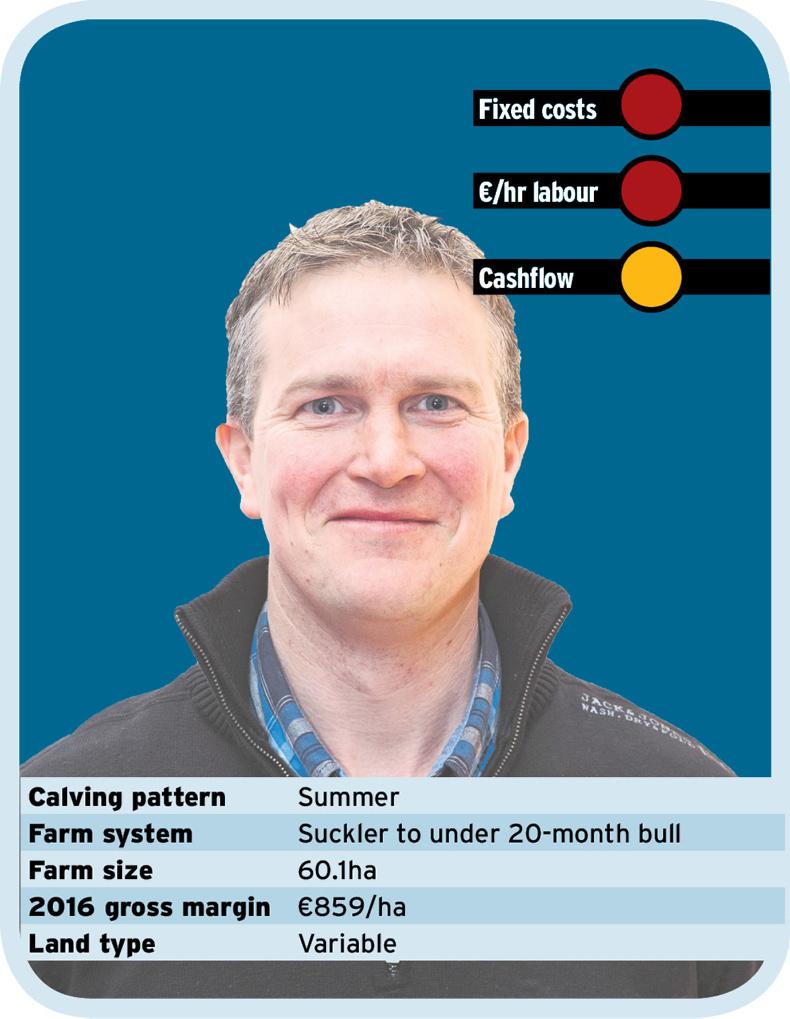
Maurice is farming near the coast in Dunmore East, Co Waterford. The farm comprises 50ha of grassland, 23ha of arable and 25ha of mixed grazing ground. Maurice operates a suckler-to-beef system, with all males finished as bulls at 16-18 months and heifers at 20-22 months. A flock of 160 crossbred ewes are lambed down in mid-season. Maurice hopes to calve 90 cows in 2017. He uses both stock bulls and AI.
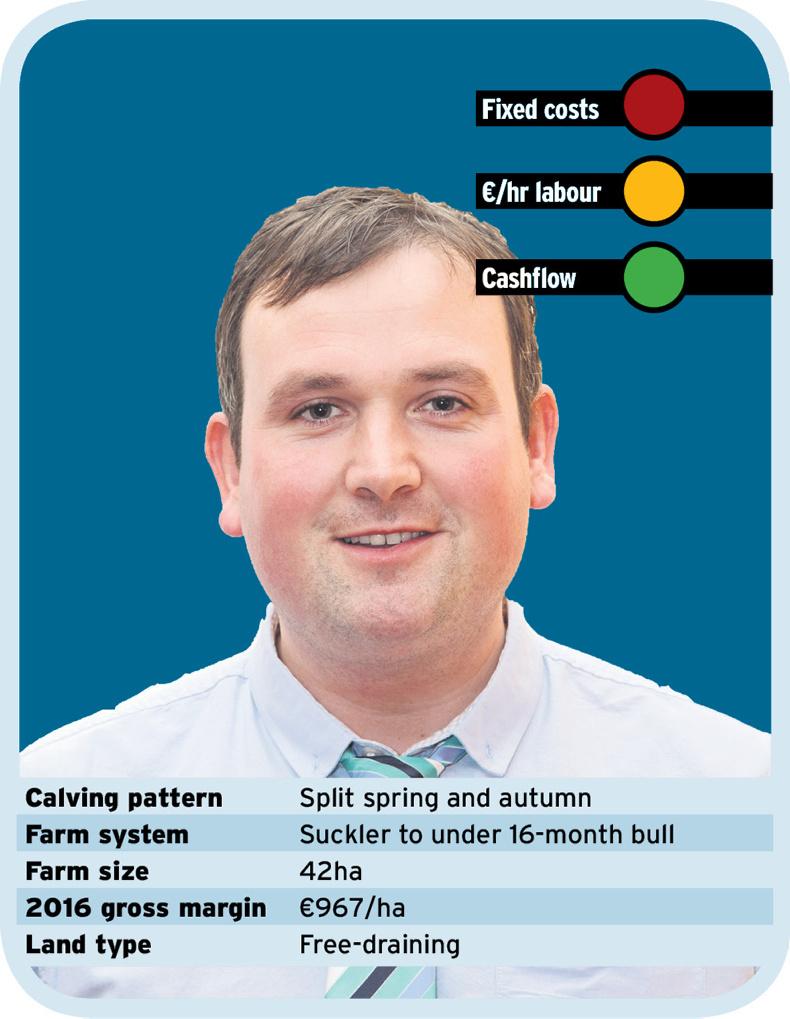
Martin O’Hare
Dundalk, Co Louth
Martin is farming in a partnership with his mother Sheila in Dundalk, Co Louth, on three free-draining blocks of land. He is married to Eilish. The farm comprises of 42ha grass and 18ha of tillage. He presently has 70 suckler cows and brings most of the progeny to beef. Males are all finished as bulls under 16-months. Martin’s aim for the programme is to become as efficient as he can and in doing so remain a viable full-time farmer into the future.
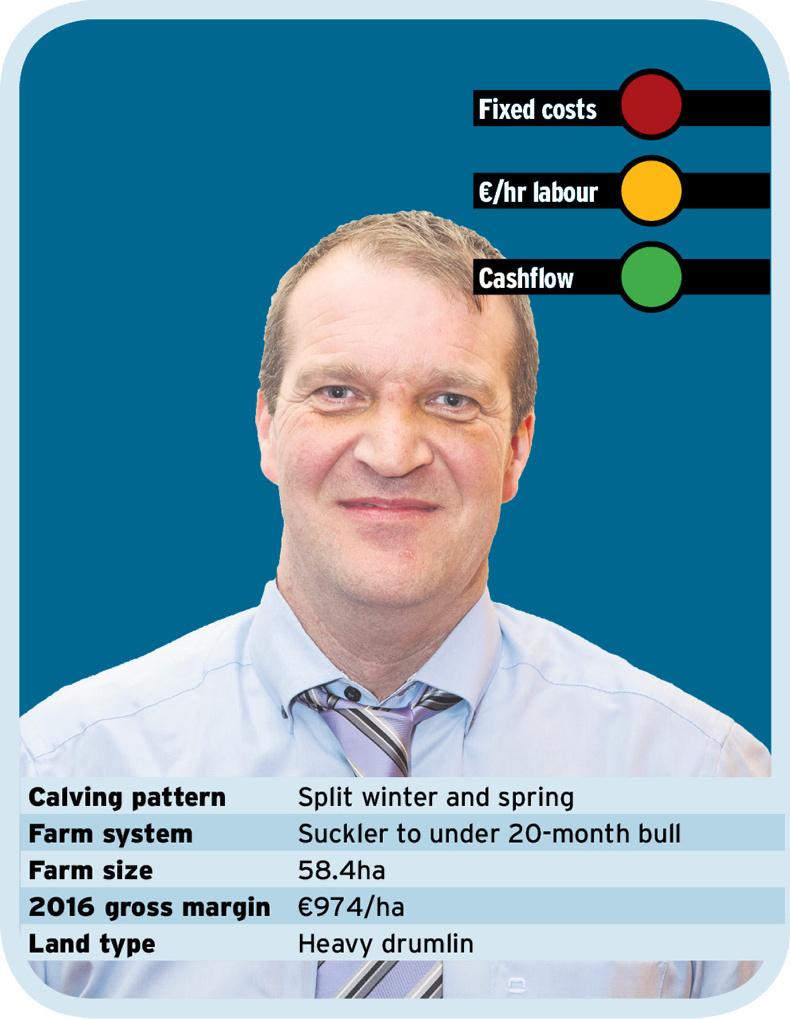
Wesley Browne
Dunraymond, Co Monaghan
Wesley is running 80 cows on heavy drumlin land outside Monaghan town. Around 8ha of the most challenging land was planted in spring 2016. Wesley is a member of the Monaghan Quality Group. All of the male progeny are slaughtered under-16 months. Replacement heifers are home-bred, with suitable surplus heifers sold for breeding and any overly-terminal heifers are slaughtered. Most of Wesley’s breeding herd are four- or five-star maternal
animals.
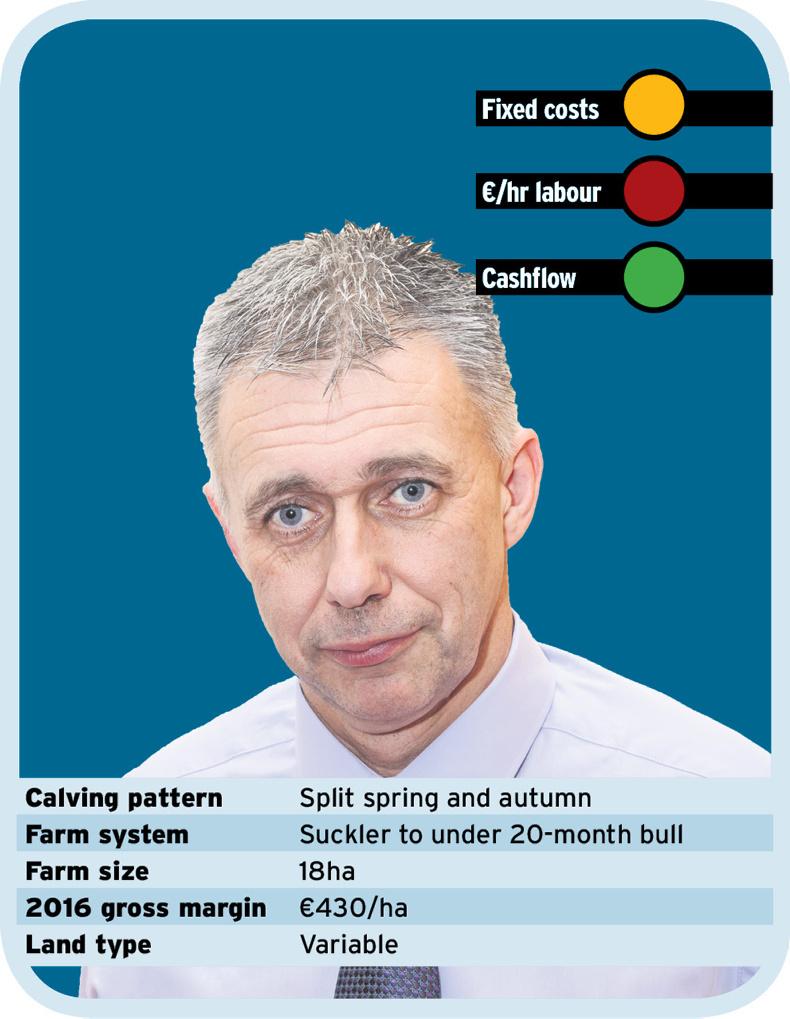
Tommie Holmes
Ballina, Co Mayo
Tommie Holmes is farming 18ha in Tullysleva, outside Ballina, Co Mayo. The land type is good and free draining – former potato land. The farm operates a suckler-to-beef system with bulls finished at 16-20 months. Additional weanlings are purchased in the autumn at the local mart. Breed type is mainly Angus. There is a high reliance on grazed grass on the farm, with a paddock grazing system in place. Non-performing paddocks are reseeded and grass is measured weekly. The stocking rate at present on the farm is 1.9 LU/ha.
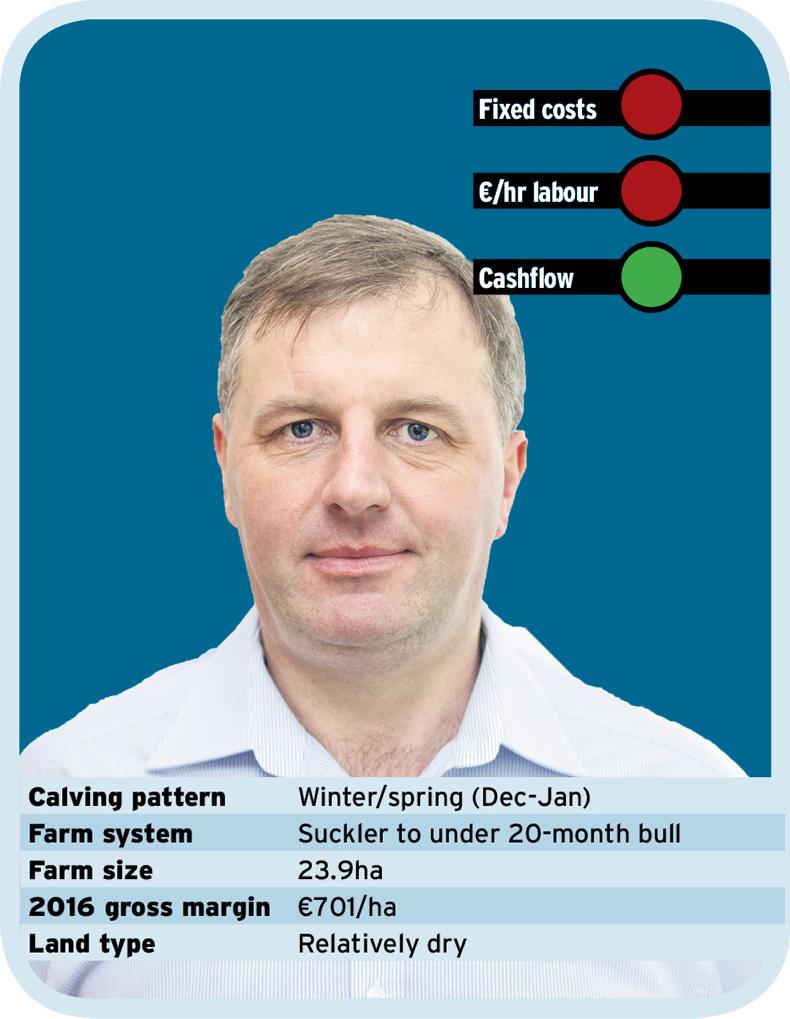
John McSweeney
Lissarda, Co Cork
John McSweeney is married to Trish and they have two young children. They are farming 24ha of predominantly dry, well-drained grassland in Co Cork. Both John and Trish are working off-farm. There is a suckler herd of 20 cows at present and progeny are sold as beef with bulls sold under-16 months and heifers sold under-17 months. In 2016, 51 Friesian bull calves were bought, reared and sold again as weanlings.
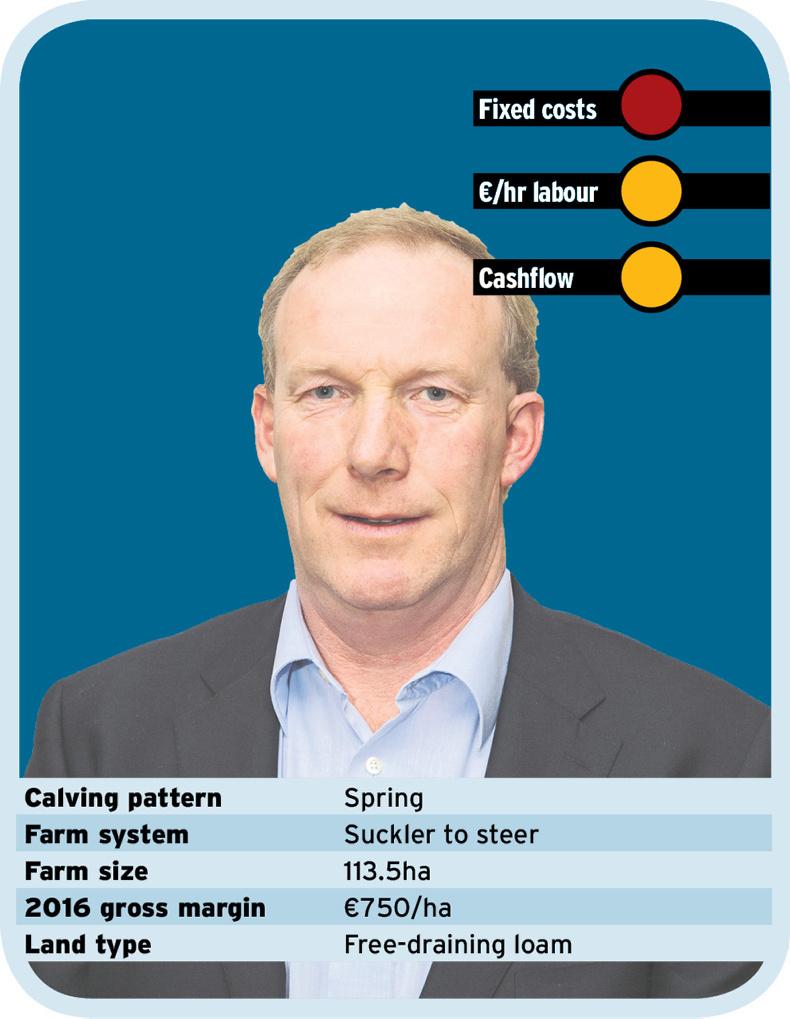
John Dunne
Portarlington, Co Offaly
John Dunne is a full-time suckler-to-beef farmer in Portarlington, Co Offaly. He is married to Eileen and they have four children. He runs a herd of 100 suckler cows operating out of two farmyards. He brings the majority of his progeny to beef. The soil is good-quality, dry and sandy with good grass-growing potential. Though bull beef has been tried in recent years, John has decided to focus on steer beef to utilise more grass on the sizeable farm.
Register for free to read this story and our free stories.
This content is available to digital subscribers and loyalty code users only. Sign in to your account, use the code or subscribe to get unlimited access.
The reader loyalty code gives you full access to the site from when you enter it until the following Wednesday at 9pm. Find your unique code on the back page of Irish Country Living every week.
CODE ACCEPTED
You have full access to the site until next Wednesday at 9pm.
CODE NOT VALID
Please try again or contact support.
Our BETTER farm Beef Challenge bull producers group encompasses both those slaughtering bulls on the QPS grid under 16 months of age and those producing older bulls – usually getting a partial second season at grass.
Bull beef can drive a farm’s output in two ways. Research has shown that a bull will grow around 16% faster than a steer under similar conditions. Their increased tendency to grow lean muscle leads to a higher rate of beef output per unit of feed going in – be it grass or concentrates.
The second way that a bull boosts a farm’s output is by freeing up farm resources. While steer systems typically require two full seasons at grass and two winters, bulls require either one or one-and-a-half grazing seasons and almost never need a second winter (apart from animals born shortly before or during the wintering period). Bulls will reach slaughter targets in a fraction of the time that a steer takes. This allows for more room to push cow, or other drystock numbers and achieves more output per hectare.
Leaner
However, research also shows that bulls will be around 20% leaner than steers when fed similarly. In order to achieve adequate carcase fatness specifications, bulls must be intensively fed with concentrates prior to slaughter and this makes the system an expensive one. The chart shows how our BETTER farm systems rank in terms of profitability, output and the main input bills. Given that under-16 month bulls see limited or no grass post-weaning, this system’s feed bill is highest at €531/ha, but so are its profits.
The strength of the under 16-month bull system is the combination of a bull’s ability to grow and the premium beef price achieved. The 20 month bull is relying solely on the former here, though a period of cheap grass-based weight gain post-weaning is the key to its success. As it is not considered prime beef, constant communication between processor and producer is a necessity in this system – it is a niche.
John and Joe Healy are a father and son who farm outside Athboy, Co Meath. Joe has a young family and works full-time off-farm. Since getting out of dairying 10 years ago, they have concentrated on retaining milk within the herd and driving quality through the use of AI, all of which is done by Joe. The farm is 100% grass and the land is moderate-quality for Meath. Joe hopes to improve profit through growing and utilising more grass on the farm and increasing their stocking rate.
Maurice Hearne
Dunmore East, Co Waterford
Maurice is farming near the coast in Dunmore East, Co Waterford. The farm comprises 50ha of grassland, 23ha of arable and 25ha of mixed grazing ground. Maurice operates a suckler-to-beef system, with all males finished as bulls at 16-18 months and heifers at 20-22 months. A flock of 160 crossbred ewes are lambed down in mid-season. Maurice hopes to calve 90 cows in 2017. He uses both stock bulls and AI.
Martin O’Hare
Dundalk, Co Louth
Martin is farming in a partnership with his mother Sheila in Dundalk, Co Louth, on three free-draining blocks of land. He is married to Eilish. The farm comprises of 42ha grass and 18ha of tillage. He presently has 70 suckler cows and brings most of the progeny to beef. Males are all finished as bulls under 16-months. Martin’s aim for the programme is to become as efficient as he can and in doing so remain a viable full-time farmer into the future.
Wesley Browne
Dunraymond, Co Monaghan
Wesley is running 80 cows on heavy drumlin land outside Monaghan town. Around 8ha of the most challenging land was planted in spring 2016. Wesley is a member of the Monaghan Quality Group. All of the male progeny are slaughtered under-16 months. Replacement heifers are home-bred, with suitable surplus heifers sold for breeding and any overly-terminal heifers are slaughtered. Most of Wesley’s breeding herd are four- or five-star maternal
animals.
Tommie Holmes
Ballina, Co Mayo
Tommie Holmes is farming 18ha in Tullysleva, outside Ballina, Co Mayo. The land type is good and free draining – former potato land. The farm operates a suckler-to-beef system with bulls finished at 16-20 months. Additional weanlings are purchased in the autumn at the local mart. Breed type is mainly Angus. There is a high reliance on grazed grass on the farm, with a paddock grazing system in place. Non-performing paddocks are reseeded and grass is measured weekly. The stocking rate at present on the farm is 1.9 LU/ha.
John McSweeney
Lissarda, Co Cork
John McSweeney is married to Trish and they have two young children. They are farming 24ha of predominantly dry, well-drained grassland in Co Cork. Both John and Trish are working off-farm. There is a suckler herd of 20 cows at present and progeny are sold as beef with bulls sold under-16 months and heifers sold under-17 months. In 2016, 51 Friesian bull calves were bought, reared and sold again as weanlings.
John Dunne
Portarlington, Co Offaly
John Dunne is a full-time suckler-to-beef farmer in Portarlington, Co Offaly. He is married to Eileen and they have four children. He runs a herd of 100 suckler cows operating out of two farmyards. He brings the majority of his progeny to beef. The soil is good-quality, dry and sandy with good grass-growing potential. Though bull beef has been tried in recent years, John has decided to focus on steer beef to utilise more grass on the sizeable farm.
If you would like to speak to a member of our team, please call us on 01-4199525.
Link sent to your email address
We have sent an email to your address. Please click on the link in this email to reset your password. If you can't find it in your inbox, please check your spam folder. If you can't find the email, please call us on 01-4199525.
ENTER YOUR LOYALTY CODE:
The reader loyalty code gives you full access to the site from when you enter it until the following Wednesday at 9pm. Find your unique code on the back page of Irish Country Living every week.
SHARING OPTIONS