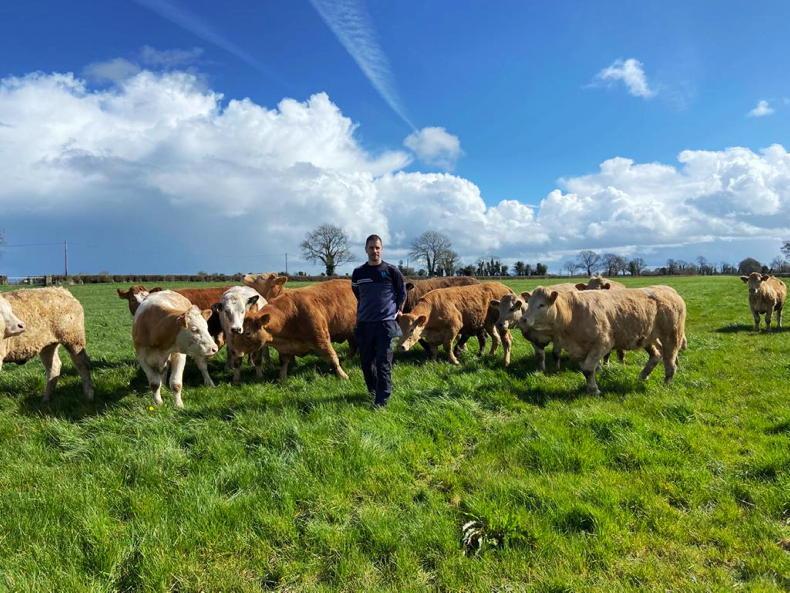
Footprint Farmer Andrew Mulhare is waiting on ground conditions to improve a bit further before he starts sowing spring crops on his farm near Ballybrittas, Co Laois.
Andrew’s farm was soil sampled last month, and the results are back. In comparison to the 2021 results, this year’s samples have seen a decrease in phosphorus (P) and potassium (K) indices, which has surprised Andrew. The graphs show this year’s results in comparison to 2021.
Phosphorus indices across the farm dropped substantially, which Andrew was not expecting. In 2021, 92% of the farm was in index 3 and 4 for P.
However, this year’s results saw this figure fall to 47%.
Due to the high pH across the farm and good levels of P across the farm previously, Andrew did not expect this result. Because of the high pHs, he focused on putting out slurry and nitrogen as opposed to adding a P and K compound into the mix.
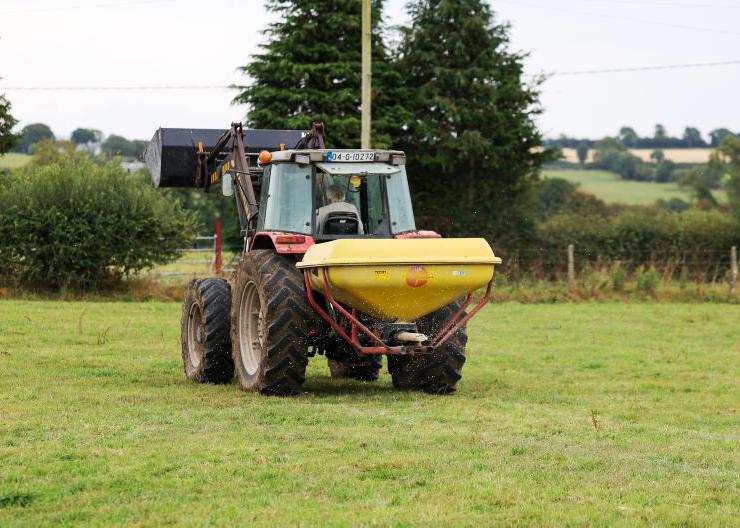
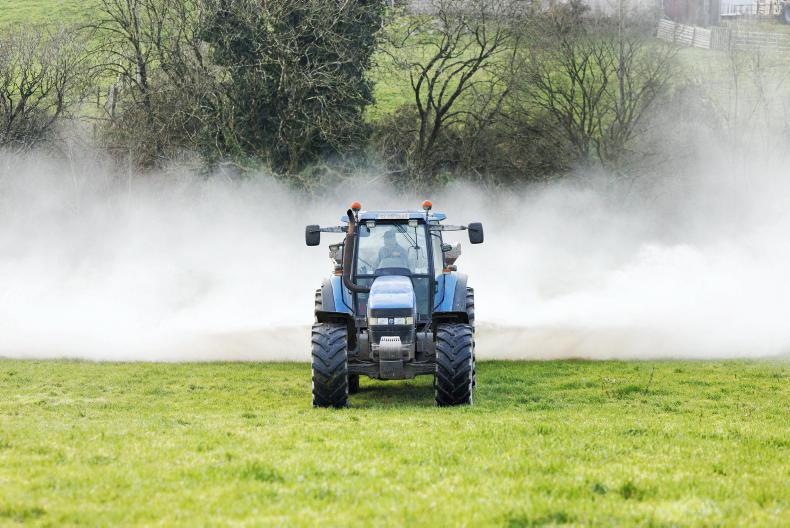
P indices were lower across both silage and grazing grounds, and to combat this Andrew plans to go in with a compound first, instead of relying on nitrogen (N) and slurry.
Andrew is also debating whether to use 24:2.5:10 as his compound, but is conscious of keeping the nitrogen levels lower so as to not affect the clover in the sward.
Potassium levels have always been a little low on Andrew’s farm. However, this year’s samples show they have decreased further. In terms of K levels, in 2021, almost 40% of soils were at index 3, while none were at index 4.
There were some improvements made, and this year’s results show almost 10% of the farm move into index 4.
However, overall, approximately 50% of the farm is at index 3 and 4 for K at the moment, which shows plenty of room for improvement.
Seventeen per cent of Andrew’s ground was in index 1 for K, which included almost all of the silage ground.
One of the most effective ways to build K levels is by applying organic manures, in Andrew’s case, cattle slurry.
Alternatively, Muriate of Potash (MOP) which contains 50% K, can be used depending on crop requirements. It is also recommended to apply compounds containing K such as 18-6-12 during the growing season, which will keep soil K levels topped up over time.
K that is taken off needs to be replaced.
Soils at index 3 for K, producing 5t DM/ha, need 100 units of K per acre for first-cut silage.
Andrew’s farm has always had a high pH and results show this trend continuing.
He is above the recommended pH for grassland and tillage soils which are 6.5 and 7, respectively. Therefore, Andrew is not required to spread any lime this year.
To improve both P and K indices, Andrew plans to:

Use more compound fertilisers such as 10:10:20 and 18:6:12 instead of N.Continue to chop straw to increase P and K levels going back into the soil. Lime is not needed as ph levels have remained high across the farm, with the average pH being 7.8.
Footprint Farmer Andrew Mulhare is waiting on ground conditions to improve a bit further before he starts sowing spring crops on his farm near Ballybrittas, Co Laois.
Andrew’s farm was soil sampled last month, and the results are back. In comparison to the 2021 results, this year’s samples have seen a decrease in phosphorus (P) and potassium (K) indices, which has surprised Andrew. The graphs show this year’s results in comparison to 2021.
Phosphorus indices across the farm dropped substantially, which Andrew was not expecting. In 2021, 92% of the farm was in index 3 and 4 for P.
However, this year’s results saw this figure fall to 47%.
Due to the high pH across the farm and good levels of P across the farm previously, Andrew did not expect this result. Because of the high pHs, he focused on putting out slurry and nitrogen as opposed to adding a P and K compound into the mix.
P indices were lower across both silage and grazing grounds, and to combat this Andrew plans to go in with a compound first, instead of relying on nitrogen (N) and slurry.
Andrew is also debating whether to use 24:2.5:10 as his compound, but is conscious of keeping the nitrogen levels lower so as to not affect the clover in the sward.
Potassium levels have always been a little low on Andrew’s farm. However, this year’s samples show they have decreased further. In terms of K levels, in 2021, almost 40% of soils were at index 3, while none were at index 4.
There were some improvements made, and this year’s results show almost 10% of the farm move into index 4.
However, overall, approximately 50% of the farm is at index 3 and 4 for K at the moment, which shows plenty of room for improvement.
Seventeen per cent of Andrew’s ground was in index 1 for K, which included almost all of the silage ground.
One of the most effective ways to build K levels is by applying organic manures, in Andrew’s case, cattle slurry.
Alternatively, Muriate of Potash (MOP) which contains 50% K, can be used depending on crop requirements. It is also recommended to apply compounds containing K such as 18-6-12 during the growing season, which will keep soil K levels topped up over time.
K that is taken off needs to be replaced.
Soils at index 3 for K, producing 5t DM/ha, need 100 units of K per acre for first-cut silage.
Andrew’s farm has always had a high pH and results show this trend continuing.
He is above the recommended pH for grassland and tillage soils which are 6.5 and 7, respectively. Therefore, Andrew is not required to spread any lime this year.
To improve both P and K indices, Andrew plans to:
Use more compound fertilisers such as 10:10:20 and 18:6:12 instead of N.Continue to chop straw to increase P and K levels going back into the soil. Lime is not needed as ph levels have remained high across the farm, with the average pH being 7.8.
SHARING OPTIONS