The extent of Russia’s influence on Europe has been clear in the past 12 months. It has exploited Europe’s energy dependency, flexed its muscle in terms of food production and price and driven up the cost of living for Europeans.
The economic consequences of conflict between Russia and Ukraine would be significant for global markets, businesses and indeed consumers, particularly in Europe.
Here we look at Russia’s influence and potential impacts.
Grain market
Russia and Ukraine combined are a significant force in the global grain trade, accounting for almost 30% of global wheat exports, 30% of global barley exports and 20% of global corn exports.
The impact of conflict in the region and retaliatory economic sanctions could have a significant impact on grain availability and price in world grain markets.
Disruption to Black Sea trade
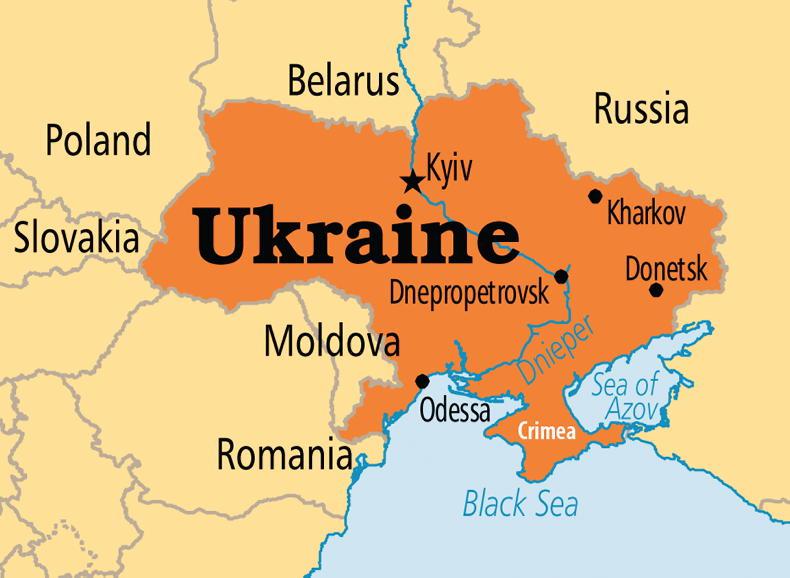
If conflict ensued, trade into and out of the Black Sea region would likely be disrupted and costs would almost certainly increase. In addition to Ukrainian grain exports, grain flows down the Danube from eastern Europe, including Poland and Romania to the port of Constanta. A wider regional impact may be felt.
Fertiliser prices
Russia is a commodity powerhouse. It is the largest fertiliser exporter in the world, accounting for 25% of global nitrogen exports, 20% of global potash and 16% of global phosphate exports.
Reduced Russian fertiliser would impact directly on farmers and global food production and European production, in particular.
Gas prices
Russia supplies 40% of Europe’s natural gas requirements. Any further reduction in Russian gas flows to Europe by way of cutting off pipe flows or through sanctions would leave Europe very vulnerable given the current energy crisis.
The EU is negotiating alternative gas supply arrangements. However, it is unlikely to result in reduced prices.
Natural gas accounts for 80% of nitrogen fertiliser manufacturing costs. High gas prices will influence European fertiliser production and prices.
Oil prices
Russia is a key oil producer and supplies 30% of Europe’s crude oil imports. Brent Crude Oil price, already at high levels, surpassed $95 a barrel last Friday amid concerns of an imminent Russian invasion of Ukraine. It was up 16% from the start of January to $93.58 a barrel on Tuesday.
The continued threat of conflict will support oil prices. Any escalation in tensions and economic sanctions will likely result in higher oil prices, impacting prices for households and businesses.
The impact of conflict between Russia and Ukraine and retaliatory economic sanctions imposed by the west would most likely impact on economic recovery in Europe.
Oxford Economics estimates that the impact of a “limited” incursion by Russia into Ukraine would lower eurozone GDP by 0.3% by the end of 2022 and push inflation by 0.7%.
If sanctions were then applied from the west, including Europe, the imposition of these sanctions may give rise to political and business tensions within Europe, consuming European politics and detracting from other political and policy agendas.
The entire international community is unlikely to apply these sanctions in the event of conflict.
There will be blocks of countries that impose sanctions and those that will continue to trade with Russia and perhaps benefit from surpluses of grain, fertiliser and other commodities.