





One of the optional actions in the recently launched 2026 Beef Welfare Scheme which is worth up to €25 per eligible calf, is faecal testing. The action is listed alongside the option of forage testing and farmers have to denote at application stage which action they wish to select.
Farmers must also enter the number of calves selected for payment if this deviates from the number of calves selected for meal feeding.
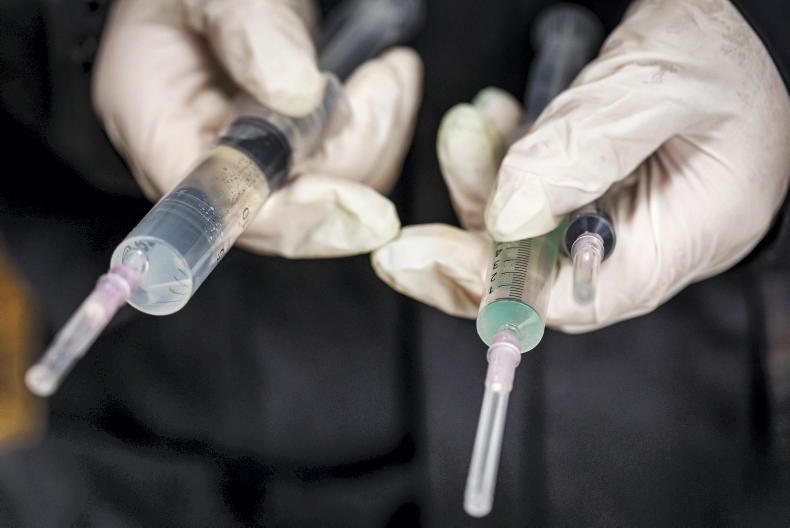
The faecal testing action requires farmers to carry out two faecal egg tests for parasites of their choice and submit for testing in a “suitable laboratory/testing facility of the farmer’s choosing”.
The Department has explained that this can be any laboratory or testing facility, including a farmer’s own veterinary practitioner. The only caveat here is that the veterinary practitioner is capable of testing for the selected parasite and can provide an appropriate report.
The Department adds that participants should not select the optional faecal count action if they are also participating in the Parasite Control Consult programme under the Targeted Advisory Service on Animal Health (TASAH).
Important notes
Farmers completing faecal testing will be required to complete a record showing the date of collection of samples, the number of samples collected and the date in which it has been submitted to a suitable laboratory / testing facility of their choosing for analysis. The Department may request a copy of record sheets and purchase receipts for test kits as part of an administration check to verify compliance with this measure.
Value of faecal testing
The terms and conditions state that testing can cover a range of parasites and advise that a farmer, individually or through seeking professional advice, will be best placed to identify the most appropriate faecal test for the holding.
The most appropriate faecal tests at this stage of the year are probably for stomach/gut worms or liver fluke with testing providing an indication of the burden of parasites present.
It advises that the “use of faecal testing is recommended to be used in a strategic performance approach where animals with reduced performance are sampled and treated when elevated egg counts are recorded. This approach can potentially reduce the amount of dosing treatments required.
The terms and conditions also highlight that faecal testing can also be used to measure the efficacy of any treatment given. In this regard anthelmintic resistance for gastro-intestinal worms is the greatest concern with resistance to macrocyclic lactones including avermectins increasing in prevalence.
It is worth highlighting that if this is the aim, then additional faecal egg testing will be required to establish if the drug used has achieved the necessary kill of parasites (upwards of 95% of parasites killed denotes there is no issue with anthelmintic resistance for that particular product).
Follow-on testing post-treatment should take place approximately seven days later for levamisole or yellow wormers and 14 days later for benzimidazoles or white drenches and macrocycle lactones or clear wormers. To be clear, this is not a requirement of the scheme but would be a useful exercise to tie in along with testing where there are any concerns regarding anthelmintic efficacy.
Testing process
Actioning results
The result will provide farmers with a faecal egg count which can be used to determine the need to treat animals. Your vet will be ideally placed to give advice on the results but, in general, the advice is to treat for gut worms once the number of eggs per gram (EPG) exceeds 200epg.
Vets advise that FECs will not indicate an early lungworm problem and as such they recommend farmers to be on guard for the clinical signs of disease such as a husky cough or rapid breathing. This will frequently appear before eggs are shed in the dung and therefore veterinary advice is to treat calves once you hear coughing.




SHARING OPTIONS