


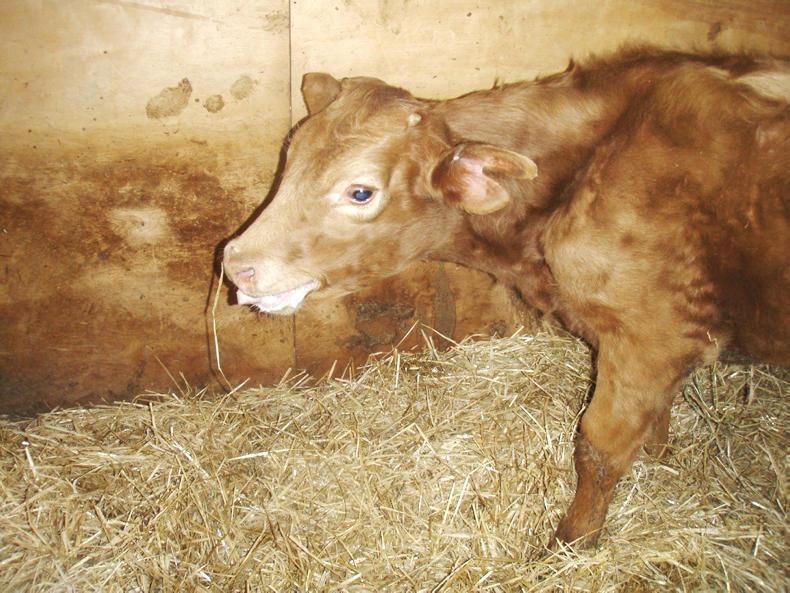
Where pneumonia occurs without mortality, there can be major stunting of calves, resulting in the failure to reach production milestones on schedule.
Cause
Pneumonia in cattle of all ages is a multifactorial disease, with infectious pathogens, management factors and environmental factors all contributing to its development. In terms of infectious agents, calf and weanling pneumonia can be caused by viruses (IBR, RSV and PI3), bacteria (mannhaemia haemolytica, pasturella multocida, Mycoplasma bovis/dispar and histophilus somnus), or parasites such as lungworm. In most cases with housed calves or weanlings, pneumonia usually occurs due to a mixed infection, ie an initial viral infection followed by secondary bacterial invasion.
Management factors play a huge role in determining the risk of pneumonia in calves and weanlings. Particular factors include colostrum management in neonatal calves.
Stressors such as the transport of calves/weanlings to and from the mart and under-feeding of young calves all lead to an increased risk of pneumonia. Draughts and wet bedding reduce a calf’s core body temperature, making it more susceptible to pneumonia.
Environmental risk factors for pneumonia include poor ventilation in the calf housing; drafts at calf level; overcrowding in pens and mixing of animals of different age groups in the same airspace. This is a risk as a percentage of older animals will be carriers of respiratory viruses and will maintain these diseases in the herd by spreading them to younger animals sharing the same airspace.
Symptoms
Early signs of pneumonia can be non-specific such as being off-form, dullness, reduced feed intake and lack of gut-fill.
Other symptoms of pneumonia include increased rate and depth of respiration (heavy and loud breathing); high temperature especially in the early stages (>39.2°C) and nasal discharge (clear in the early stages and thicker and coloured later in the course of the pneumonia). Coughing is also a symptom as pus and mucus builds up in the lungs and major airways.
There are some clinical symptoms that may lead one to suspect involvement by particular agents. IBR (infectious bovine rhinotracheitis) is a virus that leads to disease of the upper airways and is associated with nasal and ocular discharge, a red or burnt appearance to the muzzle, and a high temperature early in the course of disease. In contrast RSV (respiratory syncitial virus) and PI3 (parainfluenza 3) are pathogens that affect the lower airways, leading to severe respiratory disease and high mortality in neonatal calves.
The bacteria mannhaemia haemolytica and mycoplasma bovis are also primary pathogens of the lower airways and lungs. They cause severe inflammation, with extensive lung damage and frequently result in death or stunting due to irreversible lung damage. Mycoplasma bovis may also lead to swollen joints. Mannhaemia is the most common secondary invader following initial viral infections. Histophilus somnus is usually a secondary invader following initial viral infection, although it can be a very significant primary pathogen in feedlot cattle.
Lungworm will obviously only be an issue in calves that have been grazing infected pasture for a period of time, and should always be considered among the causes of coughing in weanlings from mid-summer onwards. Mycoplasma dispar can also cause coughing in weanlings but is not associated with high mortality rates.
Treatment
There are many very effective antibiotics available for the treatment of pneumonia, with differences in methods of administration and longevity of action. It is always advisable to consult with your vet on suitable treatment options and to obtain early veterinary intervention in the treatment/management of individual and group outbreaks of pneumonia.
Antibiotics are active against bacteria only and will certainly treat primary or secondary bacterial infections. However, there will be no response in the case of severe acute viral infections, resulting in relatively high mortality rates with RSV pneumonia in particular.
As well as the use of antibiotics, anti-inflammatories play a crucial role in the treatment of individual cases of pneumonia. Remember that pneumonia is a process of inflammation of the lungs and respiratory tract, and inflammation results in changes and damage to the normal lung tissue. Anti-inflammatories can be administered in all cases of pneumonia, both viral and bacterial, to reduce the extent of lung damage, reduce high temperatures and speed up recovery. General supportive care is also very important, including the provision of adequate nutrition and shelter/housing while the animals are sick.
Prevention and control
The prevention of calf disease is based on maximising a calf’s immunity and minimising the stressors that a calf is subjected to.
Maximising the immune status of the calf can be done by attending to a number of key areas. These include colostrum feeding, the management of the calf, vaccination, reducing concurrent disease (eg BVD) and adequate dry cow feeding to ensure good-quality colostrum and healthy strong calves at birth.
In terms of vaccination, there are effective vaccines available against IBR, RSV, PI3 and Mannhaemia haemolytica. In general terms, vaccines can be divided into intranasal vaccines and injectable vaccines.
The intranasal vaccines stimulate good immunity in a very short period of time (three to seven days) and are suitable for use in the face of an outbreak of pneumonia, even in very young calves (down to 10 days of age). The immunity following intranasal vaccination, however, tends to be relatively short-acting (three to four months).
In contrast, injectable vaccines may take three to four weeks (with a two injection course) to stimulate maximal immunity, but it is longer-lasting (six months in the case of IBR, and up to 12 months for the other pathogens). It is very important to remember that no vaccine gives 100% protection and, in the case of respiratory disease, if housing, ventilation and stocking rates are poor, then vaccine efficiency will be dramatically reduced. Therefore, attention should be paid to maintaining calf housing and reducing stressors to both calves and weanlings. It is also vital that booster vaccines are given as required.
Ensuring calves get a lungworm dose at least a month prior to weaning will help reduce stress at weaning.




SHARING OPTIONS