



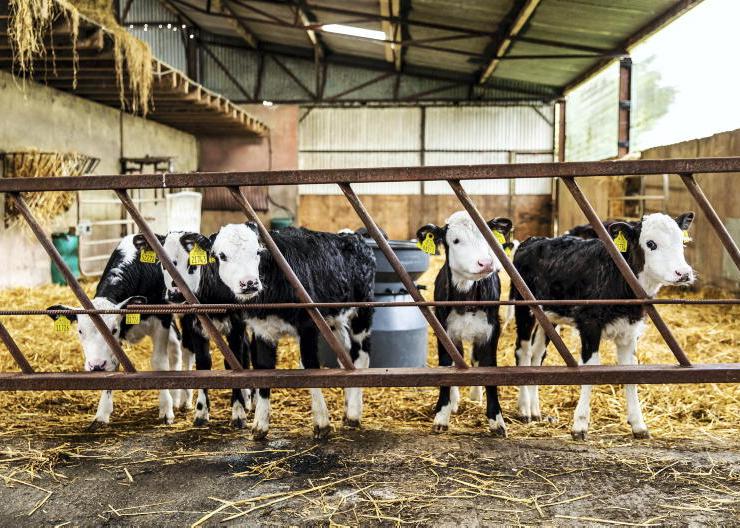
Rearing calves is a bit like learning how to ride a bike for the first time. When things are going well there’s nothing quite like it, but if there’s a bit of a wobble things can come crashing down quickly.
Rearing calves is not rocket science, but there are a few things that first-time calf rearers should know before they embark on a new adventure.
In a suckler situation, each calf has its own mother looking after it 24/7.
The instinct that a cow has to look after its calf is a sight to behold.
Lying next to its mother, the suckler calf is kept warm and can feed whenever it wants to.
Even the best farmers are poor substitutes for what a cow can do for its calf.
That is why facilities and protocols are so important when it comes to rearing dairy calves. The farmer has to provide the environment and the feed for the young calf.
Just because calves are cheaper than older cattle doesn’t mean the budget should be spent buying calves. How many calves to rear largely depends on the facilities and the labour available for looking after them.
There are a few rules of thumb here.
In terms of housing, the recommendation is for no less than 2m2 of lying area per calf.
This means that in a square pen measuring 16ft by 16ft, there should be no more than 12 calves in that pen.
That’s the guidelines, but if ventilation or drainage is poor, then maybe 12 calves could be too many in the pen.
Most calf sheds in Ireland have been re-purposed in one form or another so a purpose-built calf shed is not a necessity when it comes to calf housing.
There are some really important factors when deciding on where to put calves.
Firstly, make sure there is drainage in the floor. If there is no drainage then the seepage will have nowhere to go.
Young calves do a lot of urinating and their faeces are usually watery. Studies have found that calves produce around five to six litres of excreta per day.
In a pen with 12 calves, that’s 60 to 70 litres of liquid material being added to the bedding each day.
Therefore, adequate drainage is essential to make sure this material has a place to drain to.
Where drainage in the floor is inadequate, some farmers will use calf slats or pallets and put the bedding over this to create a false floor.
Farmers should, as best as possible, avoid moving calves from one pen to another as they get older.
This movement of calves around pens and into different houses creates work, but it also means that calves get exposed to different environments and different pathogens.
This increases the risk of disease. Instead, try and keep calves in the same pen throughout the rearing process.
Calves, much like babies, don’t like change but sometimes change is necessary.
For example, milk might need to be reduced in order to encourage calves to eat more solid material.
The trick is to ensure that any changes are introduced gradually and only when necessary.
For example, if bucket rearing calves, feed them at the same time morning and evening.
Be consistent when mixing milk replacer (see point six).
Not all milk replacers are the same and even milk replacers of the same type will differ between batches.
Therefore, rather than picking up bags of milk replacer every week, try and buy enough milk replacer from the one batch that will do a number of weeks at a time.
Mixing milk replacer is one of the more pleasant jobs when it comes to rearing calves.
The smell of the powder and texture of the mixed milk is something that brings back happy memories for many people.
It’s important that the job is done precisely.
On some farms, the tools for measuring out milk replacer are totally inadequate with varying quantities of powder in each “scoop”.
An open scoop is more effective than a jug or an old can, as these can bridge with powder near the mouth and a full can may not actually be a full can.
Calculate the total amount of mixed milk that is needed to feed a pen or a shed of calves.
For example, if there are 12 calves to be fed 2 litres of milk, then 24 litres of mixed milk is required in total.
If the feeding rate is 15%, then the total amount of powder required for the pen is 3.6kg.
If it’s a 12% feeding rate, then 2.9kg of powder is required in total.
Because milk powder will displace water, farmers should reduce the amount of water used by the quantity of powder.
So instead of mixing 3.6kg or 2.9kg of powder into 24 litres of water, the farmer should mix 3.6kg of powder into 20.4 litres of water to make 24 litres of mixed milk.
When mixing, pour the correct amount of milk powder into half the desired amount of water and mix with a whisk or other mixing device. Then add the rest of the water.
Never mix with boiling water as this could corrupt the proteins.
The ideal temperature to mix and feed milk replacer is body temperature, so around 37°C
And while calves don’t drink too much water, what they do drink needs to be clean and fresh.
As calves have a habit of dirtying their surroundings, clean out water drinkers daily.
Calf health can deteriorate quickly so early action is key for a good outcome.
There are a couple of essential tools for calf rearing. The first is a digital thermometer. If a calf is suspected to be off-form, checking the temperature will confirm it.
Normal temperature is between 38.5 and 39.5°C. High temperatures indicate a fever that could be brought on by scour, pneumonia, or navel ill while low temperatures are also a bad sign.
When calves are sick, continue to feed them milk, using a stomach tube if necessary. This includes calves that have scour.
Not feeding them milk won’t cure the scour but it will make them dehydrated and energy deficient.
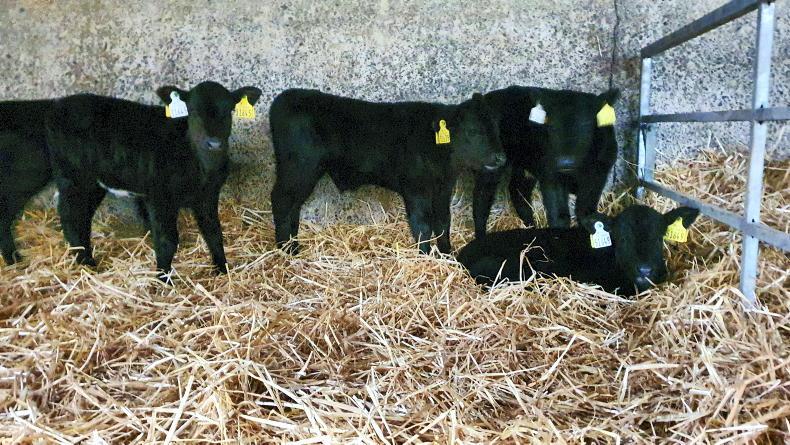
Calves spend most of their time lying down, so the quality of their bedding material is important. A wet or a cold bed will discourage the calf to lie down and this will affect growth rates.
A good bed will allow a calf to retain its body heat and so it is now using up vital energy for growth just to make up for lost heat. This is why the quality of the bedding material is so important.
If calves aren’t thriving then they are at a higher risk of picking up an infection and getting sick because their immune system is not operating optimally.
While a dry bed is absolutely essential, a dry bed by itself is not the gold standard.
The gold standard of calf bedding is a deep bed of straw. Calf specialists and experts have developed a scoring system to evaluate the bedding and its called nesting score.
The best nest score is three, and in this scenario the calf’s legs are fully covered by the straw bedding.
A score of one is the opposite and the calf’s legs are fully visible lying on the bedding material.
As calves get older they become more robust and will be more tolerant of lower bedding scores.
However, for young calves the quality of the bedding is really important.
Keeping feeding utensils and feeding equipment clean is essential to help prevent a build up of bacteria which could become a reservoir for disease.
Good hygiene is all about good habits but it’s also about having the facilities to properly clean equipment.
Again, this doesn’t have to be fancy but a good calf rearing facility will have the space to clean equipment using warm water and allow calf feeders to dry before their next use.
In other cases, farmers leave the teat feeders soaking in a large water bath with disinfectant such as peracetic acid or Milton.
Feeding equipment is one thing to keep clean, but clothing is another.
Calves have a habit of licking and sucking everything and anything and if a farmer walks into a pen of calves with dirty trousers, it’s almost guaranteed that calves will be licking them.
Farmers should keep this in mind when moving from older stock to younger stock.
Importantly, if there are sick calves on the farm, make sure and wash clothing between tending to them and tending to healthier calves as this is one way the infection spreads.


SHARING OPTIONS