Last year, the Irish Farmers Journal wrote about ‘10 ways to spend €20,000’, but this year we have 10 ways to preserve labour, which highlights the difference between the two years.
In 2025, with weather playing ball and milk price at an all-time high, farmers were looking for ways to eliminate or reduce their tax bill as much as possible.
This year has proven to be a much more challenging year, with high concentrate levels gone into cows while milk cheques are reduced. With cash flow tight now, it is hoped that farmers will still have the necessary means to clear any tax bills accrued in 2025.
Nevertheless, farmers continue to invest in their farms. This year’s initiative looked at both labour-saving investments and ideas, with some simply being a change in mindset rather than a monetary investment.
Farmers in attendance at Dairy Day 2026 were able to vote for their favourite investment, with Limerick farmer Niall Maloney and Conor Hogan, Teagasc Moorepark, ranking each item/idea based off their personal experience of it. We go into the top three labour-saving initiatives as voted by the audience, Niall and Conor.
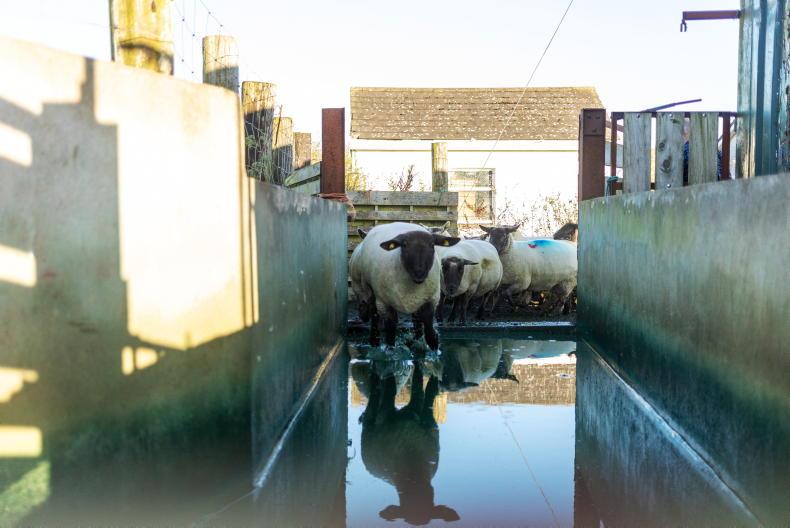
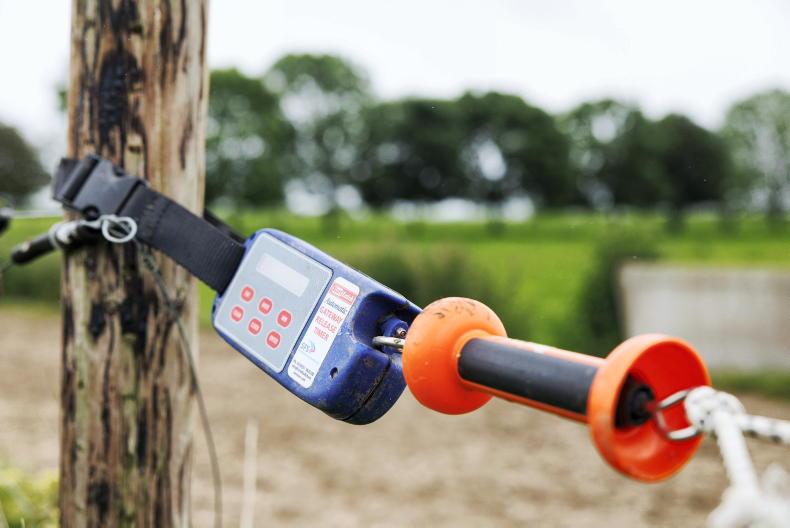
Auto gates are more commonly known by brand names such as Batt Latch or E-gate. These are becoming a common sight on farms around the country, with the device working by opening the gap to a paddock at a time selected by the farmer. Take a farmer who typically milks the cows at 7am. They can set the auto-gate to open at 6.30am and, as they arrive to start the milking, most or all of the cows will be standing in the yard, waiting. This is half an hour at every milking, or one hour per day, saved by a simple piece of equipment which will cost less than €1,000 in many cases.
On/off grazing
These devices are really useful, however, during the spring or autumn, when farms apply on/off grazing. The device will go off at its set time, allowing the farmer the freedom and flexibility to get on with other jobs.
Modern versions of the auto-gate can be connected to an app on the farmer’s phone.
This allows the device to be controlled remotely. During the spring, it is particularly useful during a heavy shower of rain, or if the farmer is unable to get to the farm in time. New adaptations to some of these higher-tech units will allow farmers to know when the latch was opened, where it is via GPS, while farmers using cow collars/boluses/tags for herd health and heat detection will also be able to view when cows first left the paddock and how many have exited, showing a farmer if there is a need to herd lazy cows out.
While Conor ranked the use of auto gates as 8/10, Niall ranked them at a low 3/10, preferring to open the latch, head to the parlour and get it ready, by which time the first cows have arrived back.
Any lazy cows were herded into the yard by Niall’s father.
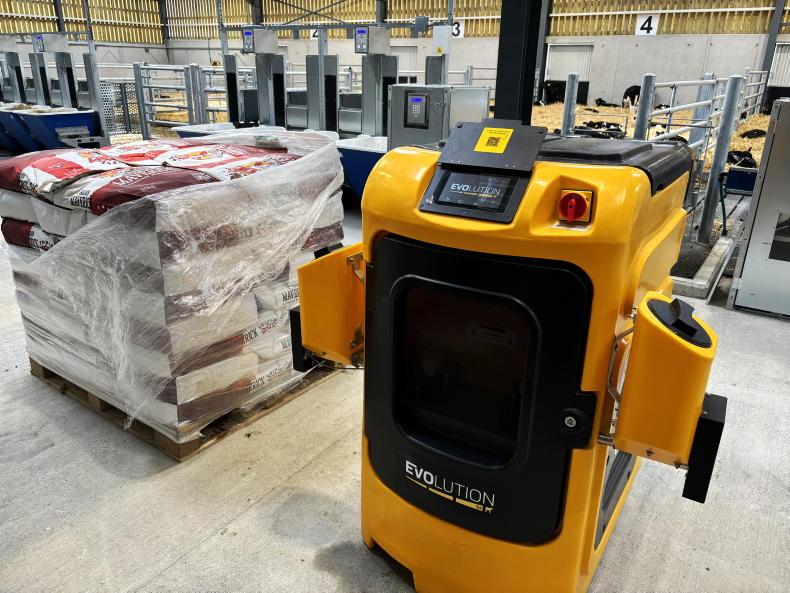
Automatic calf feeders are gaining more and more traction on Irish dairy and dairy calf to beef farms year-on-year. Time is at a premium on most dairy farms over the course of the spring months, with calving, milking, on-off grazing and all the other tasks associated with a busy spring increasing the workload dramatically. Automatic calf feeders are one of the ways in which farmers are actively reducing spring workload.
Unlike conventional feeding with a teat feeder – in which calves must be fed post milking morning and evening – farmers have the flexibility after morning milking to set up wires for cows or head for breakfast without several hours being spent on calves beforehand. Calves are typically checked over twice a day at a time that suits the farmer, with any issues generally seen via a phone app that will highlight which calves have not presented for a feed, a clear indicator of a calf that is/becoming sick.
Labour saving is the big reward from investing in a calf feeder. Teagasc has found that automatic calf feeders save an average of one minute per calf per day over twice-a-day manual calf feeding. On a farm with 100 calves reared for four weeks, that’s a time saving of 31 hours at the busiest time of the year.
Assuming another 30 replacement calves are kept on for a further eight weeks, the time saving increases to 59 hours across the entire calf-rearing period.
At a cost of €15/hour for labour, that’s a saving of €885. There is also the opportunity cost for the time to be allocated to other jobs that could add value to the farm; jobs such as grassland management or administration which hasn’t been accounted for, but are extremely valuable in the spring months.
Conor ranked the calf feeders as 8/10, with Niall giving them full marks at 10/10.
Niall installed one on-farm two years ago and noted: “It takes an awful lot of work out of calves. Once calves get a few days on it, it’s a matter of just checking them twice a day. Milk is very heavy to be carrying around in buckets. It’s a matter of throwing a bag of powder in. If a calf doesn’t drink, I’ll get a notification on my phone.”
Conor pointed out: “The guts of 700 feeders went in under TAMS last year. The reason I didn’t go higher was that where you have a very efficient calf system, or you are operating at scale, there is a bigger decision to be made. Our figures would put it at a 20% improvement in labour efficiency.”
Servicing costs and replacement parts were pointed out as high by Niall, but he was still extremely happy with the machine.
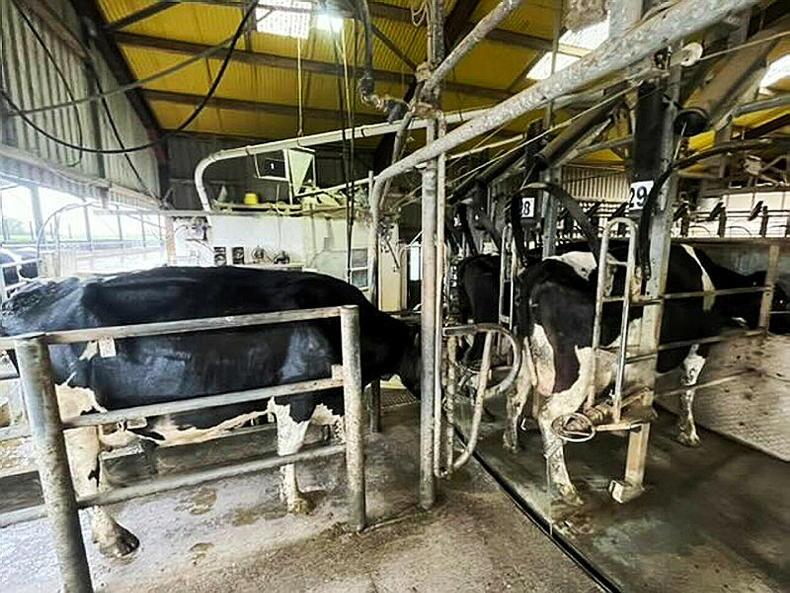
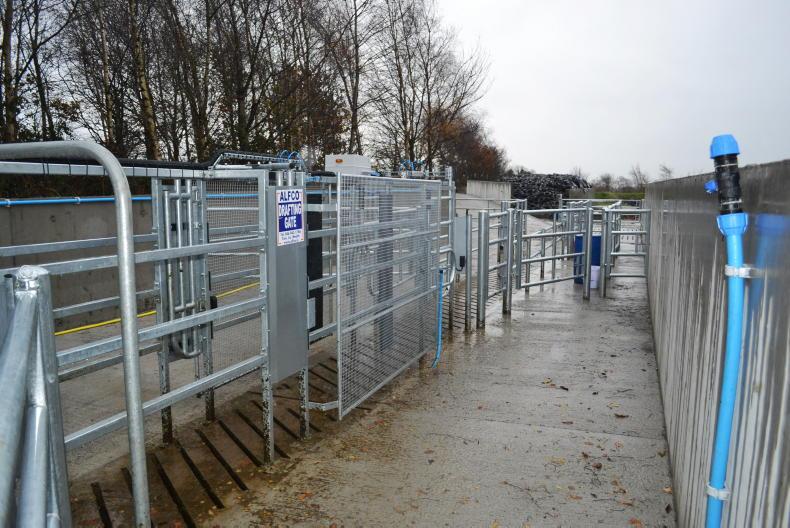
Manually drafting out cows takes time and, inevitably, it ends up interrupting the flow of milking and causes frustration for farmers and livestock alike.
Whether it’s drafting cows for AI or veterinary treatments, it often means needing a second person in the yard or running the risk of missing cows.
That’s where an automatic drafting gate comes in handy. The system identifies cows through electronic tags or collars as they leave the parlour.
Cows selected for drafting are automatically diverted into a separate pen, while the rest of the herd continues out to the paddock.
Any farms with collars will already have a drafting gate as it’s an essential component of the system, which is why we have also included them. Cows can be selected for drafting through a computer, an app or from the milking parlour itself, depending on the system installed.
Collars
With their inclusion in TAMS III in 2023, cow collars/boluses/tags have seen a large number of farmers invest in the technology to reduce labour demands around breeding, with some farmers viewing breeding as being as tough as calving due to moving from one busy season into the next.
Essentially, collars – or the heat-detection bolus or tag equivalent – are purchased as a heat-detection aid. During breeding, they identify cows in heat based on a number of metrics, the main one being spikes in activity. Instead of the farmer having to observe cows four or five times per day or apply tail paint and scratch cards, the collars notify the operator of which animals are in heat.
They also outline what stage of the heat cycle the animal is at, which in theory provides an estimate of the ideal window for insemination with both conventional and sexed semen.
With the rise in popularity of sexed semen, this technology should increase the chances of success, as decisions on whether or not to use a sexed straw on a cow that may be past the ideal window can be based on data rather than guesswork. This is certainly working well on some farms, but the technology is never 100% accurate.
In fact, conception rates to first service in many Irish herds now using collars haven’t necessarily improved when compared with results achieved before collars were installed.
Advantage
A good operator achieving strong breeding results without collars won’t necessarily be outperformed by an operator using the technology. However, the big advantage is the time saved and the greater flexibility they offer. Anyone working on the farm can draft out cows based on the information provided by the collars, while previously the owner/operator may have had to work right through the breeding season to ensure cows weren’t missed.
Booster stations are available that can aid in breeding of maiden heifers on outblocks as well, with many farmers using heat-detection collars now no longer requiring a bull, both a financial saving and a health and safety benefit.
As well as heat detection, collars can help to identify potential animal health issues earlier than they might otherwise be picked up visually.
Alerts are generally based on a reduction in activity levels or a drop in rumination time, which can indicate that something is wrong with the cow.
Both Niall and Conor rated heat detection aid as 7/10, noting that they were a great labour-saving tool but on the upper side with cost, while drafting gates were rated as 9/10 by Conor and 7/10 by Niall, who has a simple manual drafting system on his own farm that suffices.
Table 1 charts the breakdown of the scoring for each of the 10 items, with the audience vote generally tallying with that of Niall and Conor’s.
Interesting points were made by both regarding expenditure and labour saving. When questioned about expenditure and if there was a fixed amount in c/l that was reinvested in to the farm, Niall said: “We generally do it as a third, a third, a third. One third is from savings, one third is from cashflow and one third is borrowed.
“That went out of the window a few years ago when we bought land, but we generally try and work off that,” he said.
Conor, who works as a research officer in Moorepark, exploring labour and people on farms, highlighted how “an hour saved in spring time on labour could be of more value than two to three hours saved this time of the year” and encouraged farmers to explore what areas of improvement would work best for their specific farm.