Time and time again we see the same areas being highlighted as the leading causes of deaths on Irish farms, namely machinery and falls from heights. Livestock attack is the leading cause of injuries. In 2025, 23 deaths (provisional results) occurred on Irish farms, with 80% of these involving someone over the age of 60, while children are also at a high risk of death or injury from machinery due to their naivety of the danger of such machines among other factors. Through focusing on some key areas within the yard, we could greatly reduce deaths and injuries on farms for years to come.
Machinery and vehicles
PTO covers/guards: ensure all PTO shafts and moving parts are guarded. Grant aid is periodically available to replace old or broken covers, but these should be replaced whenever they become unfit for purpose. Covers/guards include the shaft cover on a PTO, as well as any guard covers on the implement being used itself. It should also be ensured that the PTO is clicking into place correctly, to prevent it sliding off the shaft of either the tractor or the implement, with the former being more dangerous due to the PTO still having power. 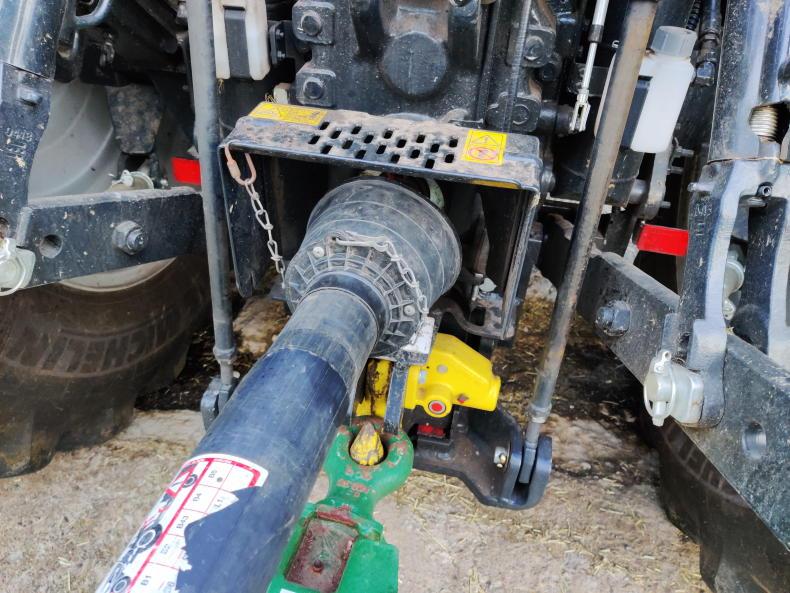
All U-guards and PTO covers should be in place before operating any equipment.
Proper working order: all machinery and vehicles need to be kept in proper working order to ensure their safe use. Brakes and lights are two of the most critical safety features on a machine or vehicle, but are one of the most common issues seen. Both brakes and lights need periodic servicing to ensure they are in good working order, including break-away cables (which are often pulled off when unhitching an implement), parking brakes and hazard lighting. Quad bikes: when using ATVs/quads, always wear an approved helmet and complete required safety training. It is now mandatory that those using a quad bike on farms complete the necessary safety course. Access: children should not have access to a busy farmyard, where they are at risk of being struck by machinery. Safety fencing may be required to prevent children from accessing particularly dangerous areas, eg slurry stores. Passengers should only be carried in vehicles that have an appropriate seat with a seat belt fitted, while children under the age of 14 should under no circumstance operate machinery.
Livestock management
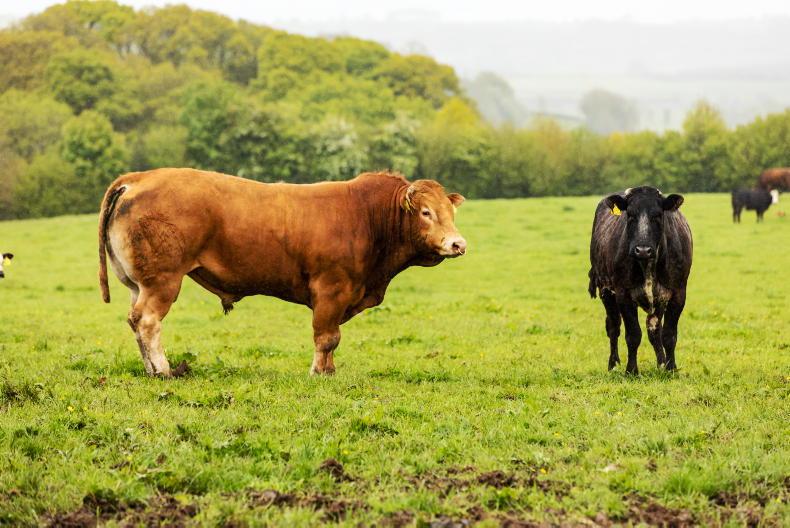
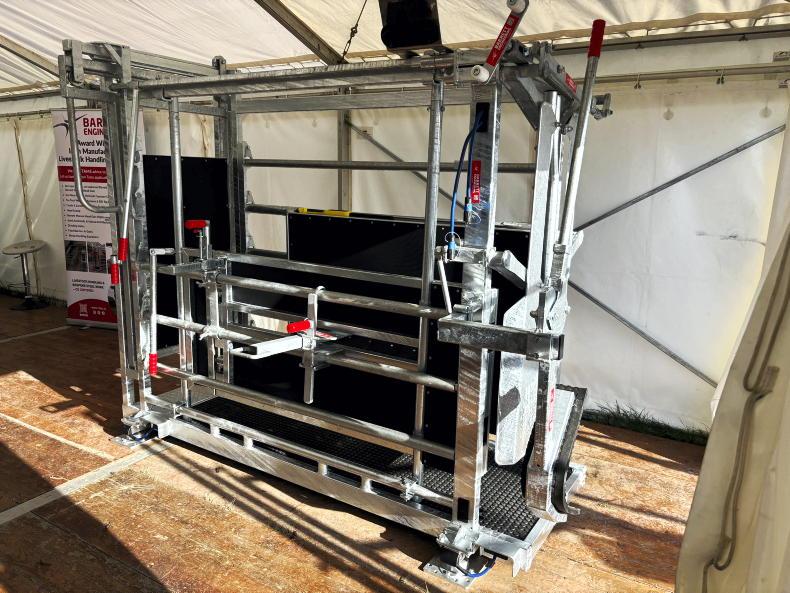
Correct facilities: a lack of proper facilities to handle livestock in a safe manner greatly increases the risk of death or injury. Quite often when we are handling animals in a crush or a calving gate, we are working with someone else, be it a vet, farm worker or a helpful neighbour. Their safety has to be considered in all circumstances as well. Calving boxes: should have a head-locking gate to allow for access to a newborn calf, without putting yourself in any danger. Cattle crushes and chutes should be strong and fit for purpose, and ideally be fitted with a skulling gate and a head scoop for ease of management. Thankfully, the Farm Safety Capital Investment Scheme (FSCIS) under TAMS III gives grant aid for many of these items, at a rate of 60%, with all valid applications approved. Culling dangerous animals: freshly calved cows, stock bulls, rams and stallions are the most dangerous animals on-farm. Temperament in freshly calved cows usually eases with time post-calving, but you do have to ask yourself the question as to if it is worth the risk having a particularly dangerous animal on your farm? Stock bulls are the same; while they might only be dangerous at certain periods of the year, farmers who spent good money on purchasing a bull will often be unwilling to cull them based on their temperament. In any case, herding of cows with a stock bull present should always be done from the safety of a vehicle, with appropriate signs put in place to warn people of the presence of a stock bull.
Working at heights/construction
Correct equipment: falls from heights or being hit from falling objects, as mentioned, are two of the leading causes of deaths on Irish farms. Recent storms have left many roofs requiring repair, while at the same time weakening the roof to complete said repairs. Only competent individuals should carry out any repairs, with these ideally done from the safety of a mobile elevated work platform (MEWP), more commonly known as a cherry picker, or a safety cage attached to a front loader or telehandler. When working directly on the roof surface, provided it has been assessed as safe to do so, use of a crawl board will help to spread your weight across a greater surface area.Where scaffolding is used, the scaffold should be in good working order, laid on a firm and level base and erected by trained professionals.
Clear roof lights: clear roof lights, or skylights, are the biggest risk in relation to someone falling through a roof structure. The underside of the roof should be inspected to identify any roof lights which have been painted over. These, plus any functioning roof lights, should be clearly cordoned off to prevent accident or injury when working on a roof. It is also strongly recommended that safety cages be placed under these, with grant aid again available for anyone looking to retrofit these.
Chemical safety
Safe use of chemicals: chemicals should only be used by a competent operator who has the appropriate certification, where required. Sprayer safety training courses are mandatory for anyone using herbicides or pesticides on their farm, with qualified operators issued a PU (professional user) number. Sprayers used on-farm must also be checked and certified every three years to ensure they are fit for use.The appropriate PPE must be use when handling chemicals, including sheep dips and pour-ons for the control of flystrike. Coveralls, gloves, masks, boots and eye protection must always be worn for your own safety. Spent sheep dip and washings from sprayers should be diluted down appropriate levels (eg one-part dip: three parts-water for sheep dip) and disposed of in a correct manner.
Storage: animal medicines, fertilisers, and sprays should all be securely stored under lock and key to prevent unauthorised access to them. Chemicals should be stored on drip trays to catch any run-off, while an absorbent material should be available for any spills. Once drums of chemicals have been emptied, they should be triple rinsed with water, punctured to prevent them being used in the future and then recycled at an appropriate facility.
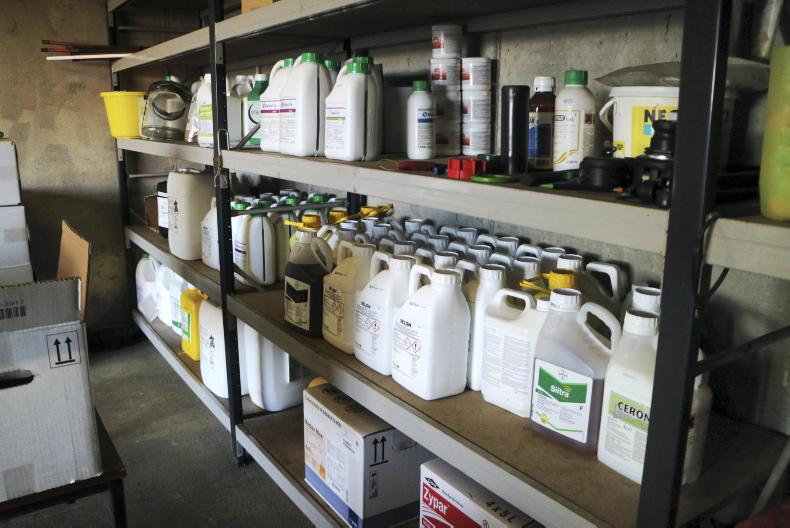
An example of a well organised chemical store.
Slurry gases
Agitating slurry: one of the highest risk jobs completed on farms, with many deaths attributed to people who have succumbed to slurry gases. Slurry gas is a highly lethal mix – primarily hydrogen sulphide, methane, carbon dioxide and ammonia – released when the crust on slurry is disturbed from agitating. Hydrogen sulphide is the most dangerous component. At low levels, it smells like rotten eggs. However, at fatal concentrations, it instantly knocks out your sense of smell and paralyses the nervous system, causing sudden collapse and death within a single breath. Gases like carbon dioxide and methane displace oxygen in the air, leading to asphyxiation.
To help to reduce the risk of the above happening, the following three-step rule should be implemented:
Evacuate: remove all livestock and persons out of the shed or any shed sharing an air space in which agitation is taking place. Pets or farm dogs should be secured away and children removed from the farmyard.Ventilate: open any doors available, to allow as much air flow into the shed as possible. Ideally, agitate on a windy day. This should be done before the agitator enters the tank. Two people should work together for safety. Agitate: once the agitator is switched on, exit the tractor and remove yourself away from the building for 10 minutes. This will allow any trapped gases under the crust of the slurry to escape into the atmosphere.







SHARING OPTIONS