The Irish Farmers Journal attended the Teagasc and Goldcrop farm walk and demo on John Stokes’ farm in Co Cork. Italian ryegrass, Westerwolds and brassicas were the main options for extending feed stocks that were discussed. Where farms are short on silage, it will be part of the solution by perhaps giving 10% to 15% more feed.
Grass crops
Westerwolds and Italian ryegrass are the main options. These grasses will have vigorous production up to next spring. They also have the most flexibility as they can be grazed, zero-grazed or baled for silage. Italian ryegrass can remain productive for two to three years, while Westerwolds grass is productive for up to 15 months. They can both grow in low temperatures and have the best capacity for rapid growth in the back end of the year. The earlier your crop can be sown, the more productive it will be.
If you are planning to grow the grass crops on a livestock farm, fields that are due to be reseeded in the next year or two are most likely the best fit. For livestock farmers, be aware that growing these crops on a grazing platform will increase your stocking rate across the farm. This will have its own implications for the remainder of the grazing season. It is well worth thinking it through – out-farms where these crops could be grazed by young stock or baled would work quite well.
According to Patrick Cashman of Goldcrop, “you can expect two to three grazings between October and March if sown in early August. With the recent rain and soil temperatures remaining high, establishment will be faster than normal for this time of year”. Spreading 3.5 bags of 18:6:12 to the acre or slurry and CAN is recommended to make up the high potassium requirements. Fertiliser should be applied as per nitrogen and phosphorous directives. The crop can be sprayed off and reseeded with perennial next spring or left for its productive lifetime.
There is no denying that growing these crops will be expensive feed, according to Patrick. It will cost around 20c/kg DM baled which will be comparable to buying straights. Where growing these crops is looking very viable is from the point of view of feeding – it is easier to feed them out. At least half of a cow’s diet must be forage intake and these crops can help to bulk out requirements. There is expected to be 30 to 40 times more Westerwolds grown this year than normal.

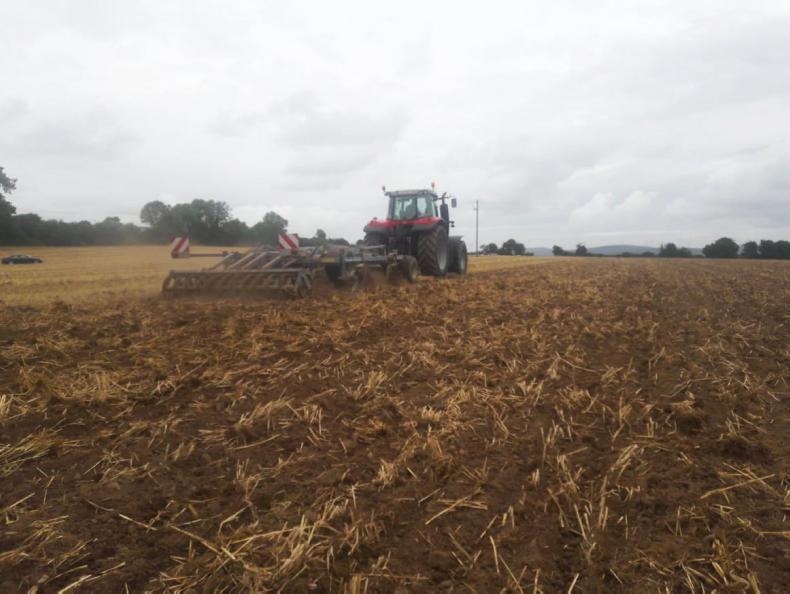
James Fleming, Teagasc, John Stokes, tillage farmer, and Michael McCarthy, Teagasc, explain the importance of good cultivation when sowing forage crops.
Brassicas
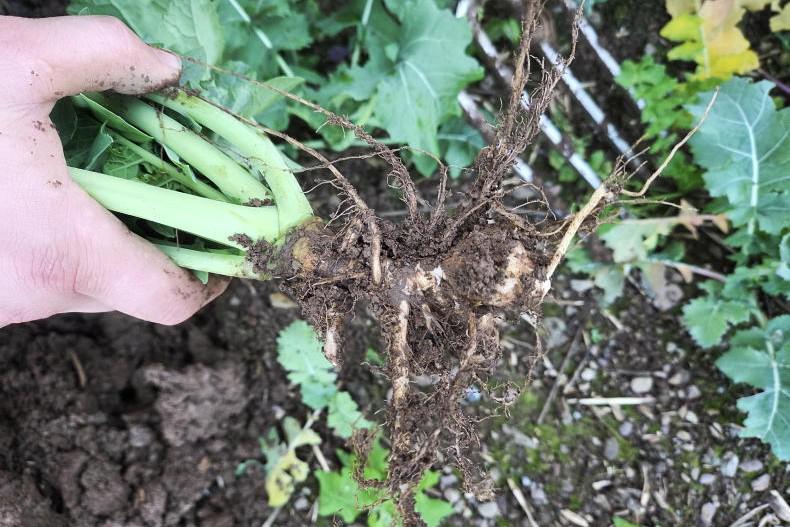
The other option to fill fodder stocks is to grow a brassica crop such as rape, or a hybrid of rape and kale, eg Redstart, Gorilla or Interval. Emer Kennedy of Teagasc stressed the importance of selecting dry paddocks for growing brassicas that are intended for grazing. “Ensure you can graze the crop length ways to improve utilisation and keep labour to a minimum,” she said.
If planning to grow brassica crops on arable farms, the best option is to move young stock or dry cows out to the fields to graze them. This means having adequate fencing and being able to feed silage or straw to balance the diet.
Baling these crops is not advised due to the low DM and high nitrates making them difficult to preserve. They can be zero-grazed and hybrid varieties will give a good regrowth if they are not cut too low.
According to Michael McCarthy and James Fleming of Teagasc, “zero grazing is an option if ground conditions allow it. However, if growing a winter fodder crop on an arable farm, it may not suit the tillage farmer to have a lot of traffic on the land.” Therefore, the ryegrass and Westerwolds may be the better options for baling only a few dry days are needed to get in and out of the field.
Emer Kennedy outlined considerations to be made when feeding forage rape or similar crops.
If deciding to grow brassica crops, animals should be given a mineral bolus containing iodine and copper. Cows must be introduced on to the crop slowly to allow the rumen to adapt and prevent acidosis. Use straw or silage to allow the microbes in the rumen to adapt. Have a runback area while strip grazing. Fencing needs to be of a good standard as cattle can gorge themselves on the feed which is potentially serious.
Cows should be taken off the brassica crop one month before calving. Feeding brassicas in frosty conditions is not recommended as the fermentation in the rumen is affected. If frost does occur, avoid moving the fence until there is a thaw in the middle of the day. For milking cows, no more than 25% of the diet can be brassicas as milk can be tainted with excessive amounts. For late-lactation animals, this is approximately 3.5kg DM.
Cost
These feeds will not be cheap. The total establishment cost of Westerwolds or Italian ryegrass is estimated at €180 to €190 per acre. Establishment costs for brassica crops is roughly €55 to €65 per acre. Depending on whether you want to graze, bale or zero-graze the crop, there will be additional costs.
James Fleming of Teagasc said: “With the recent rain, grass growth will recover to some extent. Assess what fodder you have and what you need. A decision can then be made from there if the deficit justifies growing a winter forage crop.”
Expensive feed is better than no feed, so if the decision is to grow a crop make your intentions known to your merchant.
Planning and full understanding was encouraged when entering into agreements with other farmers for contract growing. Ensure all parties know what is in store for the period of the agreement. Having a signed contract can help to remove any ambiguities and ensure that the result will be a positive one for the individuals involved.
With many tillage farmers establishing catch crops to bale, zero graze or to graze livestock, there are a number of potential risks to consider:
Grass seed: with ryegrass species such as Westerwolds now included in single and multi-species cover crop mixes, the risk of viable seed heads developing can be high if not managed correctly. If seed heads appear then the crop must be topped or mowed immediately. Regrowth: with any catch crop comes the risk of volunteers and regrowth in the next crop. Consider how the species may have to be controlled in subsequent crops before sowing. Drilling: good soil to seed contact is essential for crop establishment. Ensure there is enough tilth to cover the seed and roll afterwards.Rotations: catch crops have the potential to disrupt rotations if care isn’t given to deciding cover crop choice. Avoid growing the same family of plants which are included in the rotation. Soil damage: compaction and poaching caused by grazing livestock could cost more in the long term. Machinery can also cause compaction. Access to ground: ensure the terms of when you can access your land again are agreed as a poor autumn or spring may delay harvesting or grazing of the catch crop until late spring. Payment: depending on whether the cover crop is being grazed, zero-grazed or baled, ensure full or partial payment is secured before drilling the crop.
The Irish Farmers Journal attended the Teagasc and Goldcrop farm walk and demo on John Stokes’ farm in Co Cork. Italian ryegrass, Westerwolds and brassicas were the main options for extending feed stocks that were discussed. Where farms are short on silage, it will be part of the solution by perhaps giving 10% to 15% more feed.
Grass crops
Westerwolds and Italian ryegrass are the main options. These grasses will have vigorous production up to next spring. They also have the most flexibility as they can be grazed, zero-grazed or baled for silage. Italian ryegrass can remain productive for two to three years, while Westerwolds grass is productive for up to 15 months. They can both grow in low temperatures and have the best capacity for rapid growth in the back end of the year. The earlier your crop can be sown, the more productive it will be.
If you are planning to grow the grass crops on a livestock farm, fields that are due to be reseeded in the next year or two are most likely the best fit. For livestock farmers, be aware that growing these crops on a grazing platform will increase your stocking rate across the farm. This will have its own implications for the remainder of the grazing season. It is well worth thinking it through – out-farms where these crops could be grazed by young stock or baled would work quite well.
According to Patrick Cashman of Goldcrop, “you can expect two to three grazings between October and March if sown in early August. With the recent rain and soil temperatures remaining high, establishment will be faster than normal for this time of year”. Spreading 3.5 bags of 18:6:12 to the acre or slurry and CAN is recommended to make up the high potassium requirements. Fertiliser should be applied as per nitrogen and phosphorous directives. The crop can be sprayed off and reseeded with perennial next spring or left for its productive lifetime.
There is no denying that growing these crops will be expensive feed, according to Patrick. It will cost around 20c/kg DM baled which will be comparable to buying straights. Where growing these crops is looking very viable is from the point of view of feeding – it is easier to feed them out. At least half of a cow’s diet must be forage intake and these crops can help to bulk out requirements. There is expected to be 30 to 40 times more Westerwolds grown this year than normal.
James Fleming, Teagasc, John Stokes, tillage farmer, and Michael McCarthy, Teagasc, explain the importance of good cultivation when sowing forage crops.
Brassicas
The other option to fill fodder stocks is to grow a brassica crop such as rape, or a hybrid of rape and kale, eg Redstart, Gorilla or Interval. Emer Kennedy of Teagasc stressed the importance of selecting dry paddocks for growing brassicas that are intended for grazing. “Ensure you can graze the crop length ways to improve utilisation and keep labour to a minimum,” she said.
If planning to grow brassica crops on arable farms, the best option is to move young stock or dry cows out to the fields to graze them. This means having adequate fencing and being able to feed silage or straw to balance the diet.
Baling these crops is not advised due to the low DM and high nitrates making them difficult to preserve. They can be zero-grazed and hybrid varieties will give a good regrowth if they are not cut too low.
According to Michael McCarthy and James Fleming of Teagasc, “zero grazing is an option if ground conditions allow it. However, if growing a winter fodder crop on an arable farm, it may not suit the tillage farmer to have a lot of traffic on the land.” Therefore, the ryegrass and Westerwolds may be the better options for baling only a few dry days are needed to get in and out of the field.
Emer Kennedy outlined considerations to be made when feeding forage rape or similar crops.
If deciding to grow brassica crops, animals should be given a mineral bolus containing iodine and copper. Cows must be introduced on to the crop slowly to allow the rumen to adapt and prevent acidosis. Use straw or silage to allow the microbes in the rumen to adapt. Have a runback area while strip grazing. Fencing needs to be of a good standard as cattle can gorge themselves on the feed which is potentially serious.
Cows should be taken off the brassica crop one month before calving. Feeding brassicas in frosty conditions is not recommended as the fermentation in the rumen is affected. If frost does occur, avoid moving the fence until there is a thaw in the middle of the day. For milking cows, no more than 25% of the diet can be brassicas as milk can be tainted with excessive amounts. For late-lactation animals, this is approximately 3.5kg DM.
Cost
These feeds will not be cheap. The total establishment cost of Westerwolds or Italian ryegrass is estimated at €180 to €190 per acre. Establishment costs for brassica crops is roughly €55 to €65 per acre. Depending on whether you want to graze, bale or zero-graze the crop, there will be additional costs.
James Fleming of Teagasc said: “With the recent rain, grass growth will recover to some extent. Assess what fodder you have and what you need. A decision can then be made from there if the deficit justifies growing a winter forage crop.”
Expensive feed is better than no feed, so if the decision is to grow a crop make your intentions known to your merchant.
Planning and full understanding was encouraged when entering into agreements with other farmers for contract growing. Ensure all parties know what is in store for the period of the agreement. Having a signed contract can help to remove any ambiguities and ensure that the result will be a positive one for the individuals involved.
With many tillage farmers establishing catch crops to bale, zero graze or to graze livestock, there are a number of potential risks to consider:
Grass seed: with ryegrass species such as Westerwolds now included in single and multi-species cover crop mixes, the risk of viable seed heads developing can be high if not managed correctly. If seed heads appear then the crop must be topped or mowed immediately. Regrowth: with any catch crop comes the risk of volunteers and regrowth in the next crop. Consider how the species may have to be controlled in subsequent crops before sowing. Drilling: good soil to seed contact is essential for crop establishment. Ensure there is enough tilth to cover the seed and roll afterwards.Rotations: catch crops have the potential to disrupt rotations if care isn’t given to deciding cover crop choice. Avoid growing the same family of plants which are included in the rotation. Soil damage: compaction and poaching caused by grazing livestock could cost more in the long term. Machinery can also cause compaction. Access to ground: ensure the terms of when you can access your land again are agreed as a poor autumn or spring may delay harvesting or grazing of the catch crop until late spring. Payment: depending on whether the cover crop is being grazed, zero-grazed or baled, ensure full or partial payment is secured before drilling the crop. 





SHARING OPTIONS