



Young lambs are especially prone to injuries or carcase damage through suboptimum handling. A number of factory procurement officials have raised the importance of correct handling techniques to prevent carcase bruising.
The most obvious risk is through catching lambs by the wool as opposed to catching and restraining lambs with one hand under their neck and one on their rump/tail region.
Bruising can also occur where lambs are transported at too high a stocking rate or where sheepdogs are used in holding pens or to fill races and animals are moving at such a speed that carcases are bruised due to contact with penning, gates etc.
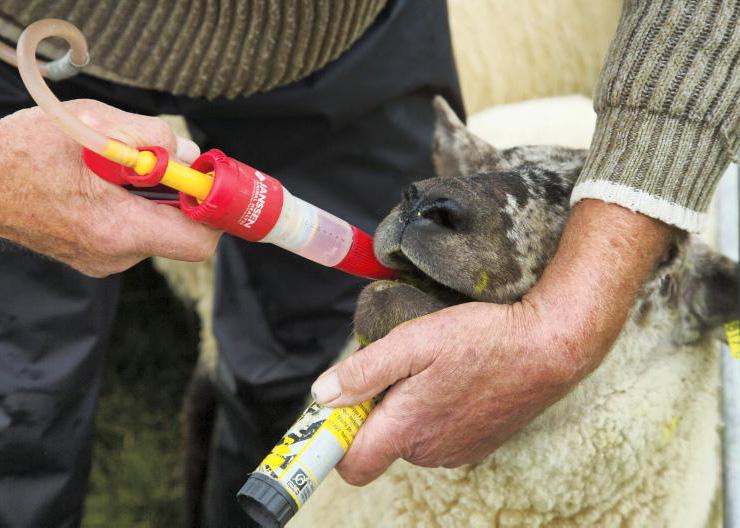
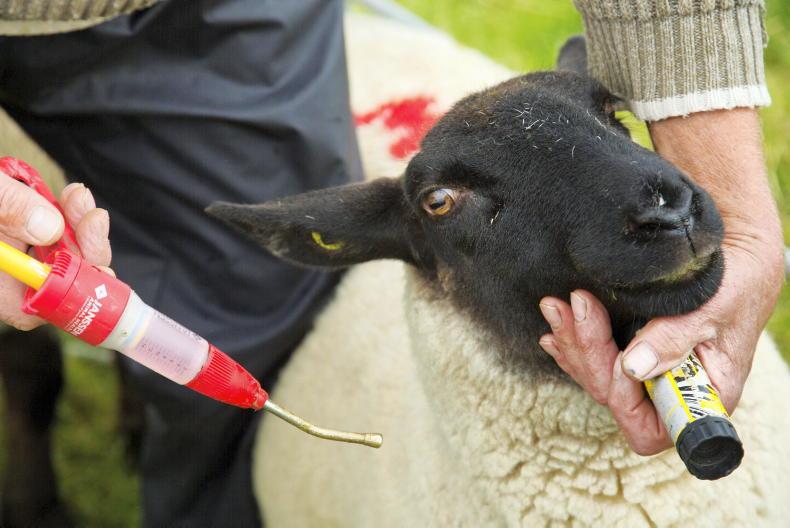
There is also a high risk of injuries when dosing or administering mineral boluses with the Department of Agriculture’s regional veterinary laboratories each year reporting on cases where lambs have died due to dosing gun injuries to the back of their throat or boluses becoming lodged in the lining of the throat and lambs succumbing to infections.
Correct dosing techniques
The Sustainable Control of Parasites in Sheep (SCOPS) advice on administering anthelmintics effectively highlights that the correct dosing technique ensures the animal swallows the full dose avoiding injury from the gun nozzle penetrating the soft tissues at the back of the mouth.
Their advised technique including the use of small nozzles for lambs includes.
Injection sites
Where administering intramuscular injections, the preferred site of inserting the injection is the neck region. The rump region should be avoided as this is a much higher value area of the carcase which will be greatly devalued if an infection of abscess occurs.
The neck or shoulder region is also the most suitable for subcutaneous injections with the exception of long-acting anthelmintics or vaccines which specify administering at the base of the ear.
The SCOPS advice adds that “care should be taken to ensure the needle is inserted correctly by parting the fleece and should be withdrawn from the skin with pressure applied at the point of insertion for several seconds to prevent leakage. Also ensure the needle isn’t inserted through the skin, resulting in the solution by-passing the animal completely”.



SHARING OPTIONS