


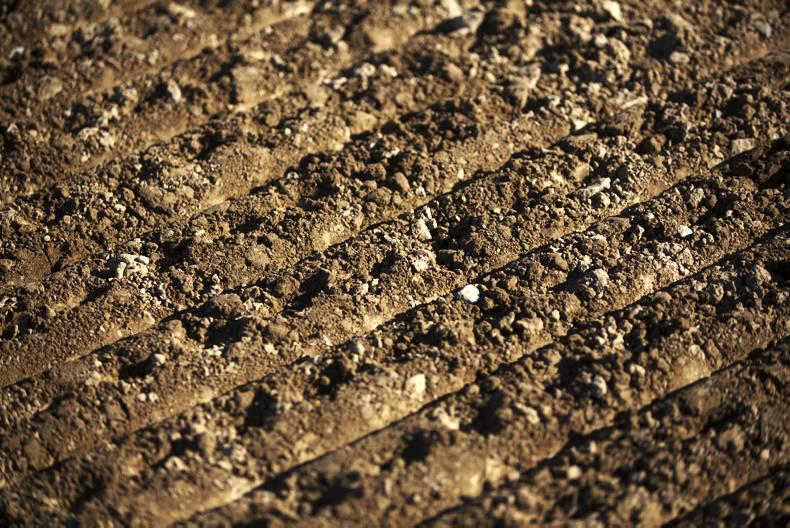
Soil science is one of the fundamental sciences of modern agriculture. Competitiveness and sustainability are two key areas in the Teagasc research programme, and soil science is very important to both. It underpins many aspects of the Teagasc research and advisory programmes including forage and crop production, land drainage and improvement, sustainability and in particular water quality and greenhouse gas emissions, soil quality and compaction. Soil type is an important factor in all of these areas, and the new Soil Information System (SIS) will provide significantly more detailed information of the 213 soil series in Ireland that make up 58 soil associations.
Soil fertility is a key determinant of productivity of our pastures, tillage and horticulture crops. Nutrient advice seeks to ensure that the growing plant has sufficient nutrients for optimum growth, without supplying too much nutrients such that the excess could end up transferring to water bodies or to air. Evidence from soil samples submitted for analysis through Teagasc suggests that many of our soils are sub-optimal when it comes to soil phosphorus, potassium levels and soil pH. This affects productivity with, for example, a pasture yield penalty of 1.5t of dry matter per hectare or greater. Correcting these deficiencies through judicious addition of nutrients is a crucial element of sustainably growing food production. Increasingly, nutrient advice will be tailored to soil type, because different soils contribute different amounts of nitrogen and phosphorus from their natural mineralisation and cycling processes.
Soil IMPROVEMENT
Soil improvement is a very important way to increase the productivity of our soils. Due to a combination of rainfall amounts and soil drainage characteristics, many soils in Ireland are wet and require to be drained. The right drainage solution depends on the unique soil characteristics of each site, and careful examination of the problem and formulation of the drainage plan is required for a successful solution. The Teagasc Heavy Soils Programme aims to improve the profitability of dairy farms on heavy soils through the adoption of key technologies including high-quality pasture management, land improvement strategies and efficient herd management.
Sustainability is a key issue in modern agriculture, and our soils are intimately involved. Excess nutrients can transfer to water bodies causing pollution. Soil nitrogen reactions can lead to the formation and release of nitrous oxide, a powerful greenhouse gas. Soil type is of great importance in both these situations, and therefore an enhanced knowledge and classification of our soils is helpful in identifying areas of highest risk, quantifying the activity and devising strategies to minimise these risks. The Agricultural Catchments Programme, funded by the Department of Agriculture, Food and the Marine and run by Teagasc, works with 300 farmers across six catchments to evaluate the environmental and economic effects of the nitrates action programme measures implemented under the Nitrates Directive.
The programme aims to maximise its effectiveness by encouraging farmer participation and disseminating information from the programme to a wide audience. Much research is also carried out on nitrous oxide emissions, to better understand the soil types, conditions and management factors that control them, and how to reduce them. It is not an easy challenge, but there are some promising possibilities under development. Related to greenhouse gas emissions is the process of carbon sequestration. There is evidence that our grassland soils are sequestering carbon, which could act as a counterbalance to agricultural greenhouse gas emissions. The rate of soil carbon sequestration is affected by soil type among many factors. Research is continuing to elucidate the factors involved and to investigate how the rate can be increased by management practices.
QUALITY AND HEALTH
Maintaining the quality and health of our soils is paramount to maintaining their long-term productivity. Issues such as compaction, soil organic matter content, and soil biodiversity are all important components of soil health and quality, and they are important issues for our research and advisory programmes. There is an obvious interaction with soil type in terms of issues such as trafficability and resulting compaction and soil organic matter content. Therefore, the enhanced information in the SIS is of value in addressing these issues.
Finally, more accurate soil classification allows for a better evidence base in policy making. For example, the unique problem posed by high rainfall, low evapotranspiration, soil permeability and topography in many Irish soils contributes to making them wet. With the more detailed soil classification in the new SIS, Teagasc scientists are able to provide greater scientific evidence to the Department of Agriculture, Food and the Marine which is exclusively responsible for mapping and delineation of eligible areas of natural constraint, so that this constraint is now recognised as one of the eligibility criteria for classification of areas of natural constraint. These examples show how important soils and soil science are to the Teagasc programme and to Irish agriculture. The completion of the Irish SIS is a major milestone and a major piece of infrastructure that will help us to mind and manage our soils, getting the most from them in a sustainable way, so that we can ensure they are at least as productive for future generation.




SHARING OPTIONS