The latest Bovine Viral Diarrhoea (BVD) National Eradication Programme results provided by Animal Health Ireland show a 24% reduction in the number of suspect or confirmed BVD-positive calves born in 2026. The results show that there were 424 calves with positive or inconclusive results from tissue tag testing up to the end of October compared to 560 calves identified up to 22 October 2025 as reflected in Figure 1.
There has also been an associated reduction in the number of suspect or confirmed breeding herds with at least one BVD suspect or confirmed calf born in 2026. This figure stood at 170 at the end of October compared to 196 on 22 October 2025 equating to a 13.3% reduction, as reflected in Figure 2.
The reduction in cases is positive following a spike in the incidence of BVD in 2025 with the level of prevalence on target to match the incidence of 462 suspect of confirmed calves and 197 suspect or confirmed herds recorded in 2024.
High risk areas
Despite the reduction, it is worrying that there continues to be black spots or high-risk areas where there are outbreaks of the disease.
These outbreaks have been the focus of the BVD implementation group (BVD-IG) and the Targeted Advisory Service on Animal Health or TASAH over the last two years and will remain in the spotlight.
Table 1 details the number of suspect or confirmed cases on a per county basis up until 23 October 2026.
As can be quickly seen, Cork has had by far the highest number of cases. This may be reasonable to expect given the high number of herds and cows in the county but the Irish Farmers Journal understands that a high number of cases have been recorded on a small cohort of farms and reducing these cases is a priority for the BVD-IG and the AHI programme manager.
There have also been some significant outbreaks on individual farms in Limerick, Clare, Monaghan, Tipperary, Laois and Galway with Laois having the highest average figure of 4.3 calves per herd.
At the other end of the scale, there are two counties which have recorded no cases of the disease in 2026 — Waterford and Wexford, while Carlow and Sligo each recorded one case.
Reinfection risk
AHI reports that a challenge in reducing the prevalence is the fact that “almost one in four herds that had a BVD-positive calf will have another one the following year due to environmental contamination. Virus shedding is massive and persists for weeks”.
A five-step cleaning and disinfection protocol is advised to help prevent reinfection (outlined on following page).
Step 1 – protect yourself: wear gloves, masks and waterproof aprons to reduce pathogen exposure.
Step 2 – dry cleaning: remove all visible debris, manure and organic material from walls, floors and crevices.
Step 3 – wet wash: high-pressure wash with detergent to remove fats/grease pre-disinfection.
Step 4 – disinfection: use Department of Agriculture-approved disinfectant. Contact time is critical for virus elimination.
Step 5 – drying: rinse and let dry completely. Leave pens empty for a period before restocking.
Vaccination strategies
Once a herd identifies a BVD suspect or positive case, movements off the farm are restricted. Restrictions can only be lifted following a whole herd test, vaccination and BVD consultation. Blood samples must be taken at least four weeks after removal of the last suspect or confirmed animals.
All breeding animals over 12 months of age are vaccinated by a vet of the farmers choosing.
The vet will also carry out a fully-funded TASAH consultation to identify the source of the outbreak and make farm-specific recommendations to prevent re-infection.
Future of the programme
The Irish Farmers Journal understands that meetings will take place in the coming weeks between AHI and the Department of Agriculture regarding future steps for the programme. Tissue testing remains in place for at least 2027 and all indications suggest that tissue tag testing may well continue in 2028. Farmers are frustrated with tissue tagging continuing for at least another year and there are an increasing number of questions being asked as to what the plan is to bring the eradication plan to a conclusion.
Comment
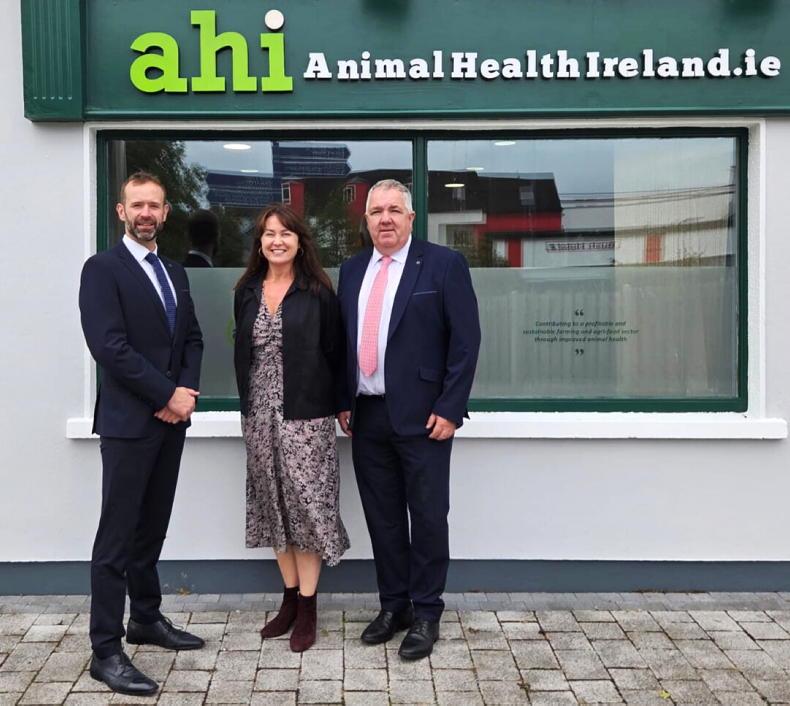
Dr Maria Guelbenzu, AHI’s BVD programme manager said: “Thanks to the huge efforts of farmers, supported by their vets, BVD figures are trending in the right direction. Now is the time to build on this progress and redouble our efforts to eradicate this disease.
“Most farmers are doing the right thing, but infection persists in a small number of repeatedly positive herds, delaying the achievement of BVD freedom for the entire industry. AHI recently met Minister Heydon and we are hopeful that additional Department resources in 2027 will allow us to engage more closely with such herds to break the cycle of infection.
“Now more than ever, we need to get the basics right. The message is simple, tag, bag and test calves promptly and remove virus positive animals quickly.”