The 2026 liver fluke forecast was released last week by the Department of Agriculture and while it predicts a lower risk on average than in recent years, there are plenty of areas where the disease is expected to be prevalent.
Figure 1 and Figure 2 detail results of the Ollerenshaw Summer Index for 2026 and 2025, respectively. The figures in red, in excess of 400, point to the disease being prevalent and posing a risk of significant losses, particularly in sheep, where the disease is left untreated. Figures in orange, from 300 to 400, pose a risk of occasional losses, while figures less than 300 denote little to no disease risk.
Contrasting the two maps shows that there is one area with a higher disease risk in 2026 in north Donegal. This is due to the county not experiencing the same prolonged dry spell and higher rainfall levels, with the southern half of the county witnessing a marginally lower level.
It is worth noting that the Agri-Food Biosciences Institute (AFBI) released their forecast for Northern Ireland in late-October with all monitor sites recording a figure of upwards of 400 on the Ollerenshaw Summer Index.
This means that the disease is forecast to be prevalent in all areas in Northern Ireland this winter.
Beef Health Check
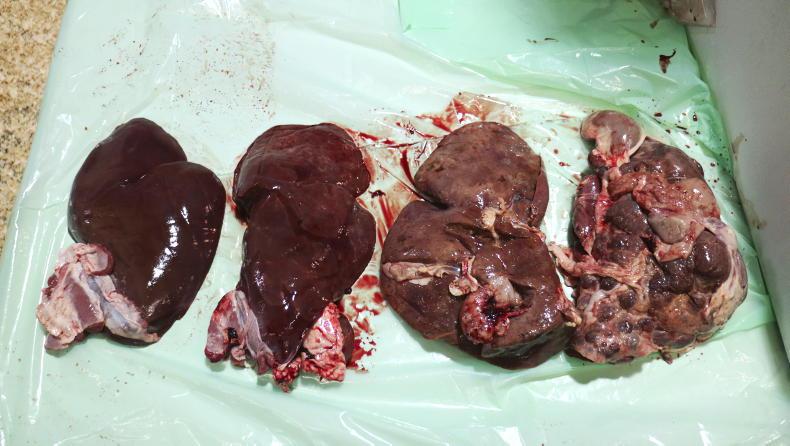
The Beef HealthCheck Programme, which is run by Animal Health Ireland in partnership with Meat Industry Ireland and meat factories nationwide, assesses the health status of livers from cattle in participating plants and report the findings.
It says that as “this year has been unusually dry and warm across the country and liver fluke levels seen in the factories have been correspondingly lower than previous years. To date this year, abattoir examinations showed an average of 33% of herds, with at least one animal with liver fluke damage.
“Active infection in one or more animals was seen in 10% of herds, compared to 13% last year. Counties in the northwest of Ireland were more heavily affected, with 60-80% of herds in Sligo, Donegal, Mayo and Roscommon reported to have signs of liver fluke at slaughter”.
It added that the prevalence within herds is typically low, depending on the farm, with 5% of animals presented to slaughter showing signs of liver fluke damage and 0.9% of animals showing live liver fluke parasites.
The reports can be found online via the Irish Cattle Breeders Federation (ICBF) website for farmers who have slaughtered cattle in participating factories since 2016. Users do not need to be members of HerdPlus to access the tool.
This facility has recently been updated to include more information and benchmark herd prevalence at national and county level. Further details on the programme can be found at https://shorturl.at/kyIZ7.
Disease monitoring
In cattle, liver fluke infestation tends to be chronic resulting in ill-thrift and poor performance. In contrast, sheep can suffer from both acute and chronic liver fluke disease – with acute disease a greater challenge from mid-September through to mid-to-late-January, depending on the year.
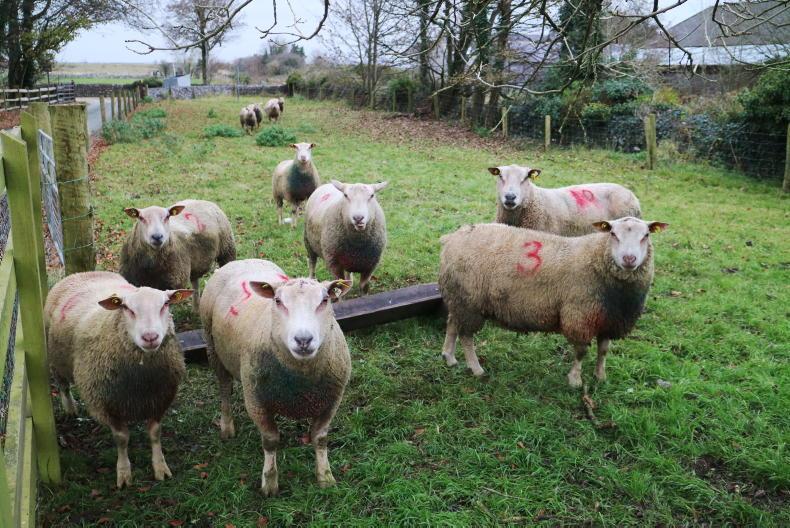
As such, sheep farmers need to be on high alert and utilise all available sources of information, such as the liver fluke forecast, investigating any sudden deaths with post-mortem examination, consulting veterinary practitioners and abattoir reports on the health status of livers.
The latter can also be used to monitor the efficacy of the farm’s control programme.
Chronic infection tends to be a greater issue from mid-December onwards, with characteristic signs including ill-thrift, poor performance, anaemia and bottle jaw appearance.
Out-wintered animals should ideally avoid grazing in areas with a suitable environment for the parasite to thrive.
“Where feasible, and as a long-term control option, areas of farms that provide suitable habitat for the mud snail such as wet muddy areas should be fenced off.”
This is not always possible, but what may be possible is strategic grazing to reduce the risk.
Treatment options
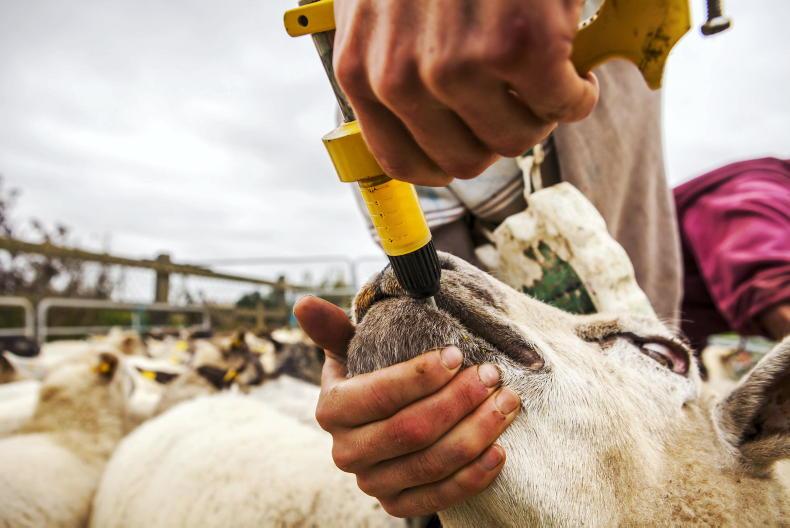
The forecast advises that where there is a history of disease and in high-risk areas, farmers should consult with their vet to devise an appropriate control programme. It says that “when using flukicides to control and treat liver fluke infection, cattle should be treated at the time of housing or shortly thereafter, and sheep in autumn or earlier in the year, where indicated by faecal examination results or prior disease history.
“For sheep, a drug effective against immature and mature flukes should be used to protect against acute disease. In addition, sheep should be moved from affected pasture to prevent re-infection. If the flukicide given to cattle at housing is not effective against early immature fluke, then faecal samples should be taken six to eight weeks after housing and tested for the presence of liver fluke eggs. This will determine whether a follow-up flukicide treatment is necessary.”
Some farmers with cattle opt to delay treatment until the parasite has entered the immature or mature stages, but note that doing so can result in performance being lost. This again reinforces the importance of devising an appropriate control programme. Dairy farmers also need to be careful with the timing of treatment, to ensure that products used satisfy the required withdrawal periods.
Remember also to estimate the weight accurately for animals entering late pregnancy, as the liveweight of animals in late gestation can be upwards of 24% higher.
It is also useful to calibrate dosing or injection equipment before treatment and during treatment if dealing with high numbers.
Repeat treatments
It is critical to note that flukicides do not have persistent activity, meaning that any out-wintered cattle or sheep are at risk of picking up further infection post-treatment and hence follow-up treatments may be necessary, especially if animals remain on high-risk pastures.
Farmers are advised to consult their vet to determine the appropriate interval for repeat treatments. In recent years, the advice was to consider treatment for out-wintered flocks in November, January and April, and possibly more frequent in high-risk areas, or where the disease risk is expected to be higher.
As cattle are much larger animals, they do not succumb to the disease as quickly and therefore rapid deaths are not a characteristic symptom, with the exception of animals with underlying health issues.
Testing options
Faecal sampling can play a role in determining the need to treat for fluke and the efficacy of treatments. However, it is important to point out that at this stage of the year, faecal sampling has significant limitations in sheep. This is because animals can be suffering and, in some cases, succumb to acute liver fluke infestation before parasites reach the mature stage of the liver fluke life cycle and start to shed eggs in faeces.
As mentioned already, testing works well in determining the need to re-treat housed animals or in establishing the efficacy of a treatment.
“In addition, bulk milk testing for liver fluke antibodies may be useful in dairy herds to monitor variation in exposure,” advises the liver fluke forecast.
Rumen fluke
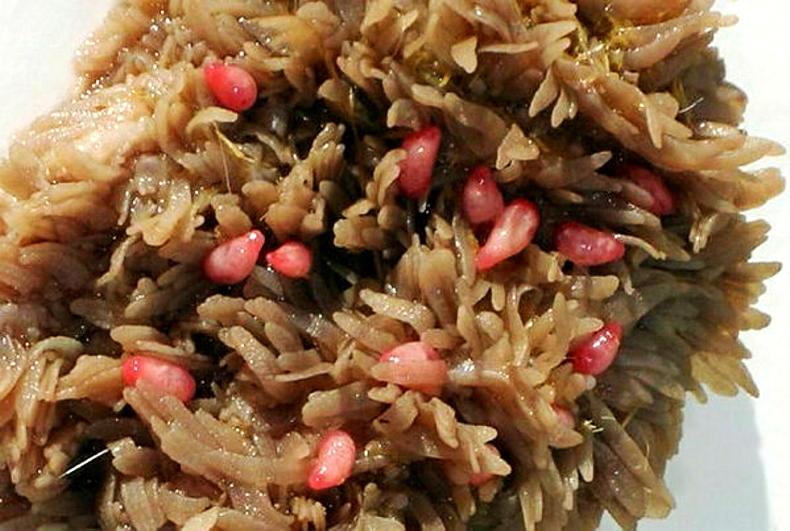
Some vets often comment that if some farmers paid as much heed to liver fluke as they do to rumen fluke, then there would be fewer problems seen. This is due to the fact that rumen fluke is frequently given more credence than it deserves with unwarranted treatments taking place.
The liver fluke forecast highlights that rumen fluke infection is “extremely common, especially in cattle, but only rarely results in disease”. Nevertheless, it is advised that if any symptoms, such as weight loss or diarrhoea, are seen or if there is a previous disease prevalence on the farm, then farmers should consult with their vet with regard to treatment. In cattle, the highest-risk animals are those in their first grazing season along with sheep.
The forecast states; “If juvenile rumen fluke infection is suspected, a test for juvenile rumen flukes should be requested when sending faecal samples for examination to a laboratory as routine parasite examination may not detect this life stage of the parasite. Post-mortem examination may also aid diagnosis”. There are no products licensed on the market for the treatment of rumen fluke and this is another reason to limit use. Products containing the active ingredient oxyclozanide will work.