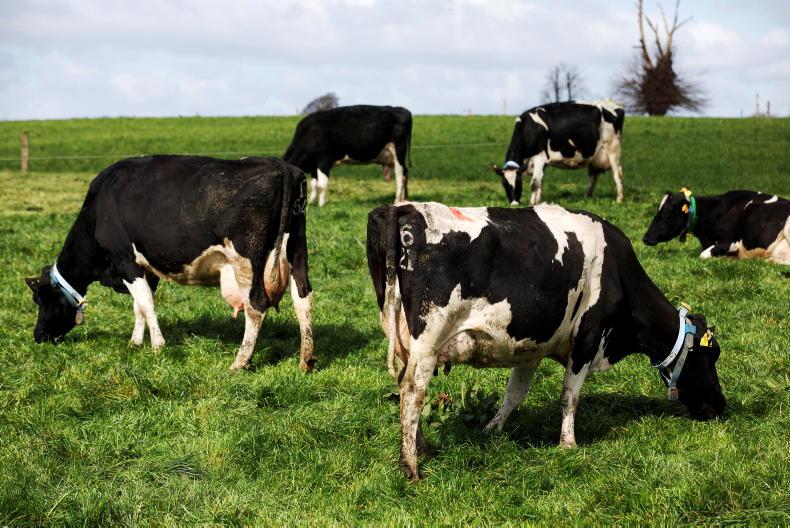
John Barry and his family operate a suckler to store system alongside a smaller dairy calf to beef system, just outside Newtown, Nenagh, Co Tipperary.
The land comprises just over 72ha of land, with about two third of this owned and the remainder rented. The majority of the farm is in grass, with 1.2ha of forage rape and 2.94ha of red clover for silage production also in the mix.
John focuses his efforts on both grassland management and breeding; even when it comes to the dairy beef calves bought in, they come from a known local source which uses quality AI bulls.
Seventy per cent of the herd is served to AI, with a Limousin stock bull mopping up the 50-spring calving and 36 autumn calving cows on farm.
These efforts from breeding would quickly be negated if John didn’t put the efforts in to winter diets that he does, with this starting back in early summer, while also combining home grown forages with the correct concentrate diet.
Willie Boland of Liffey Mills was on one of the stands, and explained some of the requirements of the ruminant diet.
“We have to remember that cattle are ruminants with a four-chamber stomach; they’re not monogastrics. They need fibre, protein and energy in their diet. You need a balanced amount of each of them to make up a proper diet.’’
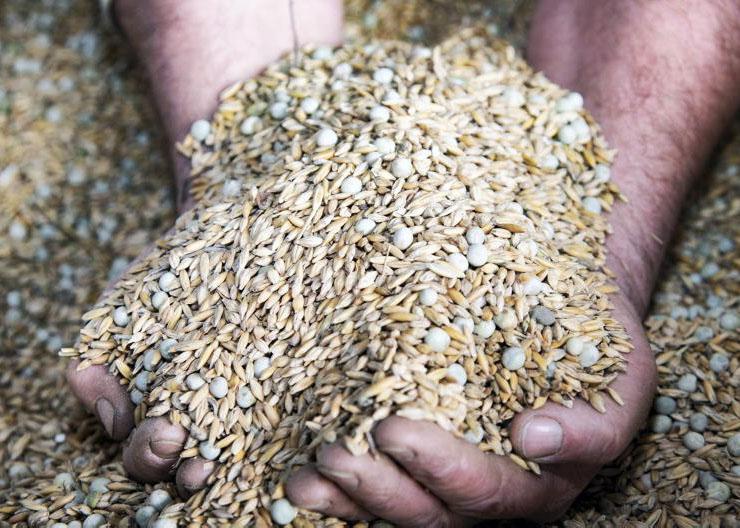
When it comes to energy sources, barley, maize, wheat or oats are the primary choices in Irish beef blends.
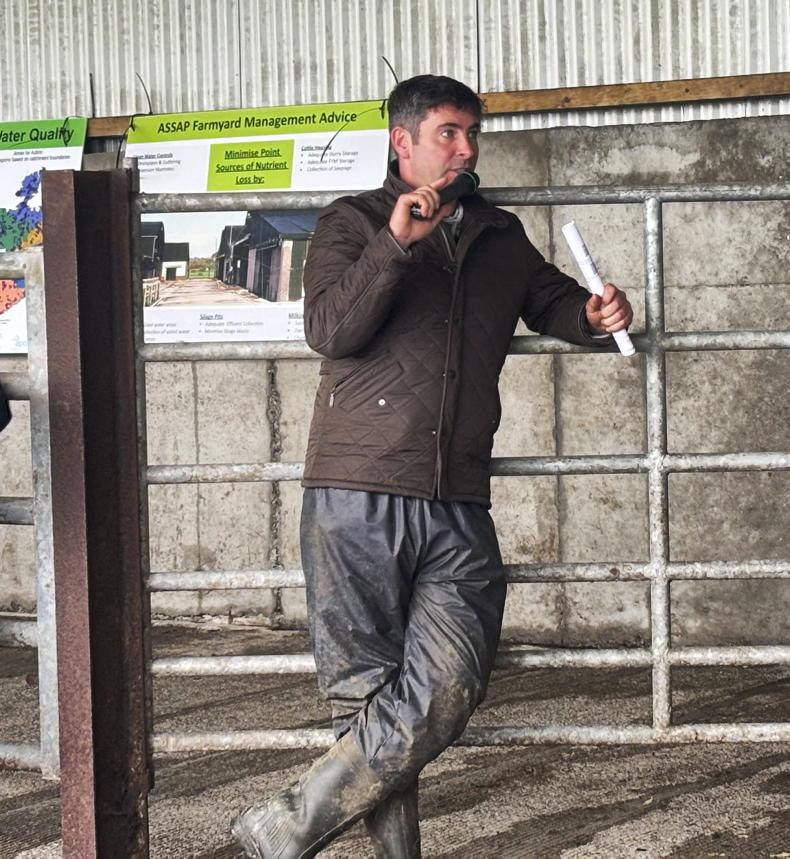
John Barry (host farmer) uses a mix of grass silage, whole crop and red clover to meet the nutritional needs of his stock, combined with a balanced concentrate feed.
Boland noted the huge volume of imported animal feed, with approximately just 15% of our total requirements.
‘’We do need to help out tillage sector before we lose it completely. To help the tillage sector, we need to use more native grains in our mix. It’s about being conscious of what we can grow here [in Ireland] and how we can use it. Comparing the four energy sources listed above on a UFL basis, barley is the base at 1.0 UFL.
“Wheat holds the same rate as barley, while maize is 5% higher at 1.05 UFL while oats is 10% less as 0.9 UFL.
“As a result, a lot of rations are based off native barley and imported maize, which Boland cited as a ‘demand at farm level’ to have a certain amount of maize in finishing diets in particular.
“There are surplus oats throughout the country as a result of a good harvest. There is more recognition on the use of oats now in blends.”
Boland pointed to trials in 2022 in Teagasc Grange in which finishing cattle were fed a two different rations; one containing barely and one which replaced the barley with oats, with no recorded difference in weight gain or fat cover between the two cattle groups.
“Oats have a much higher oil content than barley; barley has an oil content of 2.5% while oats has an oil content of 4%.
“It’s the oil content in oats that we are assuming is giving the extra gain [despite the lower UFL value].
“Where oats is deficient in UFL is the hull,” he added.
“There is a much larger hull on oats than there is in barley.
‘’The big advantage of using oats in a finishing diet is number one it’s Irish and also the digestible fibre content of oats of 29-30%.It’s way ahead of barley, wheat or maize on digestible fibres.
“The inclusion of oats (not fully replacing barley or maize) does lead to a reduced requirement for ingredients such as soya hulls, beet pulp or citrus pulp in the diet.
“In my opinion we have to be conscious of what we can grow in this country and how we can use our own native cereals.’’
Soya is the best-known protein source in the world, stated Boland, pointing to it being a ‘true protein’ in which the animal gets 95% of the protein within soya. Beans and peas are two protein sources that can be grown on Irish farms and are ‘every bit as good’ as protein sources as distillers’ grain and maize gluten, two other common sources of protein within ruminant animal blends.
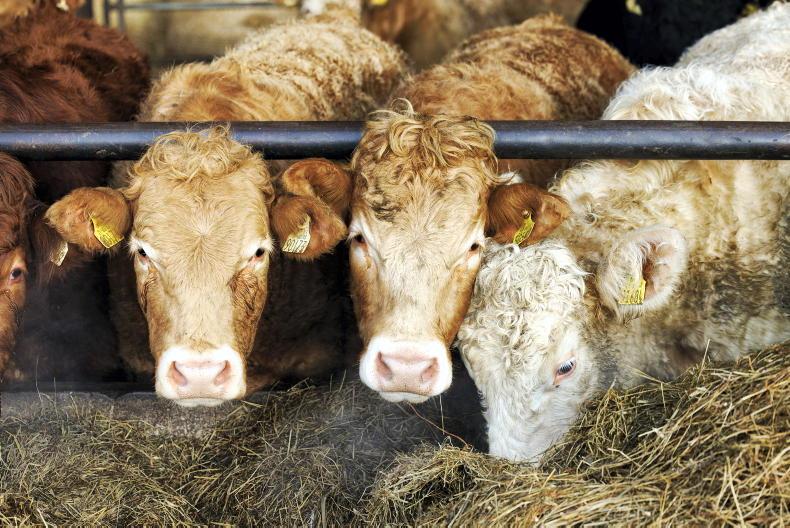
A sample of dairy beef cattle were housed for display on the day and were entering there finishing stage.
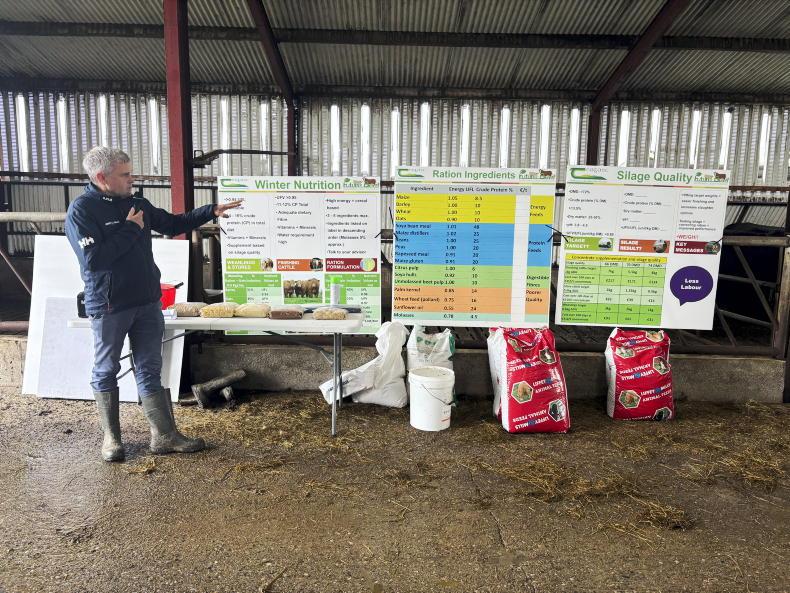
Willie Boland (Liffey Mills) discussing ration ingredients and the effect silage quality will have on feeding rates, with each increased % of DMD in silage the equivalent of 0.5kg of concentrates.
Energy was the primary requirement of these cattle, not protein, in order to put on flesh. Weanlings on the other hand still required a relatively high energy feed but a higher protein feed in comparison to these finishing type animals.
According to Boland 12-13% protein in a finishing diet was perfectly adequate, with a 15-16% protein diet adequate for a weanling diet.
‘’You have to know what you are feeding, what your requirements are and the inclusion of energy, protein and digestible fibres’’ highlighted Boland.
Lesser-value feeds that should be excluded or included at minimal levels include palm kernel, wheat feed (pollard) and sunflower oil.
As per legislation, ingredients in rations have to be labelled in descending order ie the first ingredient listed has the highest inclusion rate within the feed.
Minerals are generally the last ingredient as these have an inclusion of 2-2.5%, with some mixes also containing yeast or other additives to encourage intake.
“We generally include 70-80kg of molasses in each tonne of feed, so anything above this will have an inclusion rate above 7-8%.
“Your top ingredient will be 30-35% of an inclusion rate, while molasses will be about 8%, so from here you should be able to roughly work out the inclusion of each feed’’ stated Boland.
Keeping mixes simple, with four-six ingredients was also a key tip highlighted on the day.
Importance of high quality silage
Silage quality was pointed out to being critical to nearly every livestock enterprise, and while the quality of silage tested in recent years was poor at an average of 66 DMD, averages had risen to 68 DMD of late as farmers become more conscious of the effects good or bad silage have on their system, stated Boland.
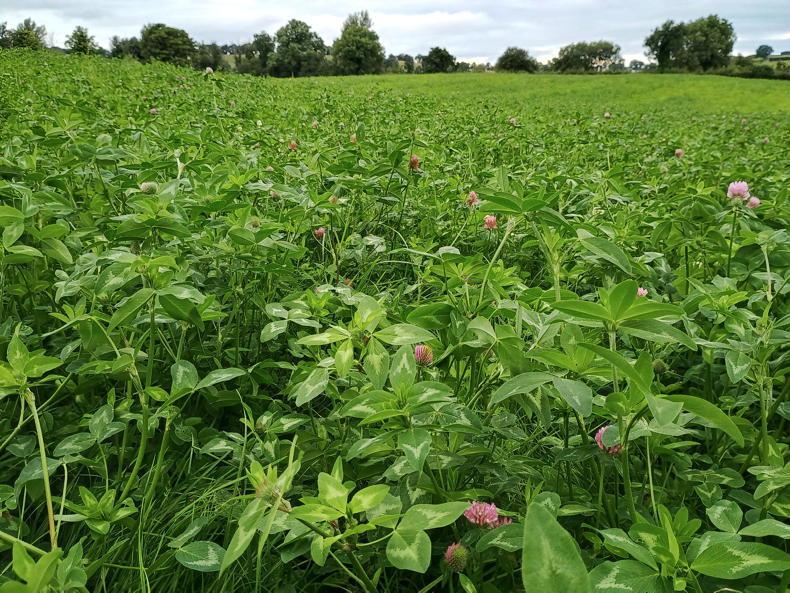
Farmers using red clover silage should be aware that the higher gains seen in stock fed it are a partly due to higher intakes, with cattle consuming 15% more in comparison to grass silage.
‘’I remember being at a talk in Teagasc Ballyhaise once and one of the speakers highlighted how much dry matter digestibility cattle can digest. If you had 100 bales of 60 DMD silage, the equivalent of 40 of those bales are waste; they’re of no value to your cattle. ‘’
The silage on John’s farm ranged from 69 DMD up to 74 DMD, all on the higher end of average. Boland pointed out that for every unit of DMD that John or other farms increased their silage by, this offset the need for concentrates by 0.5kg/head/day in a finishing diet.
The difference between John’s top silage and his lower value silage is 5 DMD, meaning an extra 2.5kg meal/head/day (+ standard rate of 5kg/head/day totalling 7.5kg meal/head/day) will be required to gain the same weight if he was to use the lower value silage compared to the higher value silage and 5kg of meal.
Over a 100-day finishing diet this equates to 250kg/ head. With the sample size of 17 cattle on the day, this equated to an additional 4.25 tonnes of meal.
On a daily basis, the meal requirement jumps from 3.5 bags/day for the finishing pen to just over 5 bags/day.
John’s silage actually showed his first cut being the lowest value something which Boland stated was common across a lot of silage samples tested, with spring having come earlier seemingly having pulled ideal cutting time back by a week or so.
‘’If you usually cut on 25 May, this year it was the equivalent of cutting on 1 June. “
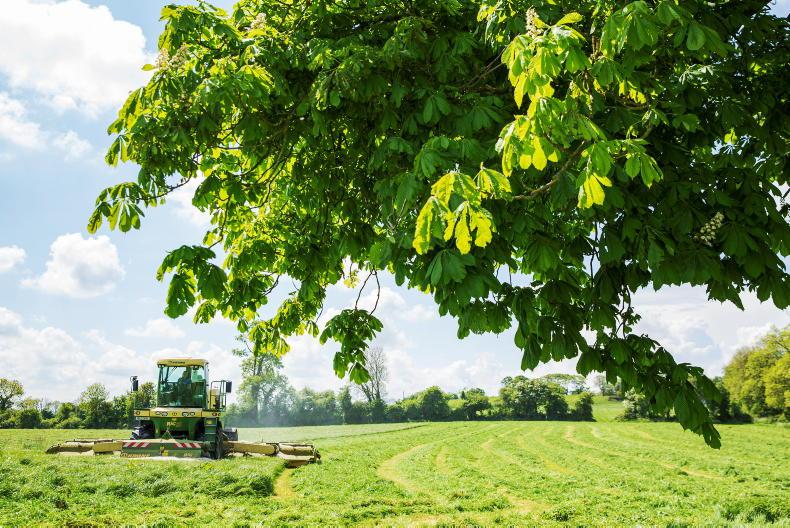
Much of John’s grass silage is also made up of older swards, which may be affecting the quality. First cut silage is taken in mid-May, with second cut taken six-seven weeks later in early July, before this ground comes back in for grazing.
“Whole crop silage has also been harvested this year and will be targeted at autumn calving cows and spring born weanlings.
“Boland noted that the results for testing on whole crop were often disappointing on a DMD basis but once cut at the correct stage, made for excellent feed.
Red clover is also grown on farm and is targeted at similar stock to whole crop silage.
A multicut system is operated, with three-four cuts taken off each paddock, with protein contents of 14% recorded on average, while dry matter was high on the earlier cuts owing to optimum wilting conditions.
Boland pointed to the increased weight gain from red clover mainly being attributed to higher intake levels, with increased stock required where red clover was concerned.
‘’Cattle will typically eat 15% more red clover silage in comparison to grass, so it is important when you are doing your fodder budgets that this is taken in to consideration.’’
As has been well highlighted by Teagsasc, heavy covers sitting on clover swards, be they red or white clover, are detrimental to clover persistency.
John is currently grazing some red clover swards with cows, and though lighter stock is generally recommended, John uses a short residency period in paddocks and good weather conditions to reduce damage to clover swards, which has worked well in the past.
John Barry and his family operate a suckler to store system alongside a smaller dairy calf to beef system, just outside Newtown, Nenagh, Co Tipperary.
The land comprises just over 72ha of land, with about two third of this owned and the remainder rented. The majority of the farm is in grass, with 1.2ha of forage rape and 2.94ha of red clover for silage production also in the mix.
John focuses his efforts on both grassland management and breeding; even when it comes to the dairy beef calves bought in, they come from a known local source which uses quality AI bulls.
Seventy per cent of the herd is served to AI, with a Limousin stock bull mopping up the 50-spring calving and 36 autumn calving cows on farm.
These efforts from breeding would quickly be negated if John didn’t put the efforts in to winter diets that he does, with this starting back in early summer, while also combining home grown forages with the correct concentrate diet.
Willie Boland of Liffey Mills was on one of the stands, and explained some of the requirements of the ruminant diet.
“We have to remember that cattle are ruminants with a four-chamber stomach; they’re not monogastrics. They need fibre, protein and energy in their diet. You need a balanced amount of each of them to make up a proper diet.’’
When it comes to energy sources, barley, maize, wheat or oats are the primary choices in Irish beef blends.

John Barry (host farmer) uses a mix of grass silage, whole crop and red clover to meet the nutritional needs of his stock, combined with a balanced concentrate feed.
Boland noted the huge volume of imported animal feed, with approximately just 15% of our total requirements.
‘’We do need to help out tillage sector before we lose it completely. To help the tillage sector, we need to use more native grains in our mix. It’s about being conscious of what we can grow here [in Ireland] and how we can use it. Comparing the four energy sources listed above on a UFL basis, barley is the base at 1.0 UFL.
“Wheat holds the same rate as barley, while maize is 5% higher at 1.05 UFL while oats is 10% less as 0.9 UFL.
“As a result, a lot of rations are based off native barley and imported maize, which Boland cited as a ‘demand at farm level’ to have a certain amount of maize in finishing diets in particular.
“There are surplus oats throughout the country as a result of a good harvest. There is more recognition on the use of oats now in blends.”
Boland pointed to trials in 2022 in Teagasc Grange in which finishing cattle were fed a two different rations; one containing barely and one which replaced the barley with oats, with no recorded difference in weight gain or fat cover between the two cattle groups.
“Oats have a much higher oil content than barley; barley has an oil content of 2.5% while oats has an oil content of 4%.
“It’s the oil content in oats that we are assuming is giving the extra gain [despite the lower UFL value].
“Where oats is deficient in UFL is the hull,” he added.
“There is a much larger hull on oats than there is in barley.
‘’The big advantage of using oats in a finishing diet is number one it’s Irish and also the digestible fibre content of oats of 29-30%.It’s way ahead of barley, wheat or maize on digestible fibres.
“The inclusion of oats (not fully replacing barley or maize) does lead to a reduced requirement for ingredients such as soya hulls, beet pulp or citrus pulp in the diet.
“In my opinion we have to be conscious of what we can grow in this country and how we can use our own native cereals.’’
Soya is the best-known protein source in the world, stated Boland, pointing to it being a ‘true protein’ in which the animal gets 95% of the protein within soya. Beans and peas are two protein sources that can be grown on Irish farms and are ‘every bit as good’ as protein sources as distillers’ grain and maize gluten, two other common sources of protein within ruminant animal blends.
A sample of dairy beef cattle were housed for display on the day and were entering there finishing stage.

Willie Boland (Liffey Mills) discussing ration ingredients and the effect silage quality will have on feeding rates, with each increased % of DMD in silage the equivalent of 0.5kg of concentrates.
Energy was the primary requirement of these cattle, not protein, in order to put on flesh. Weanlings on the other hand still required a relatively high energy feed but a higher protein feed in comparison to these finishing type animals.
According to Boland 12-13% protein in a finishing diet was perfectly adequate, with a 15-16% protein diet adequate for a weanling diet.
‘’You have to know what you are feeding, what your requirements are and the inclusion of energy, protein and digestible fibres’’ highlighted Boland.
Lesser-value feeds that should be excluded or included at minimal levels include palm kernel, wheat feed (pollard) and sunflower oil.
As per legislation, ingredients in rations have to be labelled in descending order ie the first ingredient listed has the highest inclusion rate within the feed.
Minerals are generally the last ingredient as these have an inclusion of 2-2.5%, with some mixes also containing yeast or other additives to encourage intake.
“We generally include 70-80kg of molasses in each tonne of feed, so anything above this will have an inclusion rate above 7-8%.
“Your top ingredient will be 30-35% of an inclusion rate, while molasses will be about 8%, so from here you should be able to roughly work out the inclusion of each feed’’ stated Boland.
Keeping mixes simple, with four-six ingredients was also a key tip highlighted on the day.
Importance of high quality silage
Silage quality was pointed out to being critical to nearly every livestock enterprise, and while the quality of silage tested in recent years was poor at an average of 66 DMD, averages had risen to 68 DMD of late as farmers become more conscious of the effects good or bad silage have on their system, stated Boland.

Farmers using red clover silage should be aware that the higher gains seen in stock fed it are a partly due to higher intakes, with cattle consuming 15% more in comparison to grass silage.
‘’I remember being at a talk in Teagasc Ballyhaise once and one of the speakers highlighted how much dry matter digestibility cattle can digest. If you had 100 bales of 60 DMD silage, the equivalent of 40 of those bales are waste; they’re of no value to your cattle. ‘’
The silage on John’s farm ranged from 69 DMD up to 74 DMD, all on the higher end of average. Boland pointed out that for every unit of DMD that John or other farms increased their silage by, this offset the need for concentrates by 0.5kg/head/day in a finishing diet.
The difference between John’s top silage and his lower value silage is 5 DMD, meaning an extra 2.5kg meal/head/day (+ standard rate of 5kg/head/day totalling 7.5kg meal/head/day) will be required to gain the same weight if he was to use the lower value silage compared to the higher value silage and 5kg of meal.
Over a 100-day finishing diet this equates to 250kg/ head. With the sample size of 17 cattle on the day, this equated to an additional 4.25 tonnes of meal.
On a daily basis, the meal requirement jumps from 3.5 bags/day for the finishing pen to just over 5 bags/day.
John’s silage actually showed his first cut being the lowest value something which Boland stated was common across a lot of silage samples tested, with spring having come earlier seemingly having pulled ideal cutting time back by a week or so.
‘’If you usually cut on 25 May, this year it was the equivalent of cutting on 1 June. “
Much of John’s grass silage is also made up of older swards, which may be affecting the quality. First cut silage is taken in mid-May, with second cut taken six-seven weeks later in early July, before this ground comes back in for grazing.
“Whole crop silage has also been harvested this year and will be targeted at autumn calving cows and spring born weanlings.
“Boland noted that the results for testing on whole crop were often disappointing on a DMD basis but once cut at the correct stage, made for excellent feed.
Red clover is also grown on farm and is targeted at similar stock to whole crop silage.
A multicut system is operated, with three-four cuts taken off each paddock, with protein contents of 14% recorded on average, while dry matter was high on the earlier cuts owing to optimum wilting conditions.
Boland pointed to the increased weight gain from red clover mainly being attributed to higher intake levels, with increased stock required where red clover was concerned.
‘’Cattle will typically eat 15% more red clover silage in comparison to grass, so it is important when you are doing your fodder budgets that this is taken in to consideration.’’
As has been well highlighted by Teagsasc, heavy covers sitting on clover swards, be they red or white clover, are detrimental to clover persistency.
John is currently grazing some red clover swards with cows, and though lighter stock is generally recommended, John uses a short residency period in paddocks and good weather conditions to reduce damage to clover swards, which has worked well in the past.
SHARING OPTIONS