




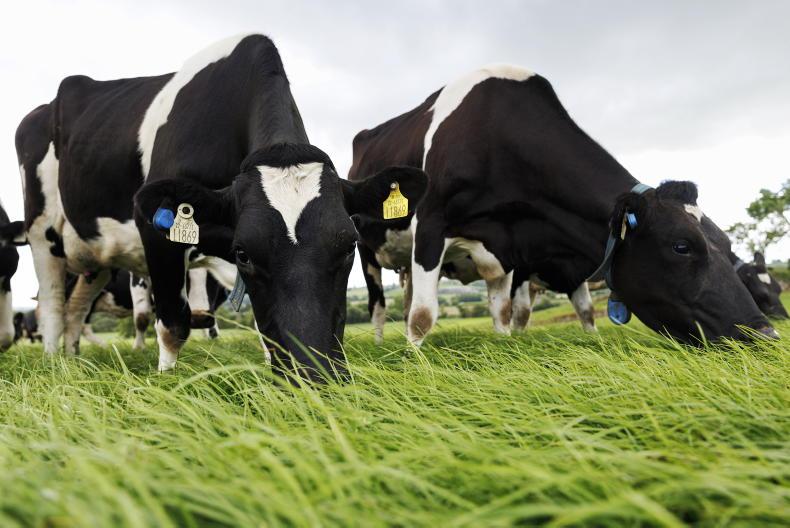
Grazing wrapped up here in Abbeyleix last Saturday with an average farm cover of 850kg DM/ha.
By the time the 1 December comes around, that should creep up to roughly 900kg DM/ha, which is exactly where I want it heading into the winter. Hitting that target gives me great confidence that I’ll have a strong wedge of grass ready for the first grazing in spring, when every fresh mouthful really counts.
To help hold that closing cover, I left about 10% of the milking platform ungrazed in the last rotation. That ground was last grazed on 28 September and will act as valuable grass for the cows in the spring. It’s always a balancing act between cleaning off paddocks and building enough cover, but this year the weather played ball for the most part, and the plan worked out fairly well.
Inside, the cows are milking away respectably considering they’re now fully housed. They’re on 4kg of meal along with 68 dry matter digestibility (DMD) second-cut silage. I’m inclined to hold the top-quality bales for the spring. Between now and dry-off they could easily eat their way through close to 200 bales, and I feel the cows get far better value from the high-DMD stuff during early lactation when demand is greatest.
On the last milk collection, they averaged 14 litres with 5.82% fat and 4.53% protein, and the SCC was 121,000. For late November, I’m happy with that. It’s a steady finish, and the high solids will help with the milk cheque when prices are in free fall.
We’ve also been busy with infrastructure improvements lately. I recently installed farmyard settlement tanks to handle grey water from the yard, along with a vegetated, bunded drain as part of the Farming for Water EIP. It’s a good scheme and a very practical one.
From what I’ve seen so far, it offers real environmental benefits while also helping farmers make meaningful upgrades without breaking the bank.
Mercosur
The wider policy environment, however, is becoming increasingly challenging, and this scheme would feel futile, if we don’t have a nitrates derogation and the Mercosur deal goes ahead.
The proposed Mercosur deal is a major concern. Farmers here are working under some of the strictest environmental, animal health, and traceability regulations in the world. Yet at the same time, the EU appears prepared to allow large volumes of beef from production systems that operate under significantly lower standards.
This creates a direct competitive imbalance and undermines the efforts being made on Irish and European farms to produce food sustainably. It is difficult to reconcile the pressure being placed on EU farmers with the willingness to outsource food production to regions with weaker oversight.
Additional regulation here is also adding pressure. The introduction of increased requirements for prescriptions, while intended to improve responsible use of animal health products, comes at a time when the EU is proposing to bring in beef which is not produced to the same standard as our own.
It just doesn’t make sense and is very hard for farmers to take. The new system brings increased cost, more administration, and reduced flexibility for farmers in managing parasite control. Most farmers have already adopted best-practice approaches, and the pace of regulatory change risks creating frustration rather than improving outcomes.
From my perspective, the EU is firing out policies that completely clash with each other, and Irish farmers are the ones paying the price. All they’re really doing is piling on more rules, cutting into our income, and making it harder every year to actually make a living from farming.


SHARING OPTIONS