


The two main causes of mastitis are staphyloccus aureus and streptococcus agalactiae, both of which are quite contagious. staph aureus infections tend to be more difficult to treat, as the infection invades cells and insulates itself from antibiotics. Strep infections are usually easier to treat with intra-mammary antibiotics, as they are found closer to the teat canal.
E. coli mastitis outbreaks are common, particularly in housed lactating cows. Where cows have severe clinical E. coli mastitis, cows can often appear very sick, and have a swollen quarter. In severe cases, veterinary assistance may be required.
Somatic Cell Count (SCC) is a good estimation of the level of subclinical mastitis within a herd. In addition to looking at SCC, it is essential to keep an accurate log of clinical cases of mastitis on the farm and treatment records. For dairy farmers and in particular winter milk suppliers, hygiene is critical to ensure good udder health and low levels of mastitis.
Mastitis can occur when dirt, or harmful bacteria comes in contact with teats and enters the teat canal. It’s not just lactating cows that are at risk, dry cows are also a high-risk category.
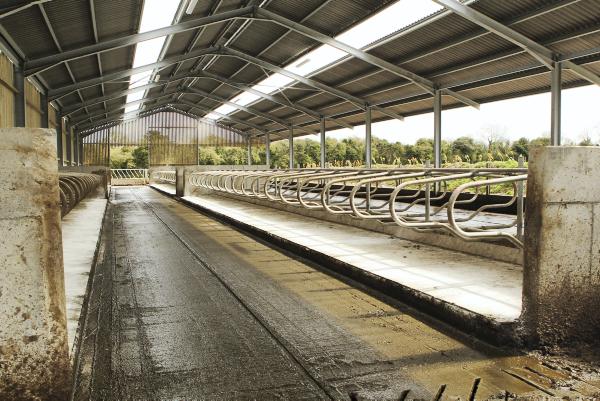
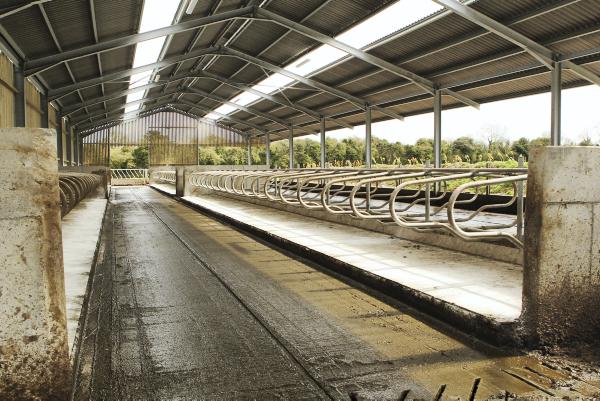
Where teat sealers are used, the threat is reduced, but good hygiene is still essential. Ideally, cubicles should be clean and dry to reduce the risk of teats coming in contact with dirt and harmful pathogens.
Lime
In Ireland, cubicle cleaning and bedding differs greatly from farm to farm. The most popular method of cubicle bedding is applying lime. In some cases, farmers will rely solely on cleaning cubicles daily, while others will apply sawdust to cleaned cubicles each day to try and minimise contact between cows udders and dirt.
A more common method is where a farmer cleans the cubicles daily and applies lime to them. The main objective of liming is to help to keep the cubicle dry so that bacterial growth is reduced. The second aim is to increase the pH which will help reduce bacterial growth as most bacteria require a low pH to grow. However, a pH of above 10 is normally required to decrease the activity of most mastitis-causing bacteria.
Hydrated lime is now more commonly used. It usually has a higher pH, making it more effective against bacterial growth. Farmers have also commented that hydrated lime can be less severe on cows teats than ground limestone, particularly in the spring and autumn when on-off grazing is taking place.
In 2013, Teagasc Moorepark conducted a study to evaluate hydrated lime as a cubicle bedding material on the microbial count on teat skin and intramammary infection.
The results showed that hydrated lime bedding treatment resulted in significantly less staphylococci and steptococci on teat skin compared to ground limestone bedding alone.
In addition, there were lower levels of SCC and subclinical infections. There are several companies selling lime-based cubicle bedding products on the Irish market. The product chosen by the farmer will be dependent on past performance and cost.
It is essential to price around, particularly when placing larger orders.
Cubicle design
With increasing cow numbers on several dairy farms, pressure has mounted in recent years to increase cubicle space. For those who are intending on increasing cubicle spaces, design is crucial to optimise cow comfort.
The width and length of the cubicle are most important. As the cow moves from a lying position to a standing position, she will move forward by over a half metre. For that reason, a cubicle facing a wall should be longer than those which are face-to-face.
Teagasc recommends that the width of a cubicle should be 1.15m, +/- 0.25m. In terms of cubicle length, they should measure 2.3m to 2.6m. Where a neck rail is fitted, it should be 1.7m +/- 0.05m from the rear kerb. The neck rail should be 1.15m high +/- 0.05m. The slope of the cubicle should be approximately 5% from front to back and should be 0.2 to 0.25m higher than the floor.
Cubicle mats or mattresses are commonly used to increase cow comfort. Teagasc says that having a correct mat or mattress on the cubicle will result in just one third of the pressure on the cow’s knee when compared with concrete alone.




SHARING OPTIONS