Under EC regulations, the responsibility of providing safe food lies with all the individuals along the food chain responsible for producing the food. This may include farmers, compound feed manufacturers, importers, hauliers etc.
Cattle finishers who take part in quality assurance schemes are obliged to use feed that is quality assured. The Department of Agriculture requires that feed business operators are registered and approved by them.
Feed business operators that are required by the Department to be registered by them are primary producers of feed materials, farmers keeping cattle or sheep, individuals involved in importing feed or distributing feed and home mixers of feed.
Only compound feed manufacturers, mineral and pre-mix manufacturers and those who store and distribute mineral mixtures and pre-mixtures are required to be approved by the Department.
Feed business operators are obliged to satisfy the requirements of the legislation in relation to the processing and distribution of feed. It is an offence to source feed from farmers or distributors who are not registered or approved within the regulations.
According to the Department of Agriculture, farmers who are responsible for primary production should ensure:
All operations are managed and carried out in such a way as to prevent, eliminate or minimise hazards that might compromise feed safety arising, for example, from chemicals, fertilizers, unclean water, veterinary medicine products and disposal of farm waste.Primary products are handled in such a way as to minimise contamination and spoilage, for example due to contact with animal waste or due to moulds at all stages of production, preparation, cleaning, packing, storage and transportation.Measures are taken to prevent contamination of feed products by vermin and pests.Results of any relevant analyses carried out on samples taken from primary products (or other samples relevant to feed safety) are taken into account.Records are maintained on any occurrence of pests or diseases that may affect the safety of primary products and on the use of plant protection products, biocides and genetically modified seeds (if appropriate). As a primary producer, you will meet the obligations set out above by complying with the appropriate EU and national legislation relating to the control of hazards. Records must be maintained of the destination and quantity of all feed material sold.Vermin control
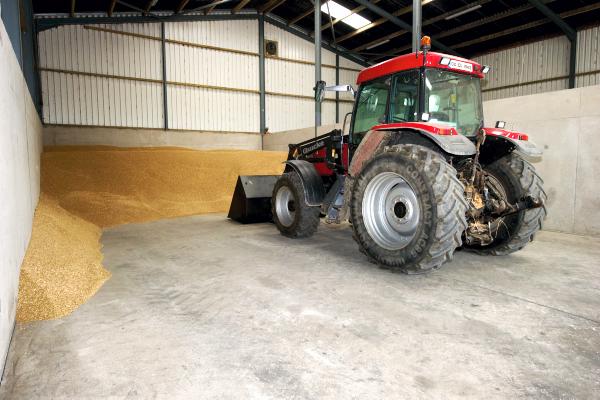
One of the biggest problems with grain storage on farms is vermin control. Controlling pests will, in most cases, help to reduce the possibility of disease transmission and grain spoilage.
The first port of call should be to ensure that the grain store is well sealed, or tight-fitting, so that vermin and pests cannot enter. However, it is also important that grain stores have adequate air flow. Air outlets should have mesh wire to keep birds out.
Along with undertaking to keep vermin out of grain stores, farmers should also be vigilant for signs of rat and mouse activity. Watch for droppings or burrow holes. Some animal feeds are more pest-resistant than others. Farmers who have used ammonia treatment on grain as a preservative often say that there is much less pest activity due to the alkaline nature of the grain.
There are several different methods of trying to reduce rodent activity. In some cases, farmers use ultrasound to try and repel mice and rats, while cats are also used widely.
Bait is used on some farms using special traps. However, where rodents have free access to grain, then baiting may not be very effective. Where food supply is limited, bait traps work best.
It is essential that farmers placing bait around the yard keep an accurate guide to the locations of the bait and check them regularly. Bait traps should be designed so that only mice or rats can enter them.
Spoilage
Where grain is bought in green off the combine, treatment of some kind will be required to stop the grain from heating. That is unless the moisture content is below 17% and there is an aeration system in the grain store, treatment of some kind will be required in order to stop grain heating. There are many different treatment methods, including propionic acid treatment, ammonia treatment, drying or even crimping. It is essential that grain spoilage is kept to a minimum as the cost of spoilage can accumulate very fast.
Indoor grain spoilage most often occurs due to dampness. Ensure that grain stores are dry and free of damp. Where there is a risk of dampness, some farmers will line the store with plastic to try and reduce losses. Reducing spoilage will mainly be related to the management of the grain store.
Farmers who store crimped grain outside can often suffer from high rates of spoilage due to water and pest damage. If good crimped pit management is adhered to, then spoilage rates can be kept to a minimum. Farmers who have used ammonia treatment of grain in recent years have reported much reduced rodent activity due to the alkaline nature of the feed.
Under EC regulations, the responsibility of providing safe food lies with all the individuals along the food chain responsible for producing the food. This may include farmers, compound feed manufacturers, importers, hauliers etc.
Cattle finishers who take part in quality assurance schemes are obliged to use feed that is quality assured. The Department of Agriculture requires that feed business operators are registered and approved by them.
Feed business operators that are required by the Department to be registered by them are primary producers of feed materials, farmers keeping cattle or sheep, individuals involved in importing feed or distributing feed and home mixers of feed.
Only compound feed manufacturers, mineral and pre-mix manufacturers and those who store and distribute mineral mixtures and pre-mixtures are required to be approved by the Department.
Feed business operators are obliged to satisfy the requirements of the legislation in relation to the processing and distribution of feed. It is an offence to source feed from farmers or distributors who are not registered or approved within the regulations.
According to the Department of Agriculture, farmers who are responsible for primary production should ensure:
All operations are managed and carried out in such a way as to prevent, eliminate or minimise hazards that might compromise feed safety arising, for example, from chemicals, fertilizers, unclean water, veterinary medicine products and disposal of farm waste.Primary products are handled in such a way as to minimise contamination and spoilage, for example due to contact with animal waste or due to moulds at all stages of production, preparation, cleaning, packing, storage and transportation.Measures are taken to prevent contamination of feed products by vermin and pests.Results of any relevant analyses carried out on samples taken from primary products (or other samples relevant to feed safety) are taken into account.Records are maintained on any occurrence of pests or diseases that may affect the safety of primary products and on the use of plant protection products, biocides and genetically modified seeds (if appropriate). As a primary producer, you will meet the obligations set out above by complying with the appropriate EU and national legislation relating to the control of hazards. Records must be maintained of the destination and quantity of all feed material sold.Vermin control
One of the biggest problems with grain storage on farms is vermin control. Controlling pests will, in most cases, help to reduce the possibility of disease transmission and grain spoilage.
The first port of call should be to ensure that the grain store is well sealed, or tight-fitting, so that vermin and pests cannot enter. However, it is also important that grain stores have adequate air flow. Air outlets should have mesh wire to keep birds out.
Along with undertaking to keep vermin out of grain stores, farmers should also be vigilant for signs of rat and mouse activity. Watch for droppings or burrow holes. Some animal feeds are more pest-resistant than others. Farmers who have used ammonia treatment on grain as a preservative often say that there is much less pest activity due to the alkaline nature of the grain.
There are several different methods of trying to reduce rodent activity. In some cases, farmers use ultrasound to try and repel mice and rats, while cats are also used widely.
Bait is used on some farms using special traps. However, where rodents have free access to grain, then baiting may not be very effective. Where food supply is limited, bait traps work best.
It is essential that farmers placing bait around the yard keep an accurate guide to the locations of the bait and check them regularly. Bait traps should be designed so that only mice or rats can enter them.
Spoilage
Where grain is bought in green off the combine, treatment of some kind will be required to stop the grain from heating. That is unless the moisture content is below 17% and there is an aeration system in the grain store, treatment of some kind will be required in order to stop grain heating. There are many different treatment methods, including propionic acid treatment, ammonia treatment, drying or even crimping. It is essential that grain spoilage is kept to a minimum as the cost of spoilage can accumulate very fast.
Indoor grain spoilage most often occurs due to dampness. Ensure that grain stores are dry and free of damp. Where there is a risk of dampness, some farmers will line the store with plastic to try and reduce losses. Reducing spoilage will mainly be related to the management of the grain store.
Farmers who store crimped grain outside can often suffer from high rates of spoilage due to water and pest damage. If good crimped pit management is adhered to, then spoilage rates can be kept to a minimum. Farmers who have used ammonia treatment of grain in recent years have reported much reduced rodent activity due to the alkaline nature of the feed.







SHARING OPTIONS