


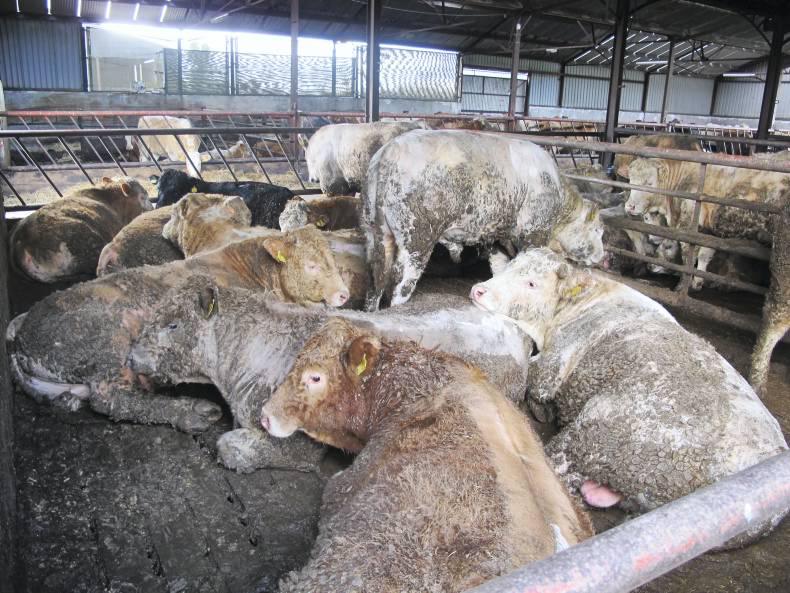
Stocking rates in pens will directly affect animal performance. If pens are overstocked, animal performance will suffer. This is due partly to restricted movement in pens reducing free access to forage and reducing intakes. This can be a major problem in pens where there are shy feeders or animals are poorly matched on size and there is increased bullying.
Where slatted houses are used, avoid over- or under-stocking pens. Table 1 details guideline stocking rates for different classes of animals housed on slats or straw bedding.
The recommendations are for pens where there is adequate feeding space. Where feeding space is limited, then this will restrict the maximum number of animals per pen.
Where animals are being fed ad lib and feeding space is restricted (but stocking rate is sufficient), it is vitally important to maintain fresh feed in front of animals at all times. In a situation like this, feed-trough management is crucial.
The volume offered should be balanced slightly above demand so that it is not a case of fresh feed being topped up continuously on older material, resulting in feed going off. The feeding area should also be checked daily and any spoiled material removed.
It is important to group animals according to their category and feeding regime. Bulls, steers and heifers should be penned separately. Do not pen bulls adjacent to female stock. Try to limit the liveweight range between cattle to a minimum (no more than 50kg to 60kg). Finishing animals, and in particular bulls, should also be grouped according to their target slaughter date.



SHARING OPTIONS