



Suddenly, with a dry week forecast, it was all go. We cut the by-now very mature hay.
While the feeding value won’t be great, the strong grass should dry and be fit to bale within a few days.
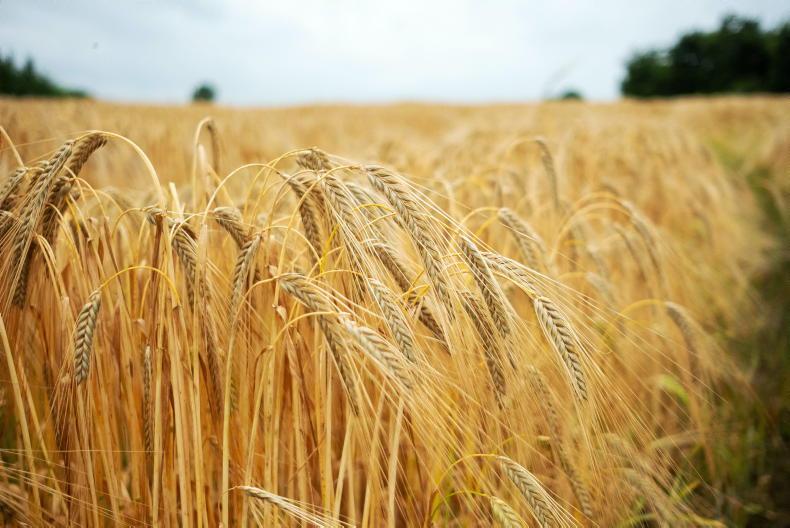
We have also begun the winter barley. While it is too early to be definite, it looks to be a promising crop.
As it is going for the stout roasting market, the moisture, protein and bushel weight are all important criteria.
It has also been a condition of growing the crop that we do not use any glyphosate on that field.
We have treated the oilseed rape with Roundup to keep the weeds under control for the following crop which it is intended will be winter barley. As a weed control method for the succeeding crop, this method has worked well.
As we went through the oilseed rape with my neighbour’s high-rise sprayer, we added a pod sealant to prevent pod shatter as much as possible.
I know most of the new hybrid varieties have built-in pod shatter resistance but I am not as confident of the ability of the Clearfield varieties to withstand a windy spell.
Swathing is probably the safer option but is more work and needs access to different equipment.
One of the bureaucratic requirements that has to be met is the annual disposal of used fertiliser bags and spray cans.
The waste recycling company set up in the local GAA grounds and I was all prepared for a slow, tedious process of paperwork and sorting out our consignment. In fact, it was really well organised with plenty of on-site help and competent staff in a caravan.
They simply wanted my herd number, they punched it in, up came the name and address. Coupled with a functioning credit card terminal, I paid and had everything completed within 20 minutes.
I am constantly amazed at the length of time it takes the health system to process information and the lack of cross-system communication. They should talk to the Department of Agriculture.
Meanwhile, we have brought in the most forward of the grass cattle for a few weeks’ final feeding.






SHARING OPTIONS