


Last autumn and winter we didn’t get enough rain to test the new drains we had put in odd spots where there were regular pools of water over the winter period.
We have more than made up for it this year. During the summer before last, we had put a conventional system with pipe and gravel in one particular section of a field that has for a long time caused problems, while in other areas, we put in a series of stone-filled mole drains and ran them over to the ditch.
This summer we cleared out the watercourse servicing both areas.
At the end of last week, I thought it had all been wasted with widespread flooding but by earlier this week, the transformation has been a revelation.
The treated areas have dried up completely and across the place, floods have been replaced by odd puddles.
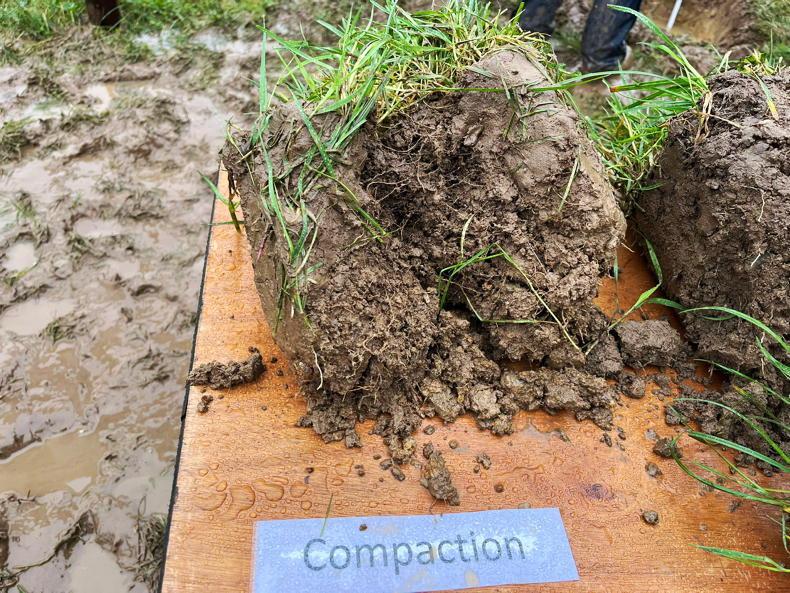
The key, I am convinced, apart from draining obvious wet areas, is to avoid compaction during the sowing season.
Important period
This year, with a full fortnight of excellent weather, this was easy to do and the land shows the benefit of not mucking crops in.
However, we have missed an important period for the application of an autumn herbicide.
The seed wheat after beans has got an early population of volunteer beans which last year we took out cheaply and easily at this time of the year.
While we can technically wait until the spring, the later option is more expensive and the more forward clumps of volunteers which we will have by that stage leaves holes in the crop which must have some effect on yield.
We will see what the next few days bring in the hope that ground will be travelable.
On the cattle side, the vast bulk of animals are in but we have decided to try and graze down the rest of the aftergrass given the comparatively good forecast.
With the sheds filling up, we are going to pour in one of the biological slurry additives. We are advised to put it in the tanks under the slats as soon as possible so that the bugs can get to work quickly.
I know people are sceptical about these products. At a recent lecture on them, we were told that sulphuric acid was the most effective slurry additive, but that it is most suitable for lagoons and outdoor storage systems.
Safety
I am sure that’s true, but it needs specialised application and I dislike using strong acids from a safety point of view.
I have found over the years that when properly applied, the biological ones certainly make agitation easier, reduce smells and perhaps are better for the soil microbes.
I would like some more definitive, impartial views on this latter point.





SHARING OPTIONS