Gardaí and the Department of Agriculture searched farms in five counties on Thursday morning as part of an investigation into the tampering of identification passports and microchips of horses presented for slaughter.
Some 6,573 horses were slaughtered for human consumption last year, according to the Department of Agriculture. In the first two months of 2019, a further 453 horses were slaughtered.
Some 7,748 horses were slaughtered for human consumption in 2017.
The peak was in 2012 when 24,362 equines were processed at slaughter plants.
Horsemeat
Horses slaughtered for human consumption in Ireland are mainly exported to continental Europe.
The majority of horsemeat is sent as boneless product to France and Belgium, where it is further processed for sale in butchers and shops.
What are the rules on horse passports?
Since 1 January 2016, all equine animals (horses, ponies, donkeys, etc) must be identified with a passport no later than 12 months from the date of birth of the animal, and in any event, before moving permanently from the holding of origin.
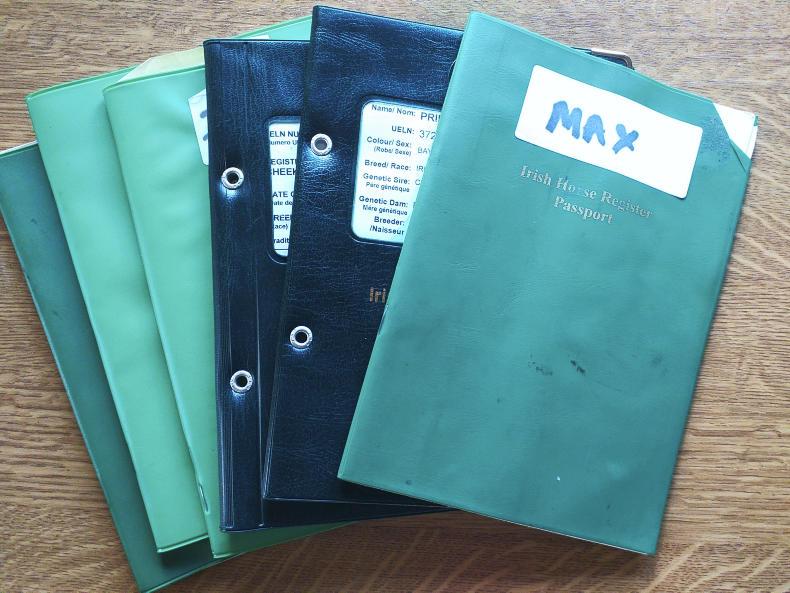
Horse passport.
Passport document
Identification of an equine animal is primarily established through its passport, a paper document that includes a drawing of identifying marks such as hair whorls and colour markings such as blazes, socks and overall body colour.
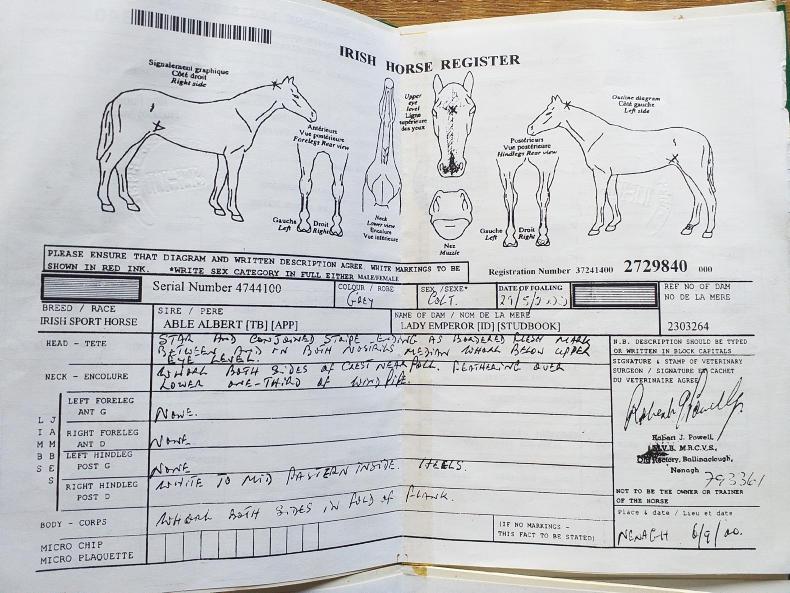
Horse passport.
Completed by a veterinary surgeon, the form also records the age, sex and date of foaling and the microchip number inserted by the vet into the neck of the horse.
Some, but not all, passports include the sire and dam details, which are required only for pedigree-recorded passports.
Equine passports are issued by passport issuing organisations (PIOs) approved by the Department of Agriculture.
Passport enforcement
According to the Minister for Agriculture Michael Creed, enforcement of equine identification legislation is primarily undertaken by authorised officers from his Department's regional office network.
“These officers work closely with their veterinary colleagues across the various local authorities and liaise with members of An Garda Síochána and Revenue Commissioners officials, as required.
“Authorised officers from my Department engage in checks at sales venues including marts and fairs, as well as at horse slaughter plants and at export points including ports and airports. These compliance checks are ongoing and will continue to be undertaken,” he told Deputy Kevin O'Keeffe from Cork in January of this year.
Horses in the foodchain
Horses that have not been registered within 12 months of foaling are not allowed in the human food chain.
The veterinary medicine section of the passport is stamped by the PIO as “not intended for slaughter for human consumption (to comply with EU regulations)".
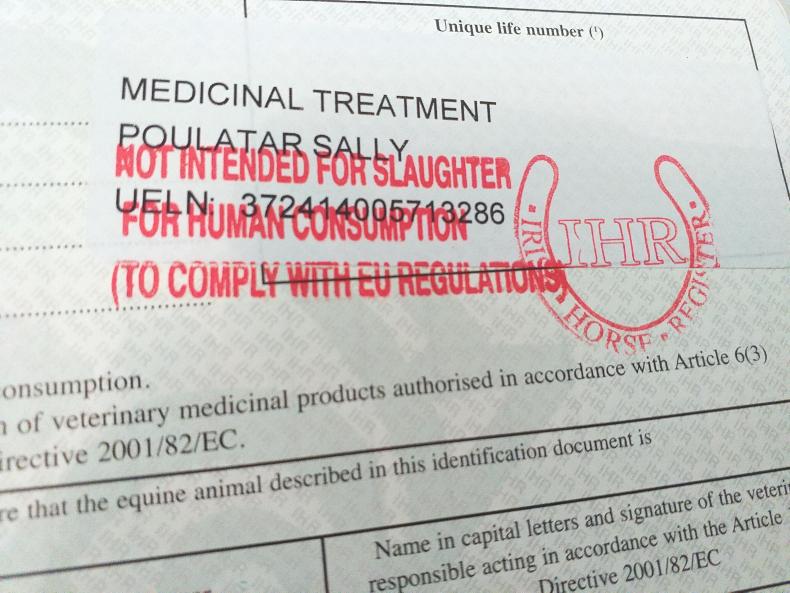
Horse passport.
Horses that have been given certain medications, including the common painkiller phenylbutazone, will also have their passports stamped as not intended for slaughter.
Horses with those passports stamped are not eligible to be slaughtered for human consumption.
Read more
Gardaí and Department raid farms as part of horse slaughter investigation
Four convicted in horsemeat trial
Food fraud cases spike across Europe
SIU called in over multiple equine microchips
Gardaí and the Department of Agriculture searched farms in five counties on Thursday morning as part of an investigation into the tampering of identification passports and microchips of horses presented for slaughter.
Some 6,573 horses were slaughtered for human consumption last year, according to the Department of Agriculture. In the first two months of 2019, a further 453 horses were slaughtered.
Some 7,748 horses were slaughtered for human consumption in 2017.
The peak was in 2012 when 24,362 equines were processed at slaughter plants.
Horsemeat
Horses slaughtered for human consumption in Ireland are mainly exported to continental Europe.
The majority of horsemeat is sent as boneless product to France and Belgium, where it is further processed for sale in butchers and shops.
What are the rules on horse passports?
Since 1 January 2016, all equine animals (horses, ponies, donkeys, etc) must be identified with a passport no later than 12 months from the date of birth of the animal, and in any event, before moving permanently from the holding of origin.
Horse passport.
Passport document
Identification of an equine animal is primarily established through its passport, a paper document that includes a drawing of identifying marks such as hair whorls and colour markings such as blazes, socks and overall body colour.
Horse passport.
Completed by a veterinary surgeon, the form also records the age, sex and date of foaling and the microchip number inserted by the vet into the neck of the horse.
Some, but not all, passports include the sire and dam details, which are required only for pedigree-recorded passports.
Equine passports are issued by passport issuing organisations (PIOs) approved by the Department of Agriculture.
Passport enforcement
According to the Minister for Agriculture Michael Creed, enforcement of equine identification legislation is primarily undertaken by authorised officers from his Department's regional office network.
“These officers work closely with their veterinary colleagues across the various local authorities and liaise with members of An Garda Síochána and Revenue Commissioners officials, as required.
“Authorised officers from my Department engage in checks at sales venues including marts and fairs, as well as at horse slaughter plants and at export points including ports and airports. These compliance checks are ongoing and will continue to be undertaken,” he told Deputy Kevin O'Keeffe from Cork in January of this year.
Horses in the foodchain
Horses that have not been registered within 12 months of foaling are not allowed in the human food chain.
The veterinary medicine section of the passport is stamped by the PIO as “not intended for slaughter for human consumption (to comply with EU regulations)".
Horse passport.
Horses that have been given certain medications, including the common painkiller phenylbutazone, will also have their passports stamped as not intended for slaughter.
Horses with those passports stamped are not eligible to be slaughtered for human consumption.
Read more
Gardaí and Department raid farms as part of horse slaughter investigation
Four convicted in horsemeat trial
Food fraud cases spike across Europe
SIU called in over multiple equine microchips







SHARING OPTIONS