Following on from two weeks of suckler beef, this week is the turn of the dairy beef finishers; farmers who are purchasing in calves and weanlings from the dairy herd and bringing through to slaughter.
While the CBVs’ of these animals are inevitably lower than their suckler counterparts, dairy farmers using high CBV beef bulls on their cows are still producing animals capable of achieving slaughter weight at a younger age with less feed than lower CBV animals coming off similar cow types.
Our farmers this week are purchasing a mix of animals; from unweaned calves to weanlings and stores, traditional and continental breeds and doing a variety of finishing programmes, with some bulls kept entire while others are finished as steer beef.
These awards are sponsored by ICBF, FBD and the participating processors.
Moyvane, Co Kerry
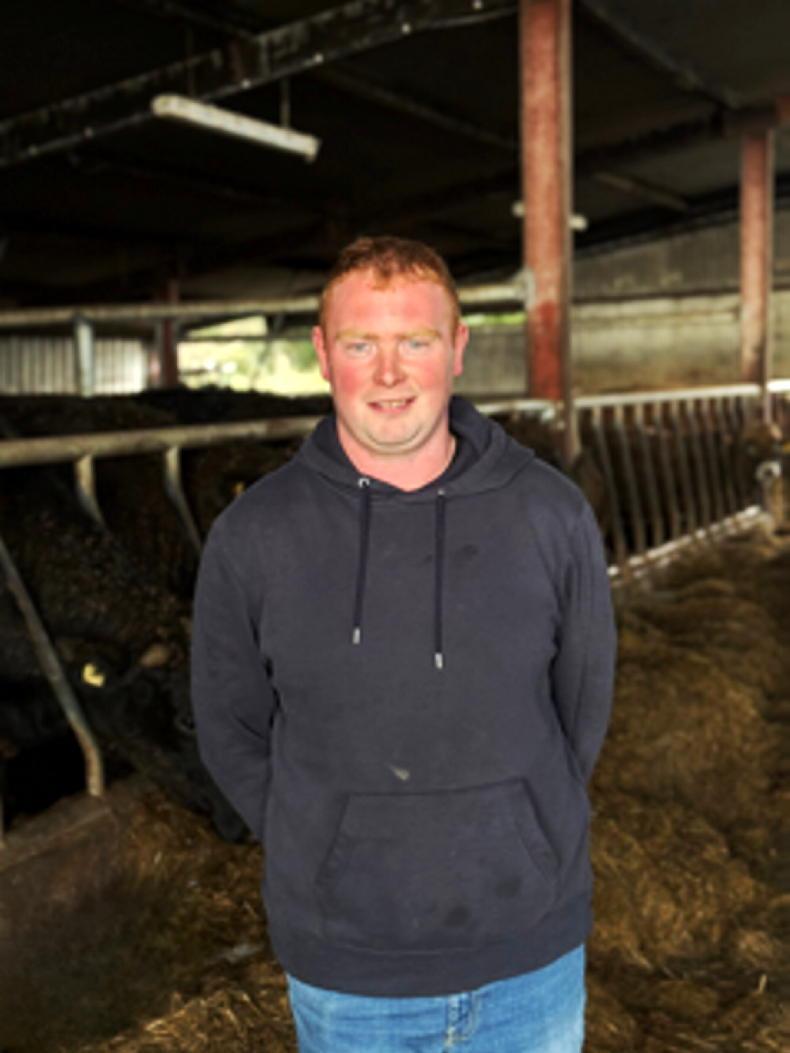
Brendan Stack, Moyvane, Co Kerry.
Brendan Stack from runs a dairy-calf to beef system as well as sucklers and is in partnership with his parents.
They farm 170ac between owned and rented land.
Over the month of February, he buys in 60 to 70 dairy-beef heifer calves from two local farmers. They’re bought at about one month old and are settled before calving starts on the families 30-cow strong Aubrac suckler herd.
Reared by Brendan and his girlfriend, Sarah, the calves are mostly Limousin- and Aubrac-crosses with a few Belgian Blue- and Charolais-crosses bought too. Brendan has a preference for continental-cross calves as he gets better kill outs and carcase weights.
He targets an average off over 300kg carcase at 22 to 24 months of age with a fat score of three and usually confirmation scores of Rs with an odd O+ too.
Getting a heavier carcase weight at that age is difficult he said.

ABP logo
All male progeny from his suckler herd are finished at U16 months with an average carcase of 400kg. He also buys some extra Aubrac-cross bulls to finish too. Along with the bulls he purchases heavy store cattle from marts.
The average CBV for his dairy-beef heifers is €251 while the average for the U16 month bulls is €438.
Brendan admits his system is still a work in progress but he has developed the farm a lot in recent years with the addition of two slatted sheds making it a very comfortable operation. All animals are processed with ABP Rathkeale.
Letterkenny, Co Donegal
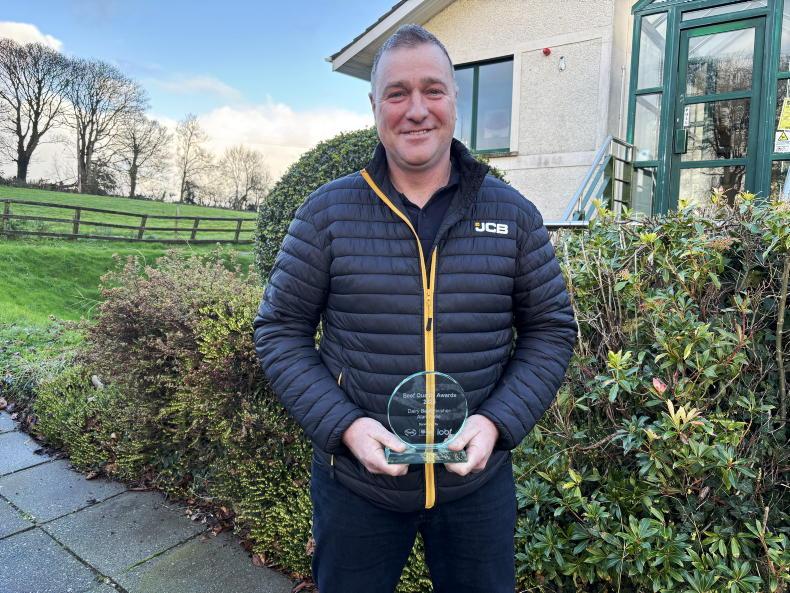
Alan Wylie, Letterkenny, Co. Donegal
Alan combines his busy contracting business alongside rearing dairy beef calves through to slaughter.
Farming just outside Letterkenny, a mixture of young and unweaned calves are purchased, with the majority of unweaned coming from neighbouring dairy farmers that Alan completes contracting work for.
A mixture of Angus, Limousin and a small number of Simmentals are purchased, with weaned calves purchased from this time of year onwards in local marts at 250-350kg.
Numbers wise, Alan looks to purchase 50 calves to rear with anywhere from 100 to 150 weaned calves purchased.
Purchasing drop calves off his own clients and knowing their system gives peace of mind that calves have been well looked after regarding colostrum and vaccination of cows.
foyle food group logo
Alan buys both bulls and heifers, with some bulls finished entire while lighter animals are squeezed and finished as bullocks. For the bull beef system, bulls are slaughtered under 24 months, getting two seasons at grass before being finished indoors.
Heifers are mainly finished indoors under 24 months of age, though some are slaughtered at grass in their second summer, with small amount of concentrates fed to these.
Dairy beef animals tick the box for Alan regarding the price at which they can be purchased compared to suckler-bred stock, while the premium achieved for Angus-cross cattle and hitting in-spec carcases suits both him and the factory.
Bulls are slaughtered at approximately 400kg carcase weight, with heifers slaughtered at 300-350kg. All animals are processed with the Foyle Food Group.
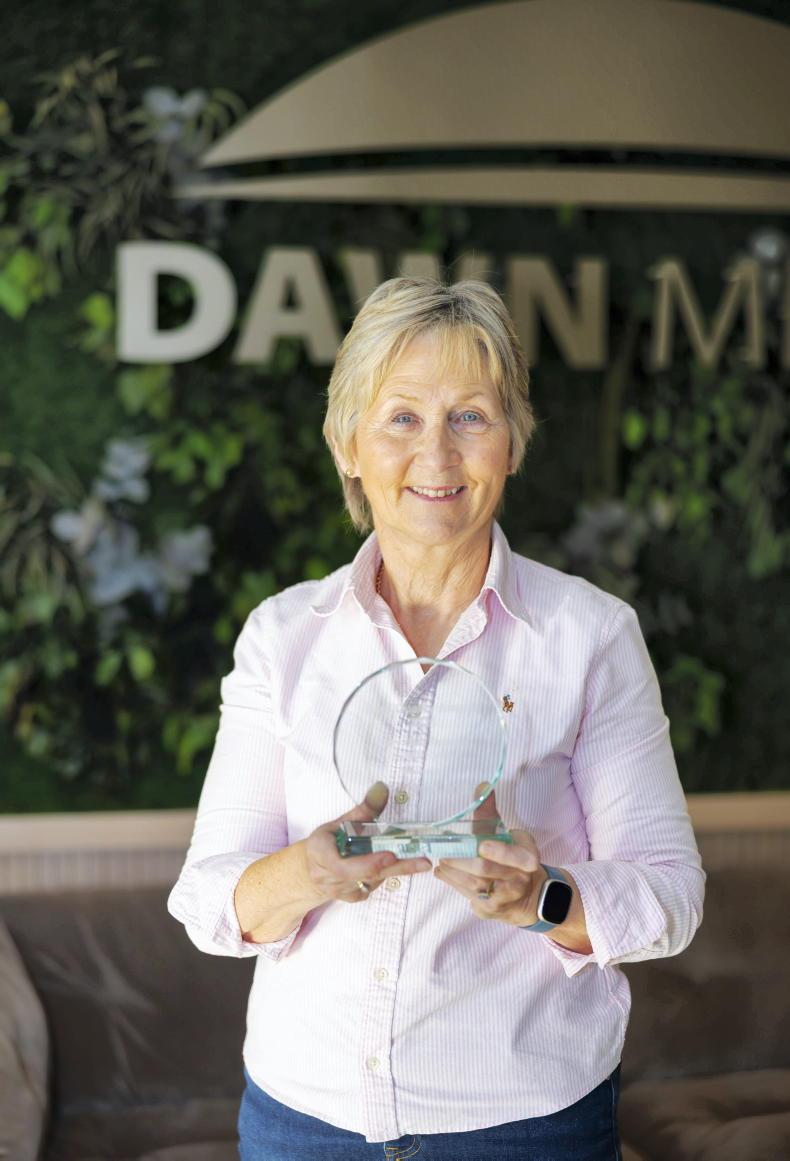
Breda Ryan of Clonmel, Co Tipperary. \ Patrick Browne
Breda and family are running their dairy beef system just outside Clonmel. Cattle are generally purchased in spring at 12 months of age, though some are purchased as younger animals before Christmas. While some stock is purchased privately from known farmers, the majority of cattle are purchased in Kilkenny and Cahir mart.
Breda finishes mainly dairy beef heifers, though some bullocks are also purchased in to bolster number. Regarding breed, no breed preference is taken; value and availability dictate what cattle are purchased, with a mix of Angus, Hereford and continental cattle bought, with a larger portion of this year’s store cattle being Limousin-cross.
Spring-bought cattle go straight to grass, and even though the farm is fragmented in nature, a paddock system is used to gain as much cheap carcase weight as possible from grass.
Dawn Meats logo
Lighter cattle are grouped and fed meal at grass to supplement growth, but the majority of cattle are on a grass-only diet for the summer months before being turned indoors in autumn and progressing on to their finishing diet.
Again, minimal concentrates are fed, with an emphasis on producing high quality silage on farm, while all penning on slats is also matted.
Animals are slaughtered between 24-30 months as they become fit, with roughly 120 cattle slaughtered annually.
All cattle are slaughtered with Dawn Meats, with cattle being processed in the Rathdowney plant.
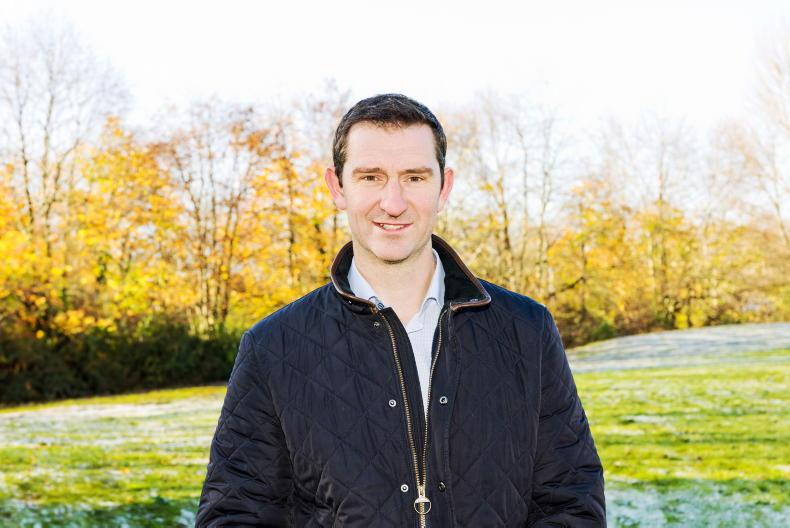
John Crimmins Dunshaughlin, Co. Meath
John Crimmins and his family farm just outside Dunshaughlin in Co Meath. John runs a dairy-calf to beef operation finishing around 100 animals on an annual basis.
He was purchasing cattle as yearlings in April but was finding it increasingly hard to get good value in the market so this year he decided to move back a step and is now buying in weaned calves that are just off milk.
John has a mix of Aberdeen Angus and Hereford calves purchased with more Aberdeen Angus on the market this year compared to other years.
In the past he has sided with the Hereford breed because of their ability to carry a little more weight before becoming too fat.
He’s happy with the performance with some of the weanlings weighed a month ago weighing 360-370kg.
John places a big emphasis on calf nutrition at an early stage and offers ad-lib ration up until about July.

Kepak logo
This he says sets the calf up for life. Bullocks are finished at 25-26 months out of the shed.
Cattle are housed for the second winter and offered good quality ad-lib silage and 2kg/concentrates/head/day.
Around February they are stepped up onto 8kg/head/day of ration and are finished over an 80-100-day period.
Carcase weights are good with 340-350kg carcase weight being achieved. John says that with a bigger focus on buying higher CBV calves next spring he will be able to drive carcase weight closer to 400kg in the near future. John is a member of the Kepak/Tirlán Twenty20 beef club and markets all his cattle through Kepak in Clonee, Co Meath.
Gorey, Co Wexford
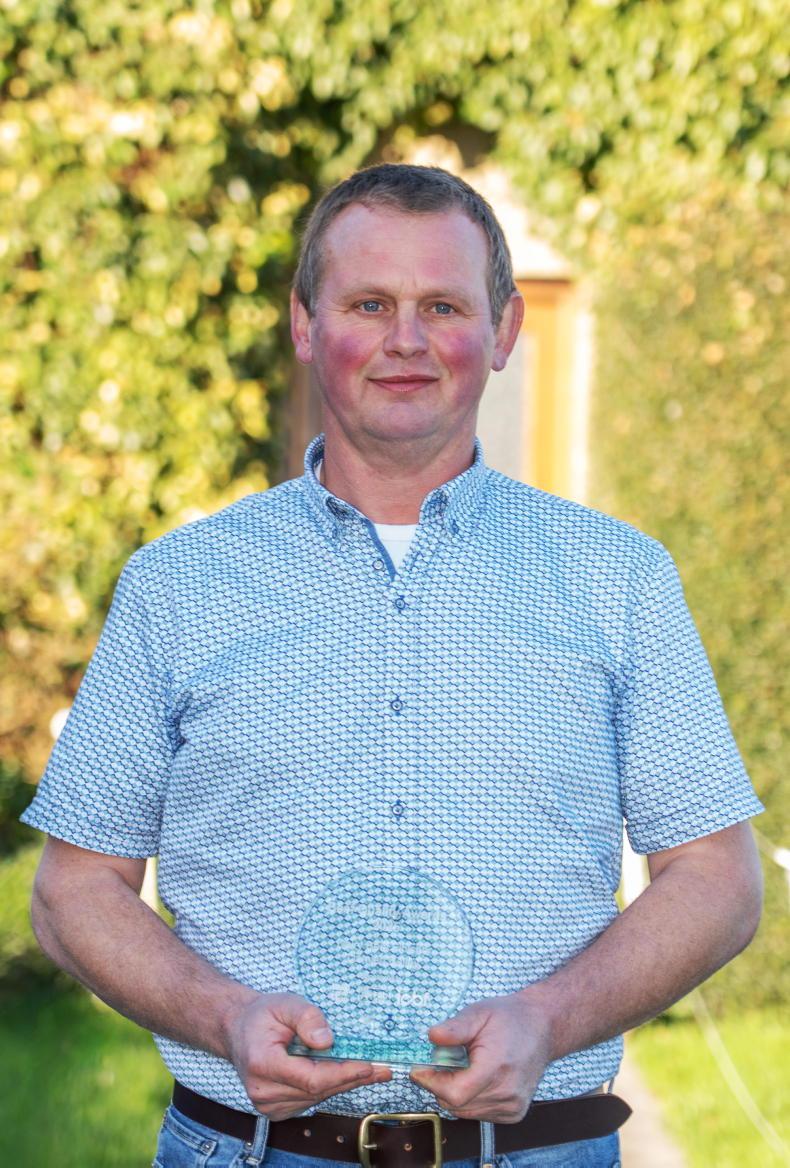
Damien Bailey. \ Barry Cronin
Damien Bailey farms just outside Gorey in Co Wexford. He runs a dairy beef operation finishing about 200 cattle annually with the majority of the cattle he finishes coming from the dairy herd.
He is farming about 60 acres of grass with another 20 acres of tillage ground.
Cattle are purchased all year round with cattle purchased in autumn and winter finished out of the shed in spring with cattle purchased in the spring finished off grass during the spring and autumn period.
The indoor finishing period consists of high-quality ad-lib silage being fed along with a high energy cereal based ration.
The same ration is fed at grass to get a level of finish on animals towards the end of the grazing season.
Liffey Meats logo
Damien has been trying to buy more Aberdeen Angus in the last 12 months with the increased bonus being one of the main drivers for more Angus on the farm.
The majority of the heifers kill out at a carcase weight of 300kg.
He is paying attention to the CBV index and says it will play a bigger role in future purchases of cattle on the farm. Damien processes all his cattle through Liffey Meats in Hacketstown, Co Carlow.
Stephen and Rory Mounsey,
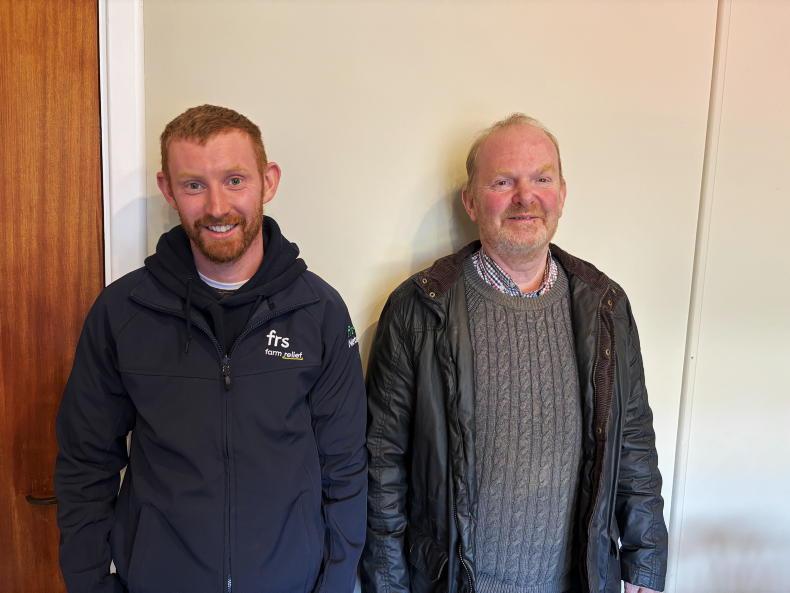
Rory and Stephen Mounsey
Stephen and Rory are combining their off-farm employment with rearing 200 calves each year to beef and ticking all the boxes when it comes to age of slaughter and getting cattle finished to spec. Calves are purchased in spring each year from four-five farmers that they have been dealing with on an annual basis.
While it had been mainly Angus calves in the past, more and more Hereford calves are coming on stream, noted Stephen, while approximately 10 Friesian bulls are purchased to make up numbers. Calves are reared on a mix of automatic and bucket feeders.
Concentrates remain in the diet up until calves start hitting after grass covers. Grass and silage are some of the key things the Mounseys focus on, with first cut silage harvested in the first 10 days of May.
Ashbourne meats logo
This high-quality feed is essential for their weanling cattle to ensure that they develop and hit grass in optimum condition to push on for their second summer in Stepehen’s opinion, without huge volumes of concentrates going in to them. The same is the case with grass, with paddock grazing employed for both the weanlings and store cattle.
Both bullocks and heifers are slaughtered between 19-22 months. They come in to the shed after their second summer and are built up to 7.5kg concentrates/head for a short, sharp finish period. Heifers slaughtered this week averaged 282kg carcase weight, with the majority grading O+ and some R-, while a target carcase weight for bullocks would be 310-320kg. The Mounseys process their cattle through Ashbourne Meats.
Following on from two weeks of suckler beef, this week is the turn of the dairy beef finishers; farmers who are purchasing in calves and weanlings from the dairy herd and bringing through to slaughter.
While the CBVs’ of these animals are inevitably lower than their suckler counterparts, dairy farmers using high CBV beef bulls on their cows are still producing animals capable of achieving slaughter weight at a younger age with less feed than lower CBV animals coming off similar cow types.
Our farmers this week are purchasing a mix of animals; from unweaned calves to weanlings and stores, traditional and continental breeds and doing a variety of finishing programmes, with some bulls kept entire while others are finished as steer beef.
These awards are sponsored by ICBF, FBD and the participating processors.
Moyvane, Co Kerry
Brendan Stack, Moyvane, Co Kerry.
Brendan Stack from runs a dairy-calf to beef system as well as sucklers and is in partnership with his parents.
They farm 170ac between owned and rented land.
Over the month of February, he buys in 60 to 70 dairy-beef heifer calves from two local farmers. They’re bought at about one month old and are settled before calving starts on the families 30-cow strong Aubrac suckler herd.
Reared by Brendan and his girlfriend, Sarah, the calves are mostly Limousin- and Aubrac-crosses with a few Belgian Blue- and Charolais-crosses bought too. Brendan has a preference for continental-cross calves as he gets better kill outs and carcase weights.
He targets an average off over 300kg carcase at 22 to 24 months of age with a fat score of three and usually confirmation scores of Rs with an odd O+ too.
Getting a heavier carcase weight at that age is difficult he said.
ABP logo
All male progeny from his suckler herd are finished at U16 months with an average carcase of 400kg. He also buys some extra Aubrac-cross bulls to finish too. Along with the bulls he purchases heavy store cattle from marts.
The average CBV for his dairy-beef heifers is €251 while the average for the U16 month bulls is €438.
Brendan admits his system is still a work in progress but he has developed the farm a lot in recent years with the addition of two slatted sheds making it a very comfortable operation. All animals are processed with ABP Rathkeale.
Letterkenny, Co Donegal
Alan Wylie, Letterkenny, Co. Donegal
Alan combines his busy contracting business alongside rearing dairy beef calves through to slaughter.
Farming just outside Letterkenny, a mixture of young and unweaned calves are purchased, with the majority of unweaned coming from neighbouring dairy farmers that Alan completes contracting work for.
A mixture of Angus, Limousin and a small number of Simmentals are purchased, with weaned calves purchased from this time of year onwards in local marts at 250-350kg.
Numbers wise, Alan looks to purchase 50 calves to rear with anywhere from 100 to 150 weaned calves purchased.
Purchasing drop calves off his own clients and knowing their system gives peace of mind that calves have been well looked after regarding colostrum and vaccination of cows.
foyle food group logo
Alan buys both bulls and heifers, with some bulls finished entire while lighter animals are squeezed and finished as bullocks. For the bull beef system, bulls are slaughtered under 24 months, getting two seasons at grass before being finished indoors.
Heifers are mainly finished indoors under 24 months of age, though some are slaughtered at grass in their second summer, with small amount of concentrates fed to these.
Dairy beef animals tick the box for Alan regarding the price at which they can be purchased compared to suckler-bred stock, while the premium achieved for Angus-cross cattle and hitting in-spec carcases suits both him and the factory.
Bulls are slaughtered at approximately 400kg carcase weight, with heifers slaughtered at 300-350kg. All animals are processed with the Foyle Food Group.
Breda Ryan of Clonmel, Co Tipperary. \ Patrick Browne
Breda and family are running their dairy beef system just outside Clonmel. Cattle are generally purchased in spring at 12 months of age, though some are purchased as younger animals before Christmas. While some stock is purchased privately from known farmers, the majority of cattle are purchased in Kilkenny and Cahir mart.
Breda finishes mainly dairy beef heifers, though some bullocks are also purchased in to bolster number. Regarding breed, no breed preference is taken; value and availability dictate what cattle are purchased, with a mix of Angus, Hereford and continental cattle bought, with a larger portion of this year’s store cattle being Limousin-cross.
Spring-bought cattle go straight to grass, and even though the farm is fragmented in nature, a paddock system is used to gain as much cheap carcase weight as possible from grass.
Dawn Meats logo
Lighter cattle are grouped and fed meal at grass to supplement growth, but the majority of cattle are on a grass-only diet for the summer months before being turned indoors in autumn and progressing on to their finishing diet.
Again, minimal concentrates are fed, with an emphasis on producing high quality silage on farm, while all penning on slats is also matted.
Animals are slaughtered between 24-30 months as they become fit, with roughly 120 cattle slaughtered annually.
All cattle are slaughtered with Dawn Meats, with cattle being processed in the Rathdowney plant.
John Crimmins Dunshaughlin, Co. Meath
John Crimmins and his family farm just outside Dunshaughlin in Co Meath. John runs a dairy-calf to beef operation finishing around 100 animals on an annual basis.
He was purchasing cattle as yearlings in April but was finding it increasingly hard to get good value in the market so this year he decided to move back a step and is now buying in weaned calves that are just off milk.
John has a mix of Aberdeen Angus and Hereford calves purchased with more Aberdeen Angus on the market this year compared to other years.
In the past he has sided with the Hereford breed because of their ability to carry a little more weight before becoming too fat.
He’s happy with the performance with some of the weanlings weighed a month ago weighing 360-370kg.
John places a big emphasis on calf nutrition at an early stage and offers ad-lib ration up until about July.
Kepak logo
This he says sets the calf up for life. Bullocks are finished at 25-26 months out of the shed.
Cattle are housed for the second winter and offered good quality ad-lib silage and 2kg/concentrates/head/day.
Around February they are stepped up onto 8kg/head/day of ration and are finished over an 80-100-day period.
Carcase weights are good with 340-350kg carcase weight being achieved. John says that with a bigger focus on buying higher CBV calves next spring he will be able to drive carcase weight closer to 400kg in the near future. John is a member of the Kepak/Tirlán Twenty20 beef club and markets all his cattle through Kepak in Clonee, Co Meath.
Gorey, Co Wexford
Damien Bailey. \ Barry Cronin
Damien Bailey farms just outside Gorey in Co Wexford. He runs a dairy beef operation finishing about 200 cattle annually with the majority of the cattle he finishes coming from the dairy herd.
He is farming about 60 acres of grass with another 20 acres of tillage ground.
Cattle are purchased all year round with cattle purchased in autumn and winter finished out of the shed in spring with cattle purchased in the spring finished off grass during the spring and autumn period.
The indoor finishing period consists of high-quality ad-lib silage being fed along with a high energy cereal based ration.
The same ration is fed at grass to get a level of finish on animals towards the end of the grazing season.
Liffey Meats logo
Damien has been trying to buy more Aberdeen Angus in the last 12 months with the increased bonus being one of the main drivers for more Angus on the farm.
The majority of the heifers kill out at a carcase weight of 300kg.
He is paying attention to the CBV index and says it will play a bigger role in future purchases of cattle on the farm. Damien processes all his cattle through Liffey Meats in Hacketstown, Co Carlow.
Stephen and Rory Mounsey,
Rory and Stephen Mounsey
Stephen and Rory are combining their off-farm employment with rearing 200 calves each year to beef and ticking all the boxes when it comes to age of slaughter and getting cattle finished to spec. Calves are purchased in spring each year from four-five farmers that they have been dealing with on an annual basis.
While it had been mainly Angus calves in the past, more and more Hereford calves are coming on stream, noted Stephen, while approximately 10 Friesian bulls are purchased to make up numbers. Calves are reared on a mix of automatic and bucket feeders.
Concentrates remain in the diet up until calves start hitting after grass covers. Grass and silage are some of the key things the Mounseys focus on, with first cut silage harvested in the first 10 days of May.
Ashbourne meats logo
This high-quality feed is essential for their weanling cattle to ensure that they develop and hit grass in optimum condition to push on for their second summer in Stepehen’s opinion, without huge volumes of concentrates going in to them. The same is the case with grass, with paddock grazing employed for both the weanlings and store cattle.
Both bullocks and heifers are slaughtered between 19-22 months. They come in to the shed after their second summer and are built up to 7.5kg concentrates/head for a short, sharp finish period. Heifers slaughtered this week averaged 282kg carcase weight, with the majority grading O+ and some R-, while a target carcase weight for bullocks would be 310-320kg. The Mounseys process their cattle through Ashbourne Meats.





SHARING OPTIONS