



EU proposals which would make supply contracts mandatory between farmers and all processors have been backed by the ICMSA.
In a move which puts the farm body and ICOS in opposition on the issue, ICMSA welcomed the Commission’s push for compulsory supplier contracts.
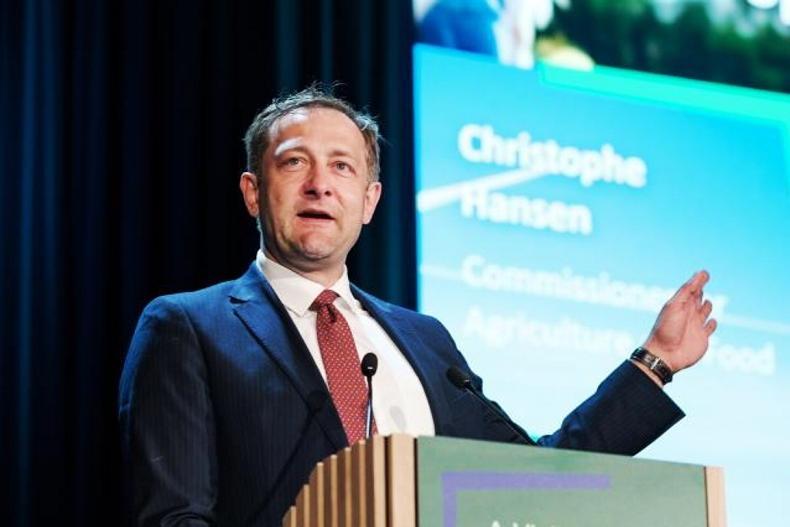
Significant amendments to the EU’s Common Market Organisation (CMO) regulations have been tabled by EU Agriculture Commissioner Christophe Hansen. Hansen argues that his proposals will strengthen the position of farmers in the supply chain and offer greater protection to them.
This view is shared by ICMSA. “Farmers need greater certainty and the proposal under the CMO for compulsory contracts or their equivalent under co-operative rules provide a step in the right direction,” said ICMSA dairy chair, Noel Murphy.
However, the proposed changes are opposed by ICOS and the EU co-operative organisation COPA.
They contend that the changes intrude in the relationship between co-ops and their members and dilute the right of member states to decide whether compulsory contracts are necessary at national level or not.
But the ICMSA believes the proposals are a positive development.
“Properly functioning co-operatives across the EU should have nothing to fear from this legislation,” Murphy maintained. “It is ICMSA’s strong view that the requirements under the legislation when finalised and agreed should apply to all milk processors including co-operatives and there should be no get out clause for anyone,” he insisted.
The proposals, if agreed, would also provide farmers with “mechanisms to address areas of concern in relation to milk price and other issues”, Murphy argued.
“While the detail of the proposed contracts can be refined, the principle of greater protections for individual milk suppliers should be supported by all,” Murphy said.
IFA
The IFA believes that member states should be allowed to interpret the rules as they see fit, an IFA spokesperson said.
“Our milk production system is structured within the co-op model, the critical point of which is to ensure for producers a fair share of the ultimate economic value of their product.
“This outcome is secured through a system wherein ultimately the producer owns and controls the processing entity purchasing their milk.
“The success of that system has meant that mandatory contracts are not a legislative requirement.
“The status quo functions extremely well. It is important therefore that the principle of subsidiarity is respected in this regard.
“We support the retention of the right of member states to determine the appropriate legislative parameters for their respective systems of milk production and supply.”





SHARING OPTIONS