


The Irish Co-operative Organisation Society (ICOS) is calling for a pause in relation to the inclusion of fertiliser in the EU’s carbon border adjustment mechanism (CBAM).
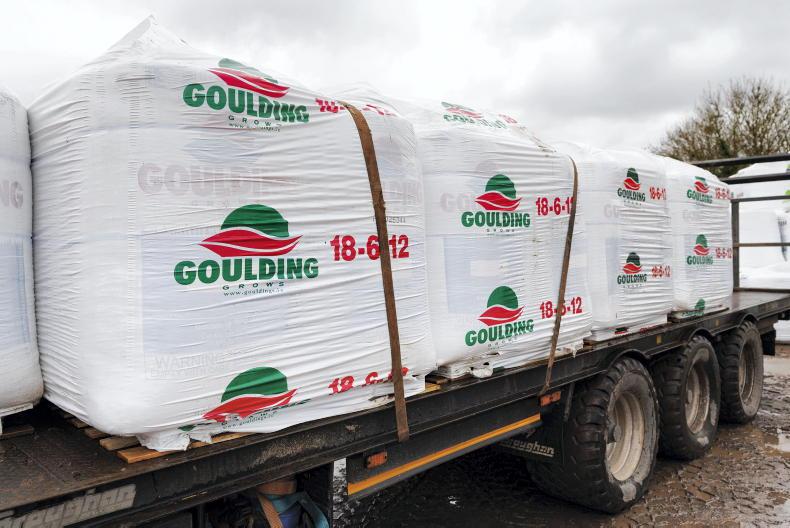
In a letter to Minister for Agriculture Martin Heydon, ICOS highlights how projections indicate a staggering €100m increase in fertiliser costs by 2030 if the tax comes into play.
The tax, which is due to come into effect from January 2026, will have a severe impact on Irish farmers, according to ICOS president Edward Carr.
From 2026, imported fertilisers from outside the EU will be subject to CBAM certificates based on their carbon intensity, with costs aligned to the EU emissions trading scheme (ETS).
At current market rates of €70/tonne carbon dioxide equivalent (CO2e), ICOS maintains that this will add €35/t to €80/t to the cost of fertilisers such as urea and CAN.
Projections show these costs could rise to as much as €250/t by 2034.
“We fully support sustainable climate action, but not at the cost of placing Irish farmers at a serious competitive disadvantage, particularly when the UK will not implement its version of CBAM until 2027.
"This will also create divergence on the island of Ireland between NI and ROI, creating a significant cross-border price gap," Carr said.
Impact assessment
ICOS also raised concerns about the lack of an independent economic impact assessment by the European Commission on CBAM’s effect on fertiliser supply and farm input costs.
The letter further notes the EU’s upcoming additional tariffs on Russian and Belarusian fertilisers from July 2025, which could further restrict availability and push prices higher, despite some monitoring provisions announced by the Commission.
“ICOS is urging the Government to take immediate action to protect Irish farmers from the financial impact of the EU’s carbon border adjustment mechanism.
"Specifically, ICOS is calling for a full EU-level economic impact assessment of CBAM on fertiliser prices and farm input costs, the introduction of transitional supports or exemptions for the Irish agricultural sector, close co-operation with the UK to prevent a cross-border price gap and active monitoring of the fertiliser market to safeguard price stability and supply for farmers,” said Carr.
The Irish agri-food sector, he added, cannot absorb these additional costs without undermining our competitiveness and sustainability targets.
“We urge the Minister to act decisively and represent Ireland’s unique concerns at EU level.”


SHARING OPTIONS