


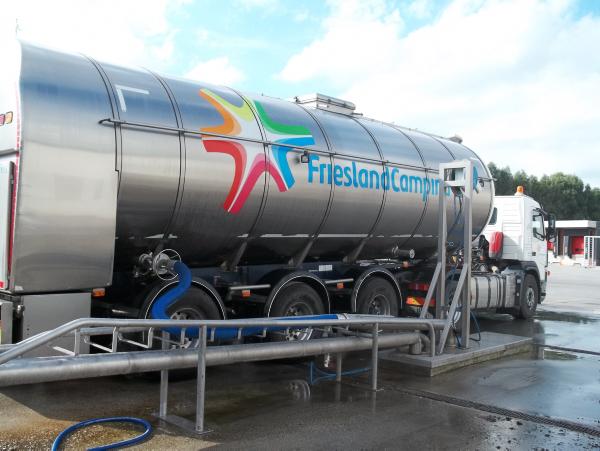
In 2013, Dutch group FreislandCampina saw revenue jump by 10.8% to €11.4bn through a combination of volume growth and higher prices.
The group noted improved performance in all divisions. However, economic conditions in Europe put pressure on volumes and margins for the consumer products division.
Operating profits were up by 5.3% to €513m. The improved operating profit was mainly due to volume growth and increased efficiencies. However, when a goodwill impairment charge is taken into account, operating profit fell by 35.7% to €313m. Net profit fell by 43.5%.
The impairment charge of €200m concerned a portion of goodwill relating primarily to the acquisition of Nutricia in 2001. The reason given for the charge is the poor economic situation in Europe.
The reduction in the profit caused by the goodwill impairment has not affected the level of the performance premium or the distribution of member bonds to the farmers.
Half of the revenue growth was achieved through price increases, with acquisitions contributing €364m. Currency translation had a net negative effect on revenue of €157m.
All categories except dairy-based beverages in Europe improved their performance, with the infant nutrition category achieving the strongest volume growth (10.8%). A similar level of volume growth was seen in dairy-based beverages in Asia and Africa while branded cheese grew in volume by 9.5% due to increased exports.
Operating margins in the ingredients division rose by 200bps to 15.3%, while the cheese, butter and milk powder division margins rose 300bps to 1.8%.
Its largest division, EMEA consumer products, saw operating margin fall 590bps to 0.3%.
Investments
FrieslandCampina has existed for five years and during this time the company has invested €1.8bn.
Investments amounting to €650m are budgeted for 2014 and as is the case in Ireland, the dairy sector is seen to be making a positive contribution towards the Dutch economy.
The group has been busy spending money over the last two years, and last year invested €559m in expanding its infant nutrition and milk processing capacity. It has acquired two cheese companies, repurchased the Friso infant nutrition brand and acquired a 7.5% interest in Synlait Milk Ltd in New Zealand.
The group recently opened an innovation centre in the Netherlands to complement a development centre in Singapore. R&D will concentrate on infant nutrition and dairy-based beverages and technologies.
Even though significant investments have been made, net debt increased moderately during the year to €696m.
Value for member farmers
The group reported a milk price for member dairy farmers of 42.49 c/l excluding VAT, up 17.2% on 2012. The guaranteed price was up 16.5% to 39.45c/litre, while the performance bonus was up 28.3% to 3.04c/litre (at 4.41% fat and 3.47% protein). The 3.04c/litre bonus included a 1.81c/litre performance premium and 1.23c/litre distribution of member bonds.
CEO Cees ‘t Hart said: “2013 was a good year for FrieslandCampina. The improved result was due primarily to volume growth in the three strategic growth categories of infant nutrition, dairy-based beverages and branded cheese.”
He said that together, these led to the highest milk price ever paid out by the group.
A dairy giant
According to a recent Rabobank report, FrieslandCampina is the fifth largest dairy company in the world, and seventh in terms of milk intake, with a turnover of €11.4bn. It processes 10.6bn litres of milk every year. In the Netherlands, it processes 60% of the milk pool. The company is fully owned by Zuivelcoöperatie FrieslandCampina UA, with 19,244 member dairy farmers in the Netherlands, Germany and Belgium. The group has grown through well-founded mergers and acquisitions. These takeovers widened the international perspective of the company, allowing access to Russia through their German mergers in the 90s and into Hungary and Romania with the Nutricia taker in 2001.
The group employs almost 22,000 people, operates in 28 countries and exports to over 100.




SHARING OPTIONS