



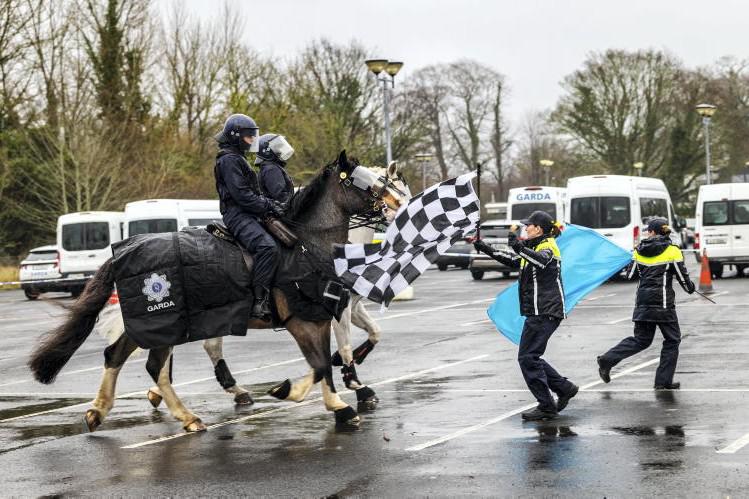
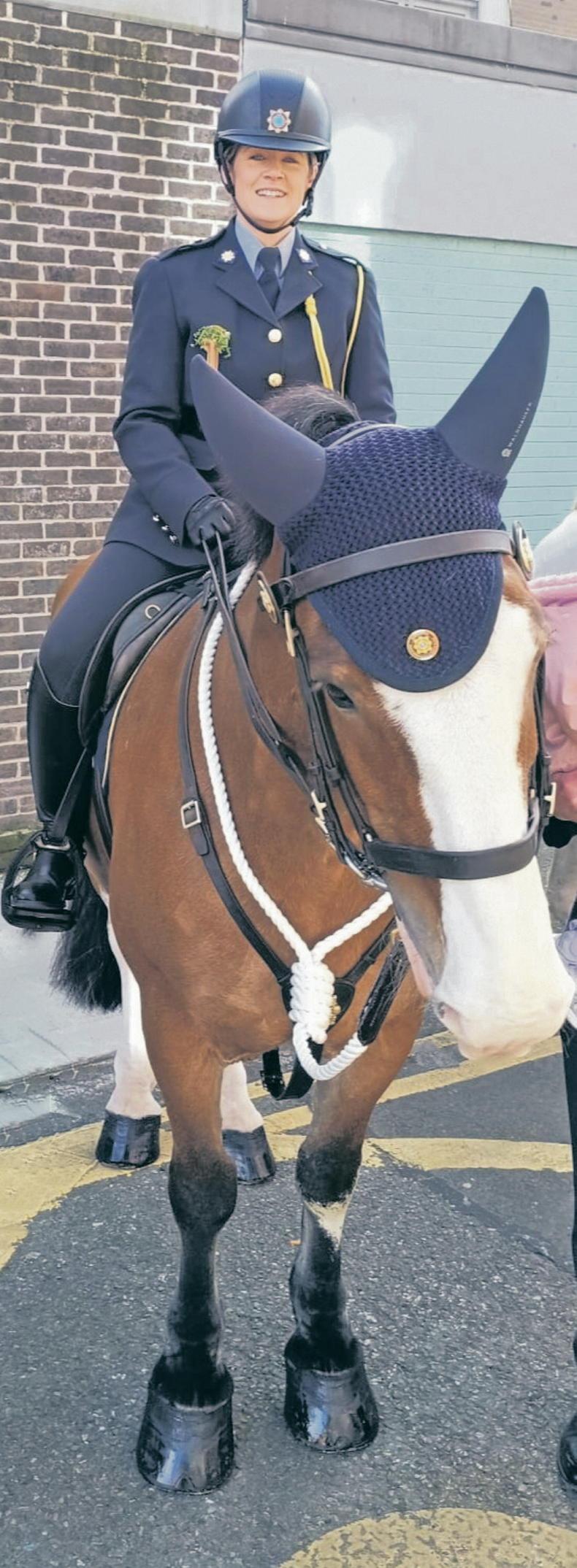
The horses of the An Garda Síochána Mounted Unit are impossible to ignore. On quiet days, there’s often something reassuring and quietly authoritative in their presence on our streets. Yet, as Sergeant Ciara Lowry explains, their role extends far beyond that steadying influence, encompassing an increasingly complex policing brief.
“We’ve only had a mounted unit in Ireland for the last 26 years,” says Ciara. “Our role in the mounted unit is both within the guards and with the general public. First, we have a high-visibility policing role. We go on patrol like you would in a patrol car or on a bike, but we’re on horseback. We can do checkpoints; we’re in towns and cities all around Ireland. We’re a national unit, so we travel wherever we’re needed.
“Along with that, our role has really evolved into crowd management and protest management. We now have a public order role. Many would have seen that in events like the Citywest protests and big matches. We’re being utilised a lot more down the country too.
“Nine times out of 10, we don’t need to get involved. But we can push back a crowd, to block off a road, to contain an area. We’re big, we’re stocky. There’s research suggesting that one mounted Garda is equivalent to about eight members on foot. If you have seven horses coming trotting at you, you will move. There’s a chance you’ll turn around and run.”
Based in their stables in Dublin’s Phoenix Park, the horses’ work is not confined to urban settings. The unit also operates in other landscapes, often in sensitive situations.
“We also have rough terrain searching capabilities. We can go over streams, rough ground and places where vehicles can’t get to. That might be searching for evidence or missing persons. And then we do ceremonial duties too, like State visits and St Patrick’s Day.”
Behind every public appearance lies a routine shaped entirely by the horses’ needs. There is no separation between policing and horsemanship here. The work is constant, practical and physical.
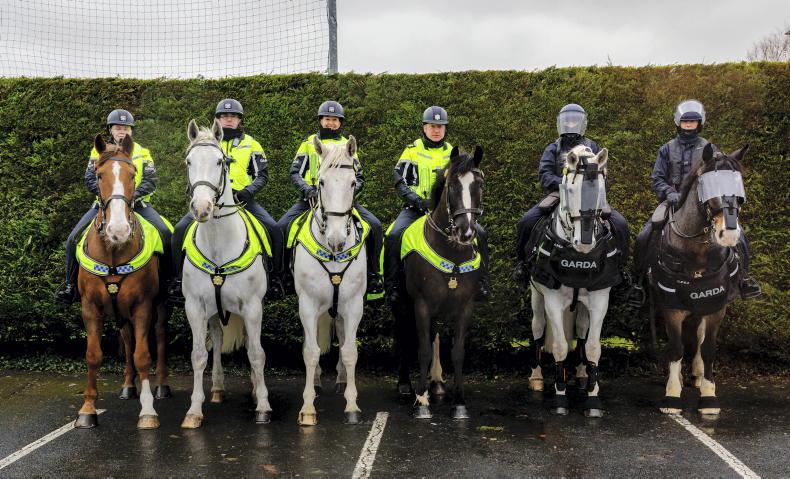
“People think we just rock in, and there’s a horse there ready to go, but we do it all. We do two shifts, 7am to 5pm and 2pm to midnight. The horses are fed at seven, they’re mucked out, turned out if we can, exercised, and then we might go on patrol.
"We do have a groom, but we’d love to expand that because it would free us up more for patrol work. At the moment, a lot of the stable work is still on us. There’s lunchtime hay too, skipping out, farriers, vets. It’s a one-stop shop. The time runs out fairly quickly when you’re dealing with horses.”
Challenging moments
While the Irish Draught remains central, the unit has become more open in what it looks for.
“Traditionally, we would have gone with the Irish Draught because they had the qualities we were looking for, and that still would be our go-to. But the breed has changed over time. They’re sportier now, and we want the old traditional plough horse.
“The biggest thing is their temperament and their brain. A lot of our job is walking and standing. Standing is huge. Some horses don’t want to stand. Size is important too – 16.2hh would be our minimum. We have everything from Irish Cobs to Friesian crosses, Clydesdale crosses and even a Percheron cross.”
“Just because it’s not an Irish Draught doesn’t mean we’d rule it out. If it has the brain, is calm, 16.2hh and above and a gelding, we’ll go and look at it.”
It is in the most challenging moments that these horses reveal their true character, however, and Ciara has some prime examples of when those special qualities come to the fore.
“We were in the Citywest riots last year, and we had fireworks coming straight at the horses. They didn’t stand still, but they didn’t turn and run. Missiles were being thrown, things were being set on fire and blocks were being ripped up and thrown. The horses were right beside it all. They stood head-on.
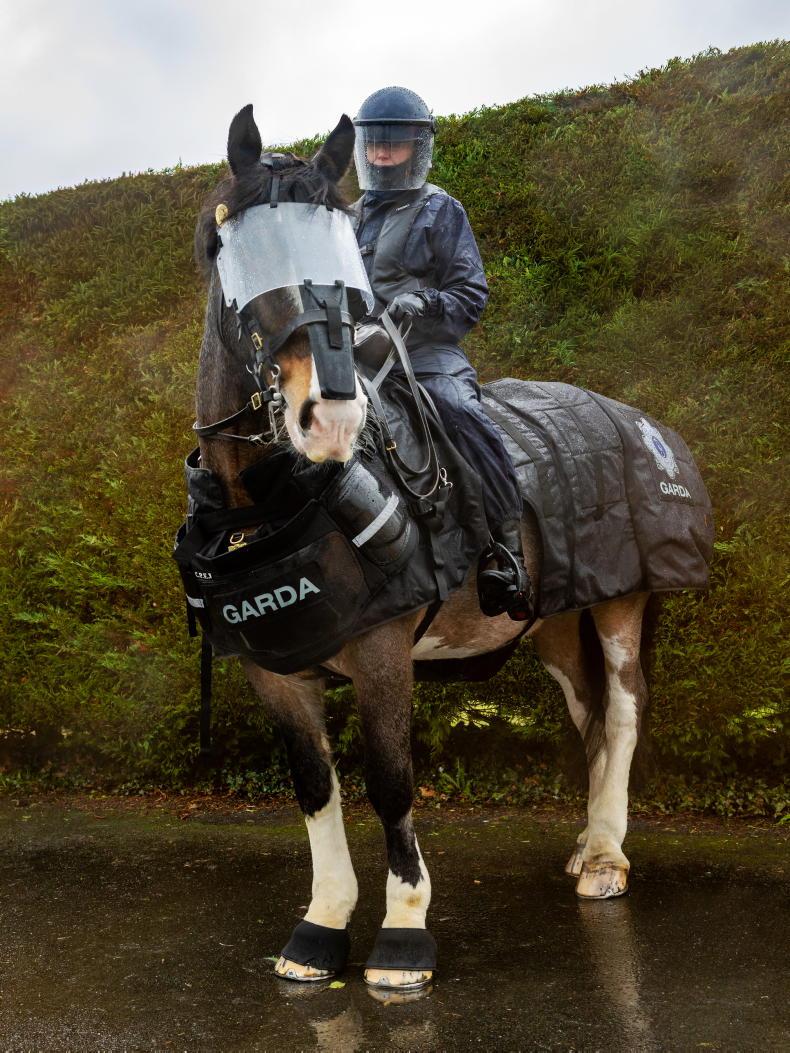
“We were so proud. You don’t even think of yourself. You’re just looking at them thinking, ‘These are doing amazing’.”
Recovery and care of the horses afterwards are essential to the unit of only 11 horses.
“It took it out of them. They were tired. They did four nights in a row. We gave them a good rest after. Their welfare is something we take very seriously. We ask them to go into situations you would never normally take a horse into, so we give them that respect afterwards.”
When it comes to training the horses for this unique job, there is no fixed timeline. Each horse progresses at its own speed, with patience at the centre of the process. Confidence is built carefully, often alongside experienced horses.
“Everything is very slow and steady,” says Ciara. “It’s all gradual. We don’t throw too much at them. We don’t blow their mind. They always go out with a buddy, a horse that has seen everything. And it’s about consistency. We never push them too hard or over their limit.
“Training is completely horse-led. Some horses might be ready in a few months; others might take two years. There’s no conveyor belt. It’s whatever they need.”
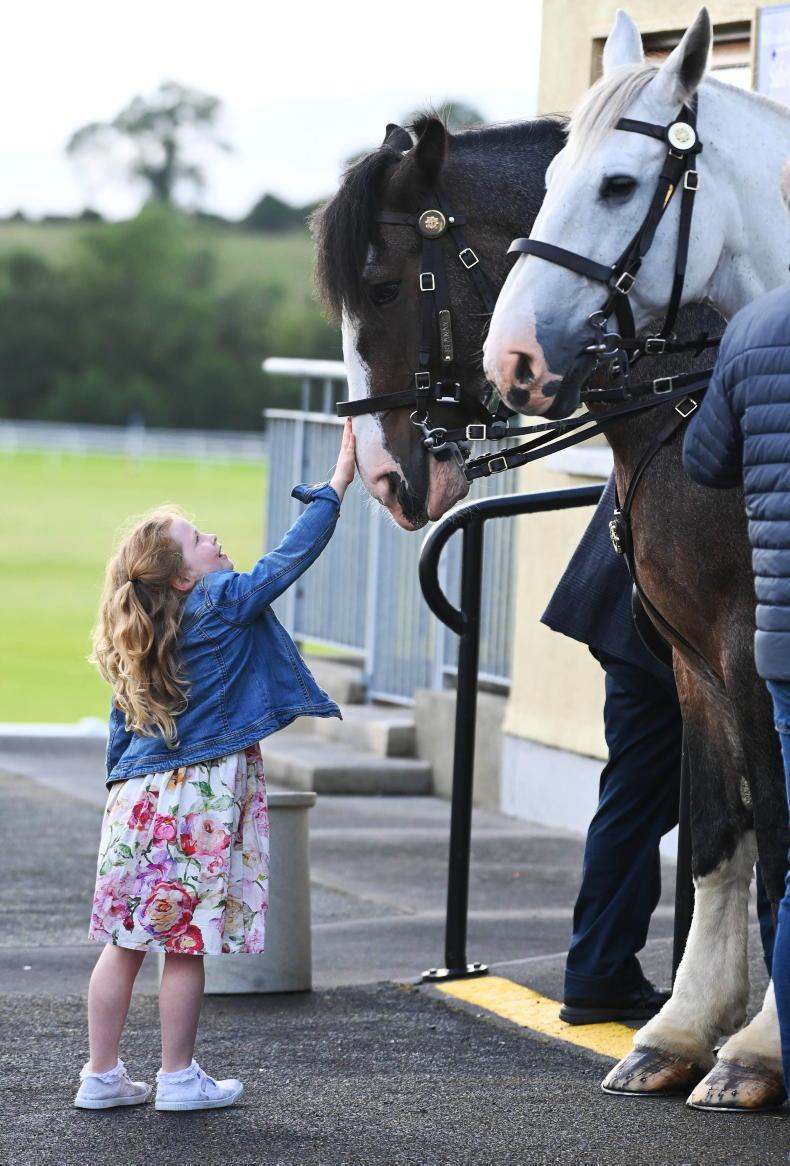
The bond between rider and horse is central to everything the unit does. These are not interchangeable roles, but relationships built on familiarity and trust.
“They’re our friends, our colleagues. They’re part of you. Everyone will have a soft spot for one. Sometimes riders are assigned to a horse so they know them inside out. If something is off, they’re responsible for picking up on it.”
It is a responsibility that continues beyond the horse’s working life.
“We don’t sell them on – they’ve done their service. We want them to have a nice life and they go to carefully chosen homes as companion horses. We vet the homes and make sure they’re right.”
Throughout every aspect of the job, welfare remains the guiding principle. Time to be a horse is considered essential, not optional.
“Turnout is key. If we had our way, we’d ride them out of the field every day. You notice the difference. They’re happier, more relaxed, even though they’re busier with work. We’re very conscious of their mental wellbeing as well as physical.”
For all their strength, it is their gentleness that leaves the deepest impression as Ciara explains: “You might have a horse that can stand up to a riot, and then a vunerable person comes over, and they just melt. They’ll drop their head, they’ll stand for hours, they know.”
It is this instinctive softness that makes them so powerful in a completely different way. Wherever they go, the horses draw people in, creating connections that might not otherwise happen.
“That’s the part that stays with me,” Ciara says. “The joy they bring to people. You go home feeling good after those days. The reaction we get from the public is unbelievable. The first thing you see is phones going up everywhere. It’s a conversation opener. It breaks down barriers.
“We had a situation where Gardaí in cars were being ignored, but when we came back on horses the next day, everyone came over to talk. Same uniform, same people, but the horses made the difference.
“It’s full-on. Horses are 24/7. You can’t just switch them off like a patrol car. We’re there on Christmas Day, and they still need to be fed. But I absolutely love it.
“We have a great unit, a great bond, and the focus is always on the horses and their welfare. You’re getting paid to work with horses. What more would you want?”
And as the unit continues its work across the country, the search for the right horse never stops.
“We are always looking for horses. Irish Draughts are brilliant, but we’re not snobs about it. If the horse meets the criteria, we’ll look at it.”


SHARING OPTIONS