



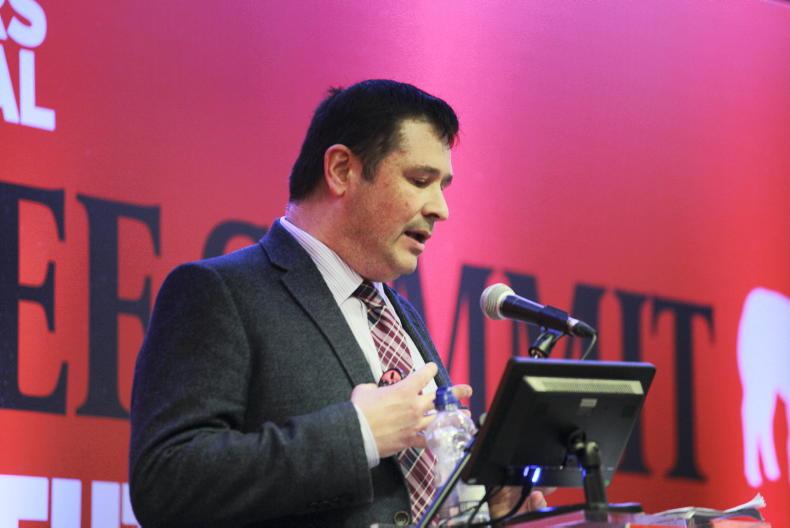
Professor of Agriculture and Food Economics at UCD Michael Wallace said that here should be “judicious management” of the available supplies of inputs across farms, so that farmers can maintain good levels of production and not exacerbate an already "difficult situation".
“There aren’t really easy solutions because of the nature of global commodity markets and the fact that we [Ireland] are exposed to factors that lie well beyond our own shores," he told RTÉ’s Morning Ireland.
“Russia and Belarus are dominant global suppliers of fertiliser and in Ireland we typically source 25% of our fertiliser from Russia.
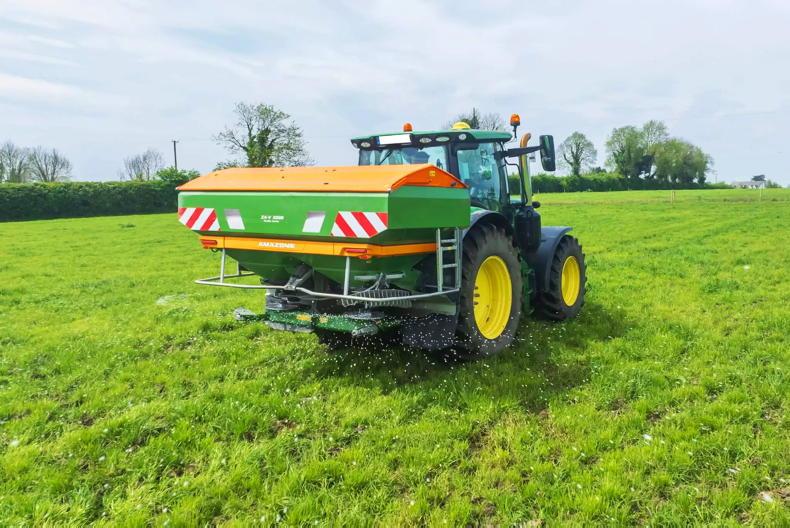
Fertiliser use
“That input has dramatically increased in price, more than doubling. What we are seeing both in Ireland and internationally is farmers reigning back on their use of fertiliser.
"That is, in turn, likely to reduce levels of output supply and tighter supply going forward will mean higher prices," he said.
Wallace stressed that we must look at protecting feed resources and ensuring that there is adequate feed produced so that farmers don’t run into problems later in the year.
What we have to try and do is look at the things we can control
He also added that Ireland must look at diversifying its sourcing of essential inputs, such as fertiliser and feed stuffs.
“What we have to try and do is look at the things we can control.
“How we can cushion the inflationary blow for low-income families, but also deal with trying to protect a supply of vital inputs to farmers," he said.
He said that with regards to food inflation, the country is facing a “perfect storm” of inflationary pressures that now look to be more elevated and likely to persist for longer than was forecast.
“What we noticed was the take-off of food price inflation particularly starting last autumn and accelerating month on month as we emerged from the pandemic.
“Supply chain issues, rising energy prices and labour shortages were already getting price pressures under way.
“We had already seen food price inflation reaching 3%.”
The impact of war
He said that what will be seen from the Central Statistics Office (CSO) inflation figures being released on Thursday 7 April is the early indications of the impacts of the Russian invasion of Ukraine and particularly how dramatically that has intensified the emerging inflationary pressures in the food area.
Wallace said that dramatic rises have been seen in bread, breakfast cereals, pasta and cooking oils.
“These reflect our direct exposure to disruption in grain markets that are emerging, particularly products like sunflower oil, with Ukraine and Russia accounting for two-thirds of supply."
Wallace said that we could struggle with availability of some imported products. However, he does not predict that this will lead to a scarcity as such.
The main impact, he said, will be the general rise at supermarket tills.




SHARING OPTIONS