I am concerned that my children will fight over the farm when I am gone. I have a son who has a great interest in farming and while he works off farm, I think he is the most likely to keep it going when I am gone. As he is not farming currently, the rest of the children think it should be divided up amongst all of them. In my will, I have left the farm to my son and the bit of money I have between the rest of them. Have I done the right thing?
ANSWER: it is up to you to decide what you want to do with the farm. That said, of more importance to most parents is that the children do not end up fighting over land.
From a planning perspective, solicitors often advise farm owners to avoid outright exclusion of any child from a will. Case law would suggest providing even a modest portion, perhaps 10-20% of the estate’s value can help insulate the will from a Section 117 challenge.
Better still you could transfer the agricultural assets to your son while you are alive, thus taking them out of the estate that could be subject to challenge. That way when you die, all that is left is the money which will be divided amongst the rest of your children equally.
Section 117 claims
Family farms are one of the most common sources of dispute in probate law. Increasingly, there’s a focus on Section 117 of the Succession Act 1965, which allows a child to challenge a parent’s will on the grounds that the parent has failed in their “moral duty” to make proper provision.
Under Section 117, a child may apply to the court where they believe they have been unfairly excluded or inadequately provided for. The court will then consider whether the deceased, viewed as a “prudent and just parent,” made proper provision for each child in light of their means and circumstances.
The court’s role is not to rewrite the will according to its own sense of fairness, but to correct a clear moral lapse based on the circumstances at the date of death.
Section 117 involves a two-step test with these important questions:
Has the testator failed in their moral duty to make proper provision for the child? If so, what level of provision should be made? There is a strict six-month time limit from the date of the Grant of Probate to bring a S117 claim forward.
Moral duty and the farm child
Courts have recognised these nuances where one child inherits the farm and the rest very little.
In one case in 2003, the High Court noted that “special circumstances” may arise where a child has shaped their life on the belief they would inherit the farm.
Such reliance can give rise to a moral duty on the part of the testator. On the other hand, where another child has been educated, supported in business, or received gifts during the parent’s lifetime, that may discharge the parent’s obligation.
Looking to another case in 2019, a son who had left school early to work the family farm received only 3.5ac (worth €42,000) out of an estate valued at €3.4m, while another sibling received over 200ac. The court held that a “just and prudent parent” would have made more substantial provision for the claimant. A moral duty was found, and the son was awarded a share worth approximately €1.2m.
The decision reflected not just the disparity in provision, but the claimant’s reliance on family promises and his lack of alternative prospects after years of farm work.
By contrast, a different case in 2019 had a situation whereby the estate’s main asset was a 75% shareholding in a family-run pub. One child had been deeply involved in the business; others, including the claimant, had built independent lives elsewhere.
The Court of Appeal upheld the will, emphasising that the “moral duty” varies with each family’s circumstances and that the testator’s obligations to the active successor can outweigh other children’s claims.
Financial need and moral duty
Traditionally, Section 117 claims required proof of ‘financial need’. Adult children in comfortable positions, even if disappointed, are unlikely to succeed. That principle was reinforced in a case in 2001, where daughters who had endured a frugal upbringing failed in their claims because they had no immediate financial need.
More recent cases suggest that “need” may include not only hardship but also fairness in light of lifetime contributions to the family enterprise.
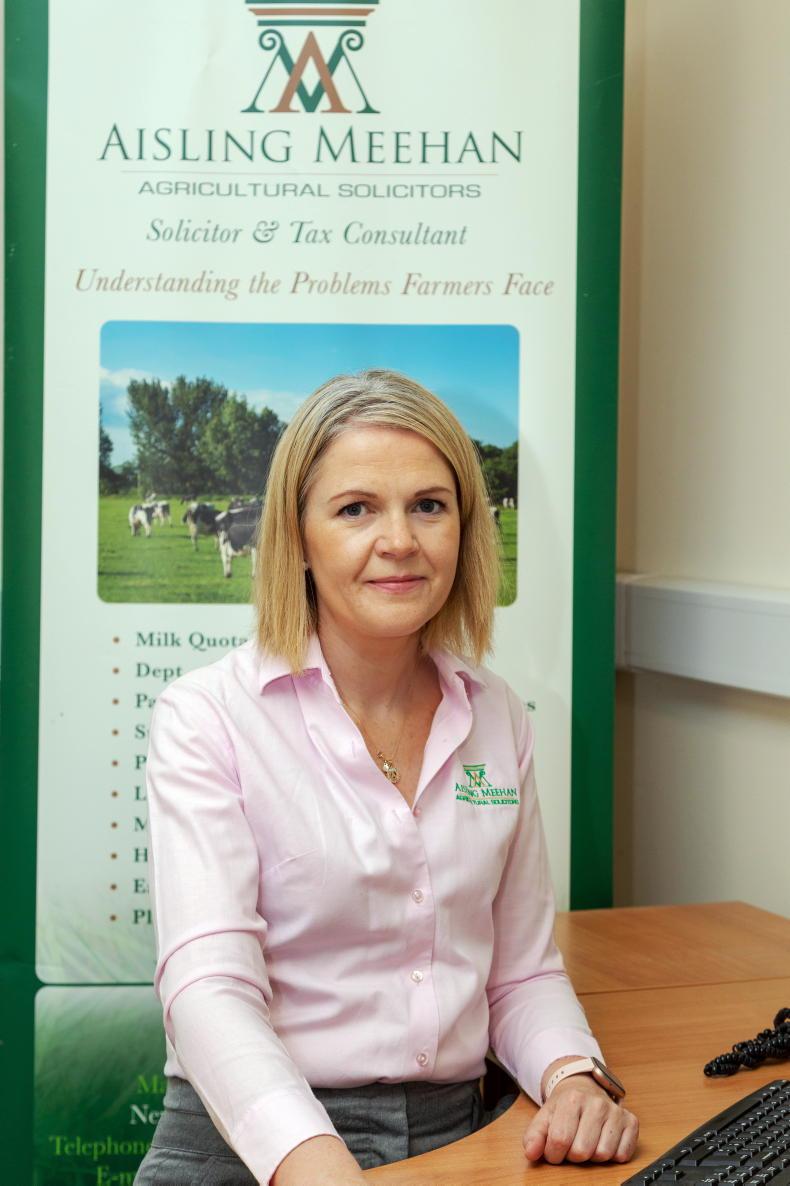
Aisling Meehan, agricultural solicitors and tax consultants.
Disclaimer: The information in this article is intended as a general guide only. While every care is taken to ensure accuracy of information contained in this article, Aisling Meehan, Agricultural Solicitors and Tax Consultants does not accept responsibility for errors or omissions howsoever arising. E-mail aisling@agrisolicitors.ie
I am concerned that my children will fight over the farm when I am gone. I have a son who has a great interest in farming and while he works off farm, I think he is the most likely to keep it going when I am gone. As he is not farming currently, the rest of the children think it should be divided up amongst all of them. In my will, I have left the farm to my son and the bit of money I have between the rest of them. Have I done the right thing?
ANSWER: it is up to you to decide what you want to do with the farm. That said, of more importance to most parents is that the children do not end up fighting over land.
From a planning perspective, solicitors often advise farm owners to avoid outright exclusion of any child from a will. Case law would suggest providing even a modest portion, perhaps 10-20% of the estate’s value can help insulate the will from a Section 117 challenge.
Better still you could transfer the agricultural assets to your son while you are alive, thus taking them out of the estate that could be subject to challenge. That way when you die, all that is left is the money which will be divided amongst the rest of your children equally.
Section 117 claims
Family farms are one of the most common sources of dispute in probate law. Increasingly, there’s a focus on Section 117 of the Succession Act 1965, which allows a child to challenge a parent’s will on the grounds that the parent has failed in their “moral duty” to make proper provision.
Under Section 117, a child may apply to the court where they believe they have been unfairly excluded or inadequately provided for. The court will then consider whether the deceased, viewed as a “prudent and just parent,” made proper provision for each child in light of their means and circumstances.
The court’s role is not to rewrite the will according to its own sense of fairness, but to correct a clear moral lapse based on the circumstances at the date of death.
Section 117 involves a two-step test with these important questions:
Has the testator failed in their moral duty to make proper provision for the child? If so, what level of provision should be made? There is a strict six-month time limit from the date of the Grant of Probate to bring a S117 claim forward.
Moral duty and the farm child
Courts have recognised these nuances where one child inherits the farm and the rest very little.
In one case in 2003, the High Court noted that “special circumstances” may arise where a child has shaped their life on the belief they would inherit the farm.
Such reliance can give rise to a moral duty on the part of the testator. On the other hand, where another child has been educated, supported in business, or received gifts during the parent’s lifetime, that may discharge the parent’s obligation.
Looking to another case in 2019, a son who had left school early to work the family farm received only 3.5ac (worth €42,000) out of an estate valued at €3.4m, while another sibling received over 200ac. The court held that a “just and prudent parent” would have made more substantial provision for the claimant. A moral duty was found, and the son was awarded a share worth approximately €1.2m.
The decision reflected not just the disparity in provision, but the claimant’s reliance on family promises and his lack of alternative prospects after years of farm work.
By contrast, a different case in 2019 had a situation whereby the estate’s main asset was a 75% shareholding in a family-run pub. One child had been deeply involved in the business; others, including the claimant, had built independent lives elsewhere.
The Court of Appeal upheld the will, emphasising that the “moral duty” varies with each family’s circumstances and that the testator’s obligations to the active successor can outweigh other children’s claims.
Financial need and moral duty
Traditionally, Section 117 claims required proof of ‘financial need’. Adult children in comfortable positions, even if disappointed, are unlikely to succeed. That principle was reinforced in a case in 2001, where daughters who had endured a frugal upbringing failed in their claims because they had no immediate financial need.
More recent cases suggest that “need” may include not only hardship but also fairness in light of lifetime contributions to the family enterprise.
Aisling Meehan, agricultural solicitors and tax consultants.
Disclaimer: The information in this article is intended as a general guide only. While every care is taken to ensure accuracy of information contained in this article, Aisling Meehan, Agricultural Solicitors and Tax Consultants does not accept responsibility for errors or omissions howsoever arising. E-mail aisling@agrisolicitors.ie








SHARING OPTIONS