



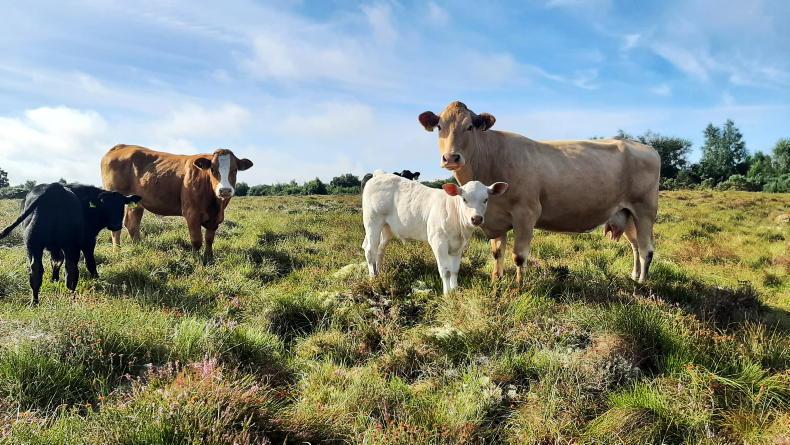
The lazy “cull the national herd” line was rolled out again this week across mainstream media. It always seems to be seen as the easy solution by those who don’t or don’t want to understand the role farmers and food producers play in rural Ireland.
This week’s content was fuelled in part by an incomplete report, co-ordinated by the Environment Protection Agency (EPA), that was largely finished last summer but never published. It provided the Irish Daily Mail with front page headlines throughout the week – Livestock cull of 30% needed, Farmer Uprising if Cattle cull required etc.
The authors of the report from the Atlantic Technological University (ATU – formerly GMIT) are furious and feel their work has been unfairly portrayed and isolated. Essentially, their work is a summary of what potential changes to land use are required to achieve net zero greenhouse gas (GHG) emissions by 2050 when farming and forestry environmental ambitions are combined.
Let’s outline some of the facts. Firstly, the final report has not been published yet. It will contain options which point to a 30% cull in livestock numbers alongside high rates of afforestation and peatland rewetting. Any one of these three solutions is no good on its own if net zero by 2050 is the ambition. Remember also that 2050 is a long way away. New science and modern accounting mechanisms will help meet ambitions more easily.
Secondly, the ATU work is just one part of a five-part report that needs to be considered in the round. So the economic impact and analysis around culling, forestry and rewetting needs to be outlined and published. The subsequent impact on rural towns and villages of such land use changes needs to be analysed. After all that, the policy needs to be drafted and debated.
Environmental ambitions
The nub of the issue here is that very soon forestry is to be included with agriculture in a new accounting system for GHG emissions. This will make meeting environmental targets an even bigger industry challenge. Instead of just being 21,000 kilotonnes of carbon dioxide equivalent in the red because of farming, including the broader land use category with farming will mean the carbon dioxide equivalent will be closer to 28,000 kilotonnes in deficit.
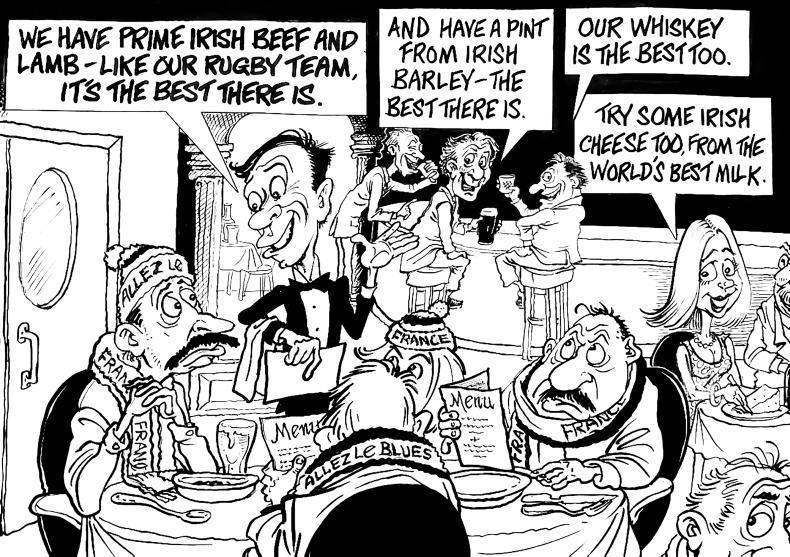
So while the ATU researchers were pressurised to finish their work last summer, it seems the report then was left to stew for six months. Then, this week, it was drip fed in isolation a sort of kite flying, to condition the general public and further fuel the fire against food and farmers. Supposedly this would make the job of the farm organisations a battle too hot to handle. Has it worked? I believe the public are now seeing through this headline-grabbing anti-farming rhetoric.
It is very clear that the Government is kicking the can down the road. The policy implications of this land use review combined with existing farming environmental challenges involve taking vote-swinging decisions.
In this vacuum of inaction, delay tactics, leaks, sloppy work by the EPA, and indecision, the farmers producing food make headlines in mainstream media for all the wrong reasons.
There is a clear roadmap to bring this research work together sooner rather than later to allow this crucial piece of land use review to be taken seriously and subsequent policy developed.
Forestry
At the moment, Government policy is trying to kickstart a forestry programme. However, the engine hasn’t fired yet despite public announcements and fanfare. Another 2,000 of the 130,000 farmers are transitioning into pseudo organics with subsidy sweeteners to further reduce stocking rates.
Political decisions are being taken not to support the compensation and phased transitioning of the suckler sector, so it withers away.
Further political decisions sold as environmental solutions, such as the nitrates restrictions that are being imposed on dairy farmers to reduce stocking rates. Idealistic proposals to grow more grain are failing miserably. CAP reform is moving money from production to environmental ambitions.
Very clearly the Government needs to grab a firm hold and show policy leadership for a sector so important to rural Ireland.




SHARING OPTIONS