The Power family, well known for their hurling abilities, operate a large-scale dairy and beef finishing enterprise near Callan, Co Kilkenny.
Brothers Jim, Edmond and John, alongside their sons now milk 650 spring-calving cows and finish 730 head of cattle annually.
While the farm is focused on milk production, it is mixed in the sense that all dairy-beef animals are reared and finished on the farm.
All replacements heifers are bred and reared on farm.
The farm is fairly self sufficient in the sense that all crops in addition to grass, ie maize, fodder beet, barley and wheat are grown on farm and harvested using their own machinery for feedstocks. Having a range of feed straights available means that a diet feeder plays a key role when feeding livestock.
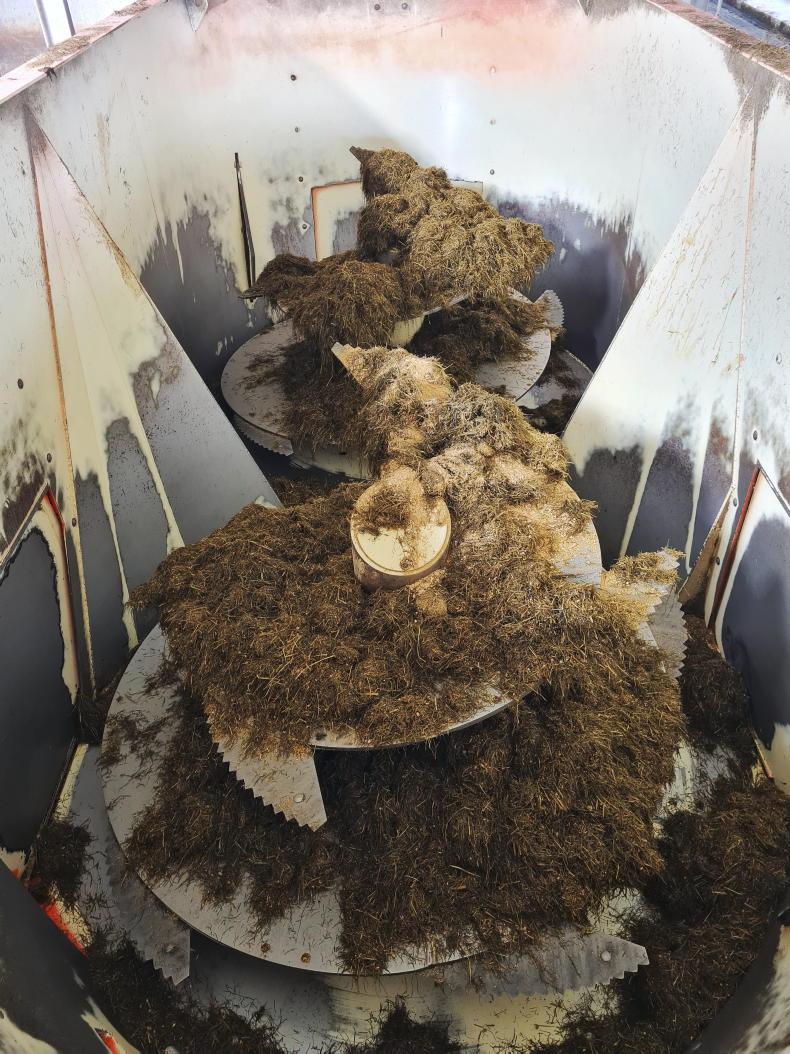
Being a Plus model, the feeder is fitted standard with 22mm augers.
John takes care of the feeding regime and calf rearing, while Jim and Edmond are responsible for milking and breeding etc.
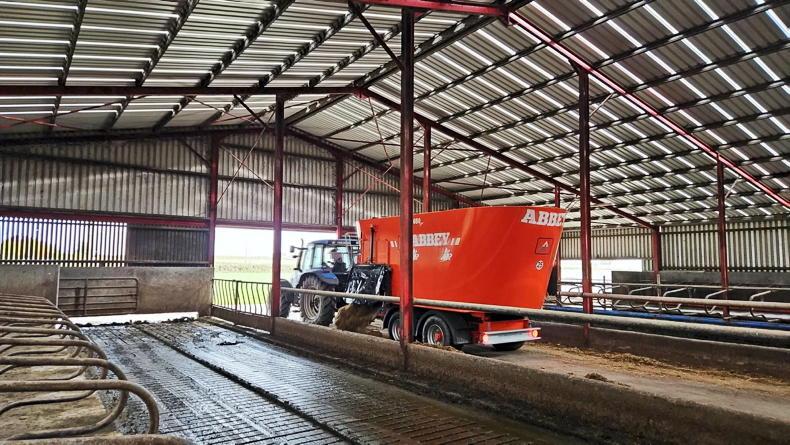
With over 2,000 cattle to be fed daily, the diet feeder is one of the busier machines on farm. Ahead of the 2025 winter feeding seasons, the Powers took delivery of a new Abbey VF2650 Plus twin tub feeder which replaced a six-year-old VF2450 model.
Feeder history
There has been a diet feeder on the farm since 1982, a point when the Powers were milking 70 cows. “Feeding was taking too long,” says John. “We demoed a Keenan. They were in their infancy then, but we saw good time savings and liked the concept. Our first feeder was a 100 model. It was later replaced with larger 110, 140, Klassic 160 and then a 240 model as numbers increased.
“The mix quality was super but handling baled silage was the limiting factor of a paddle feeder. As we began to feed more and more silage bales, we decided that a tub feeder was the way forward,” he said.
John recalls collecting a brand-new 1,020-gallon Abbey slurry tanker and new David Brown 990 in 1973 of Barlo Farm Machinery in Kilkenny. Ever since, Abbey machinery has remained on the farm. Impressed by Abbey’s build quality, the Powers decided to replace the Keenan with a 24m3 VF2450 twin tub feeder in 2013. After six years, it was replaced for the same model which also ran for six years before trading for the current VF2650.
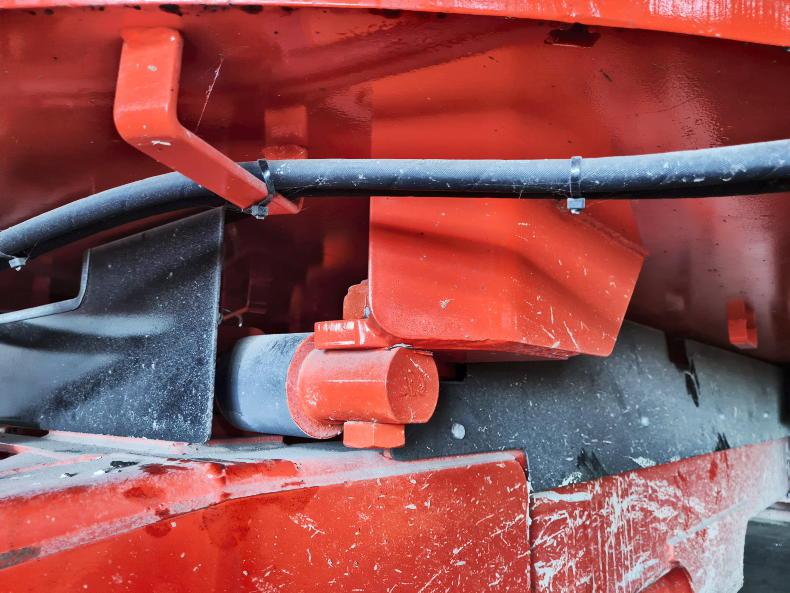
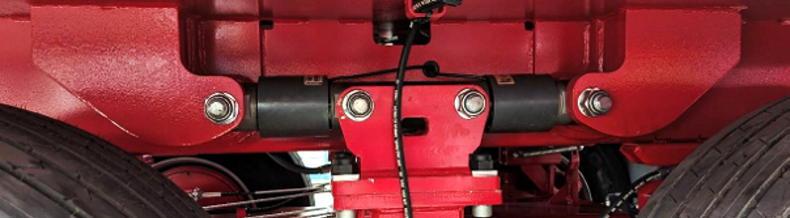
The tub is seated on four weigh cells.
“We tend to finance the feeders over a six-year term and then replace them. With the previous two machines it has worked out well, as we haven’t had to replace augers or reline side walls, leaving their running costs low,” John said.
VF2650 Plus
The VF2650 Plus is a twin-tub, 26m3 machine. Plus model feeders are beefed up in certain areas for a longer service life. This includes 22mm augers which are 50% thicker in comparison to the standard 15mm augers. Each auger is equipped with eight serrated knives and two counter knives.
Plus models feature a wider base and improved mounting flange for the heavy-duty Comer gearboxes. Other standard features include an updated door design for improved feed flow and a safety platform and folding ladder for easier viewing of inside the tub.
The feeder is also equipped with 8mm steel side walls, a wide-angle PTO shaft and a twinspeed gearbox.
“The feeder tends to be on the go all year round; feeding the beef cattle, calves or buffer feeding the cows. At the moment, I’m mixing about eight loads daily. I could get away with one load less by filling the feeder more but I don’t tend to for two reasons,” John explained.
“Firstly, we run the feeder with a New Holland TS115 which is slightly lower below the recommended horsepower. Secondly, I feel I get a better mix in a shorter period of time when there’s that little bit less in the feeder. The feed is able to flow better through the tub.
“A set of knives will last a season. The serrated design leaves them that they are self-sharpening. Other than frequent greasing, it’s a fairly maintenance-free machine,” he said.
In a typical season, the feeder will handle precision-chopped grass silage, maize silage, straw, along with beet and up to 1,000 round bales. It is also used to feed concentrates and minerals.
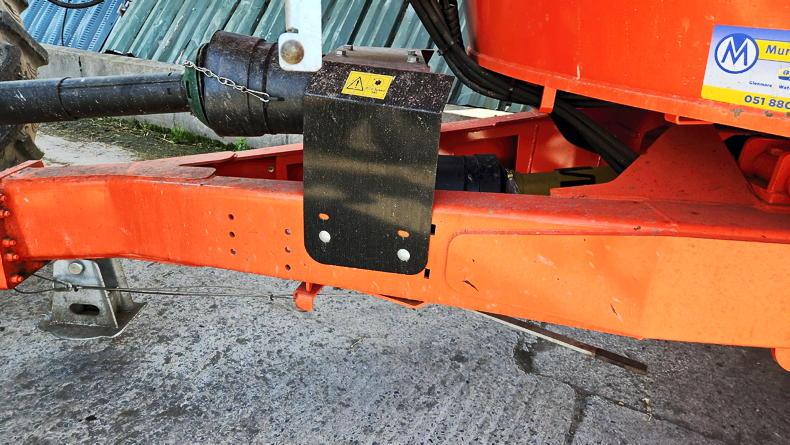
The gearbox speed is changed over manually.
John opens the bales at the pit face and breaks them up partially before loading them into the feeder. Handling bales is not an issue he says. “The new feeder has removable 5in bevelled plates at the base of each auger which improves feed flow when mixing. You can notice the feed moving better with it. But, it does take that bit extra horsepower to run,” John said.
Weighing and discharge options
Abbey uses Digi-Star electronic digital scales technology on its feeders. These scales feature a range of functions which allow a number of formulae for each ration to be stored. Weight is fed from the feeder to the scales via the four-point weighing system. John uses the scales in their simplest form when loading. With many years’ experience of feeding every day, and knowing what works and what doesn’t, he tends to formulate all of his diets without the help of any software package.
The Powers, like many farmers across the country use diet feeders to process straights into rations. Keen to keep things simple, John works off the standard spec when it comes to discharge options. The current feeder is equipped with the standard left and right-hand guillotine door.
“Our last machine was fitted with the optional rear door which we had great intentions of using for mixing rations but never really did. The simple reason for not doing so was visibility. When mixing rations, I use the side doors because I can see what’s happening,” John explained.
Abbey feeders come with the standard tray discharge system whereby a short deflector tray moves into position as the door is opened. With straight-through passages in each shed and concrete troughs in some, the simple side door and try discharge system works well, he said.
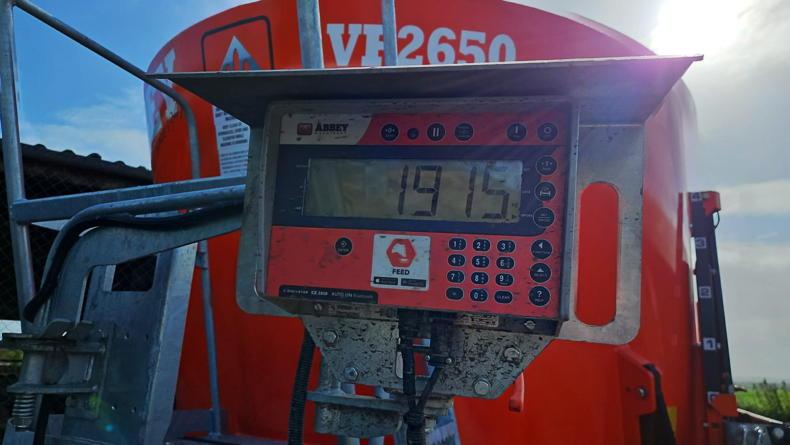
Abbey uses Digi-Star electronic scales on all its feeders.
That said, Abbey does offer a wide range of discharge options including elevator conveyors and one or two rear doors.
Controls
The Powers’ feeder works simply off three spool valves, one for each discharge door and the third for the rear steering axle. The feeder is also fitted with the standard two-speed gearbox. John uses the slower speed when loading and discharging the first half of the load before switching into the higher speed. While there is an option of cable controls to change the gearbox speed from the cab, John prefers the simplicity of doing it at ground level.
The steering axle is a key feature for John when it comes to manoeuvrability, between each shed within the four yards. In addition, he sees a huge reduction in tyre ware when using the steering axle. The feeder is equipped with the standard 435/50 R19.5 tyres.
Running a diet feeder now for almost 43 years, the Powers feel it’s a critical tool for efficiently feeding livestock, especially where there are multiple feedstocks available.
“We’re very happy with the performance we are getting out of the Abbey feeders. The previous two VF2450 machines gave practically no bother at all,” John said.
“The new feeder is even more heavy duty than the last, the thickness of steel in the auger is serious. It’s a well-perfected machine from top to bottom.
“In terms of mix quality, the new machine performs better than the previous two. The additional plates on the augers make a considerable difference to the mix consistency and leave a much fluffier feed.
“It takes a little more power to run which isn’t a major issue. Our New Holland TS115 is probably a little on the smaller side but it manages,” he said.
“We are in the cycle of replacing the feeder every six years, before there is any major auger maintenance due. For round figures, it roughly works out to €4/animal per year which is reasonable.”
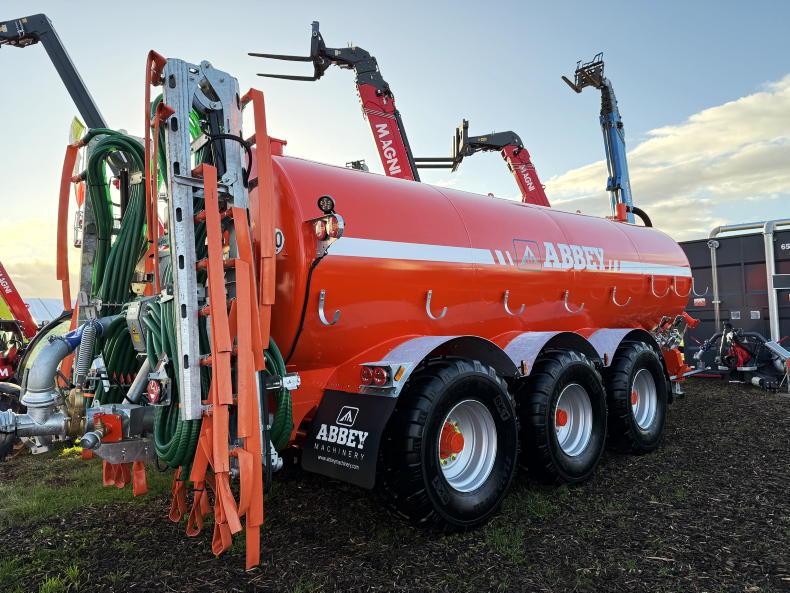
Model: VF2650 PlusCapacity: 26m3. Auger: Twin vertical auger. Weight: 9,000kg. Recommended horsepower: 120hp. Length: 7.71m. Height: 3.18m Width: 2.86mWheels: 435/50 X 19.5. Ability to handle bales.Build quality.
The Power family, well known for their hurling abilities, operate a large-scale dairy and beef finishing enterprise near Callan, Co Kilkenny.
Brothers Jim, Edmond and John, alongside their sons now milk 650 spring-calving cows and finish 730 head of cattle annually.
While the farm is focused on milk production, it is mixed in the sense that all dairy-beef animals are reared and finished on the farm.
All replacements heifers are bred and reared on farm.
The farm is fairly self sufficient in the sense that all crops in addition to grass, ie maize, fodder beet, barley and wheat are grown on farm and harvested using their own machinery for feedstocks. Having a range of feed straights available means that a diet feeder plays a key role when feeding livestock.

Being a Plus model, the feeder is fitted standard with 22mm augers.
John takes care of the feeding regime and calf rearing, while Jim and Edmond are responsible for milking and breeding etc.
With over 2,000 cattle to be fed daily, the diet feeder is one of the busier machines on farm. Ahead of the 2025 winter feeding seasons, the Powers took delivery of a new Abbey VF2650 Plus twin tub feeder which replaced a six-year-old VF2450 model.
Feeder history
There has been a diet feeder on the farm since 1982, a point when the Powers were milking 70 cows. “Feeding was taking too long,” says John. “We demoed a Keenan. They were in their infancy then, but we saw good time savings and liked the concept. Our first feeder was a 100 model. It was later replaced with larger 110, 140, Klassic 160 and then a 240 model as numbers increased.
“The mix quality was super but handling baled silage was the limiting factor of a paddle feeder. As we began to feed more and more silage bales, we decided that a tub feeder was the way forward,” he said.
John recalls collecting a brand-new 1,020-gallon Abbey slurry tanker and new David Brown 990 in 1973 of Barlo Farm Machinery in Kilkenny. Ever since, Abbey machinery has remained on the farm. Impressed by Abbey’s build quality, the Powers decided to replace the Keenan with a 24m3 VF2450 twin tub feeder in 2013. After six years, it was replaced for the same model which also ran for six years before trading for the current VF2650.

The tub is seated on four weigh cells.
“We tend to finance the feeders over a six-year term and then replace them. With the previous two machines it has worked out well, as we haven’t had to replace augers or reline side walls, leaving their running costs low,” John said.
VF2650 Plus
The VF2650 Plus is a twin-tub, 26m3 machine. Plus model feeders are beefed up in certain areas for a longer service life. This includes 22mm augers which are 50% thicker in comparison to the standard 15mm augers. Each auger is equipped with eight serrated knives and two counter knives.
Plus models feature a wider base and improved mounting flange for the heavy-duty Comer gearboxes. Other standard features include an updated door design for improved feed flow and a safety platform and folding ladder for easier viewing of inside the tub.
The feeder is also equipped with 8mm steel side walls, a wide-angle PTO shaft and a twinspeed gearbox.
“The feeder tends to be on the go all year round; feeding the beef cattle, calves or buffer feeding the cows. At the moment, I’m mixing about eight loads daily. I could get away with one load less by filling the feeder more but I don’t tend to for two reasons,” John explained.
“Firstly, we run the feeder with a New Holland TS115 which is slightly lower below the recommended horsepower. Secondly, I feel I get a better mix in a shorter period of time when there’s that little bit less in the feeder. The feed is able to flow better through the tub.
“A set of knives will last a season. The serrated design leaves them that they are self-sharpening. Other than frequent greasing, it’s a fairly maintenance-free machine,” he said.
In a typical season, the feeder will handle precision-chopped grass silage, maize silage, straw, along with beet and up to 1,000 round bales. It is also used to feed concentrates and minerals.

The gearbox speed is changed over manually.
John opens the bales at the pit face and breaks them up partially before loading them into the feeder. Handling bales is not an issue he says. “The new feeder has removable 5in bevelled plates at the base of each auger which improves feed flow when mixing. You can notice the feed moving better with it. But, it does take that bit extra horsepower to run,” John said.
Weighing and discharge options
Abbey uses Digi-Star electronic digital scales technology on its feeders. These scales feature a range of functions which allow a number of formulae for each ration to be stored. Weight is fed from the feeder to the scales via the four-point weighing system. John uses the scales in their simplest form when loading. With many years’ experience of feeding every day, and knowing what works and what doesn’t, he tends to formulate all of his diets without the help of any software package.
The Powers, like many farmers across the country use diet feeders to process straights into rations. Keen to keep things simple, John works off the standard spec when it comes to discharge options. The current feeder is equipped with the standard left and right-hand guillotine door.
“Our last machine was fitted with the optional rear door which we had great intentions of using for mixing rations but never really did. The simple reason for not doing so was visibility. When mixing rations, I use the side doors because I can see what’s happening,” John explained.
Abbey feeders come with the standard tray discharge system whereby a short deflector tray moves into position as the door is opened. With straight-through passages in each shed and concrete troughs in some, the simple side door and try discharge system works well, he said.

Abbey uses Digi-Star electronic scales on all its feeders.
That said, Abbey does offer a wide range of discharge options including elevator conveyors and one or two rear doors.
Controls
The Powers’ feeder works simply off three spool valves, one for each discharge door and the third for the rear steering axle. The feeder is also fitted with the standard two-speed gearbox. John uses the slower speed when loading and discharging the first half of the load before switching into the higher speed. While there is an option of cable controls to change the gearbox speed from the cab, John prefers the simplicity of doing it at ground level.
The steering axle is a key feature for John when it comes to manoeuvrability, between each shed within the four yards. In addition, he sees a huge reduction in tyre ware when using the steering axle. The feeder is equipped with the standard 435/50 R19.5 tyres.
Running a diet feeder now for almost 43 years, the Powers feel it’s a critical tool for efficiently feeding livestock, especially where there are multiple feedstocks available.
“We’re very happy with the performance we are getting out of the Abbey feeders. The previous two VF2450 machines gave practically no bother at all,” John said.
“The new feeder is even more heavy duty than the last, the thickness of steel in the auger is serious. It’s a well-perfected machine from top to bottom.
“In terms of mix quality, the new machine performs better than the previous two. The additional plates on the augers make a considerable difference to the mix consistency and leave a much fluffier feed.
“It takes a little more power to run which isn’t a major issue. Our New Holland TS115 is probably a little on the smaller side but it manages,” he said.
“We are in the cycle of replacing the feeder every six years, before there is any major auger maintenance due. For round figures, it roughly works out to €4/animal per year which is reasonable.”
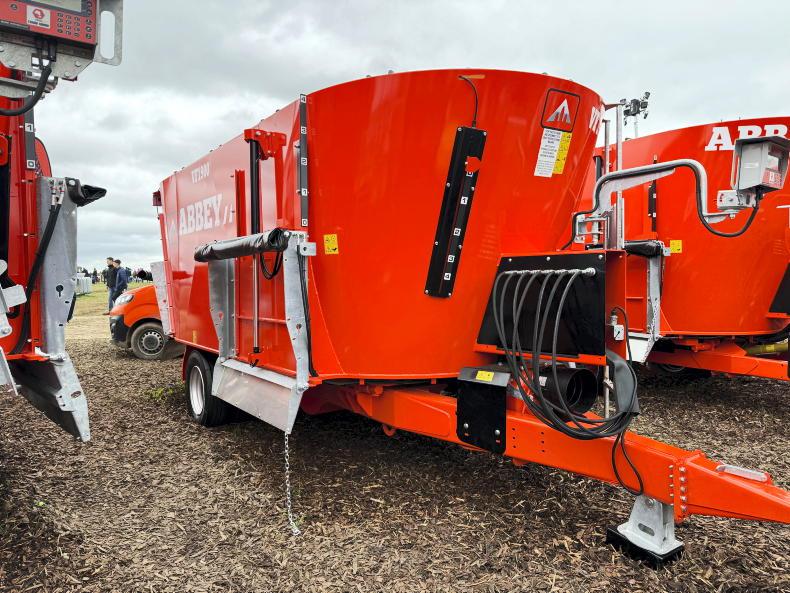
Model: VF2650 PlusCapacity: 26m3. Auger: Twin vertical auger. Weight: 9,000kg. Recommended horsepower: 120hp. Length: 7.71m. Height: 3.18m Width: 2.86mWheels: 435/50 X 19.5. Ability to handle bales.Build quality.
SHARING OPTIONS