



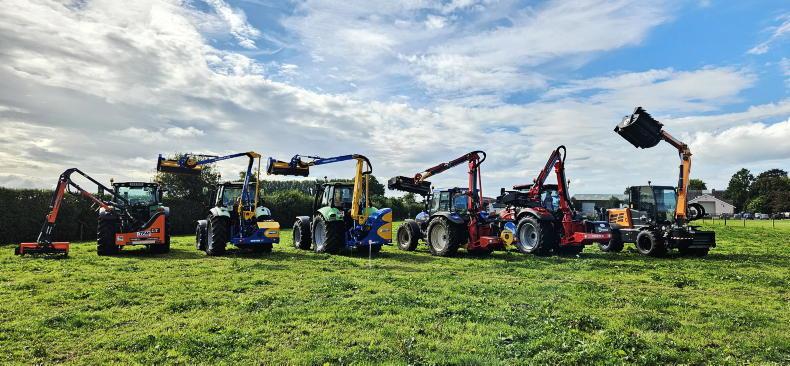
Teagasc recently held a hedge-cutting event in Kildalton College, Co Kilkenny, which looked at hedgerow management, offered cutting advice and looked at hedge-cutter maintenance and safety. One standout quote on the day was for farmers and contractors to “take it easy on hedges, improve what you have on farm first, before you plant new hedges. A tightly trimmed short back and sides is not on anymore”.
Hedgerow management
Dr Catherine Keena from Teagasc explained that hedgerows help sequester carbon, regulate water flow, which helps to reduce flooding, help filter water to improve water quality and are the most important habitat on Irish farms. She added that hedgerows are the corridors of the countryside for animals and insects. She noted that the key to biodiversity in hedgerows is good management.
She added that the only time to assess the health of a hedgerow is in the winter months, when hedges are dormant, rather than during the summer months, when leaves and vegetation hide the hedge.
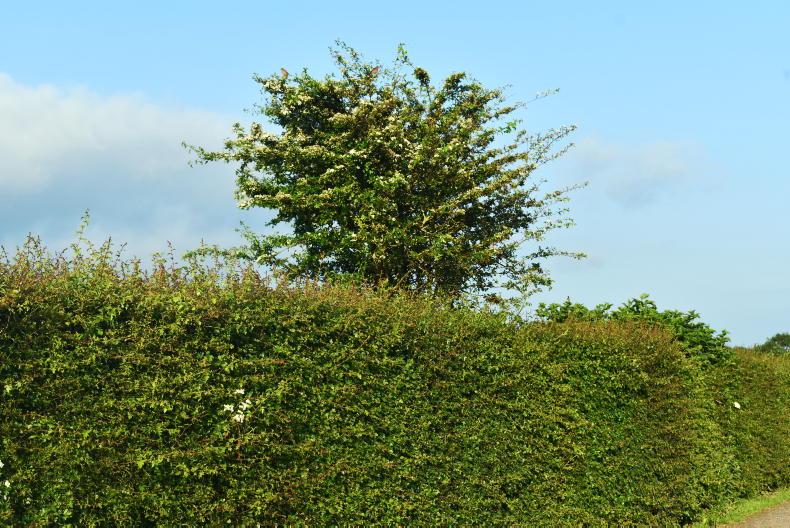
From a management purpose, she said farmers need to understand that hedgerows fall into two categories: topped hedges and tree line hedges. Whitethorns want to grow into single-stem trees with a canopy full of flowers and fruit. She said 50% of on-farm hedges should be let grow into tree line hedges.
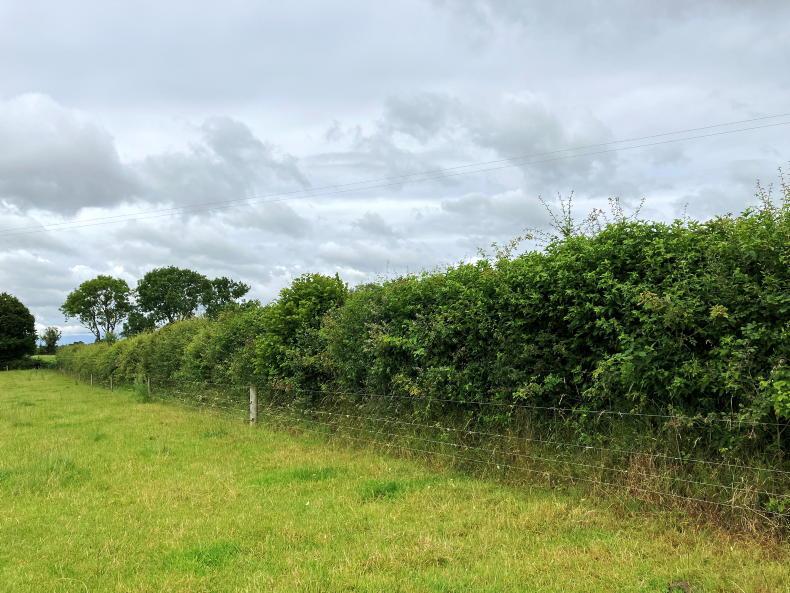
Topped hedges are a man-made habitat and need to be managed, while tree line hedges are effectively a narrow linear woodland, which do not need to be cut, unless for safety reasons. Topped hedges are at high risk of being cut incorrectly, and with repeated cutting to a low height, they will suffer death by 1,000 cuts, because the stump will no longer be able to support the hedge.
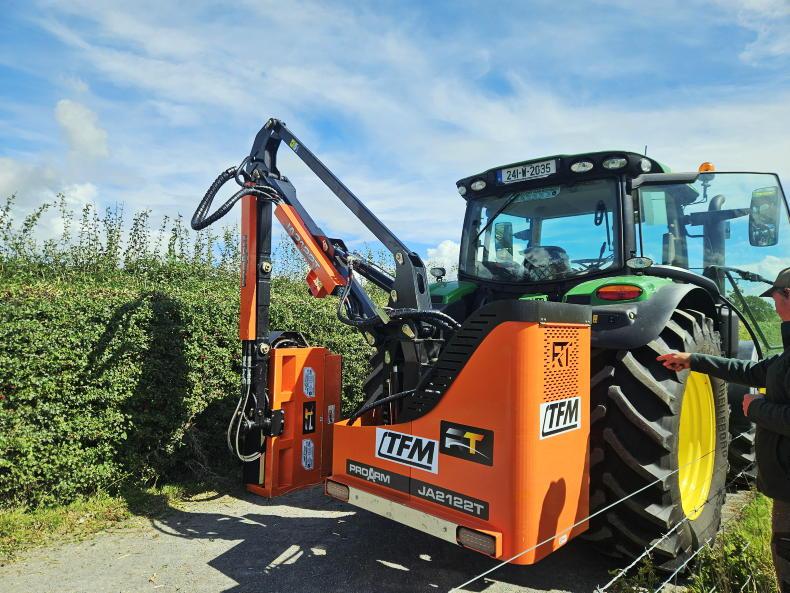
your hedge cut.
Hedge-cutting advice
The key take home message from this event by Teagasc was two-fold: firstly, to let these topped hedges grow as tall and as wide as possible, saying the bulkier these hedges are, the better. Secondly, it strongly advises leaving an occasional clump of whitethorns to grow up from within the hedge. In time, this will then become a flower- and fruit-producing tree.
Francis Quigley from Teagasc explained that the challenge here is that the contractor might feel as though he/she will be criticised for leaving a piece in the middle of the hedge row, but the key here is communication between the farmer and contractor. If you go into a barber for a haircut, you tell them how you want it cut. When you book the contractor, you need to show them and explain how you want it done.
Management by the farmer is important so that the clumps are left uncut in the following years also. Identifying these uncut clumps can be difficult, so, it is advised that they are marked. Minding this clump in the early years is important until it becomes established.
Teagasc advises cutting the hedgerow in a triangular shape, in order to try to let light down towards the base of the hedge. It said light, incremental cutting results in dense growth and healthy hedges, and to avoid rough cutting – which will only allow disease in. Around 80% to 90% of hedges in Ireland are cut by agricultural contractors, so the onus is on the farmer to have a chat with the contractor and show them what they want.

and Tom Butler, agricultural contractor.
Hedge cutter maintenance
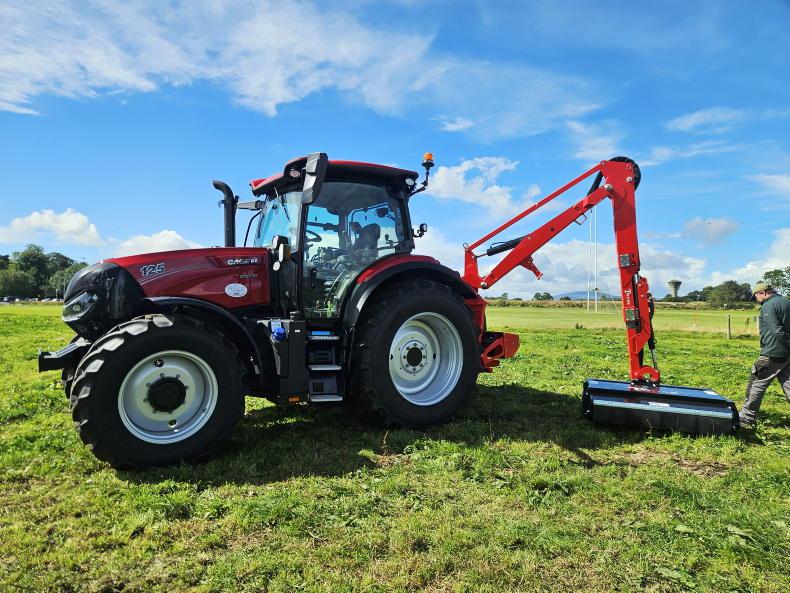
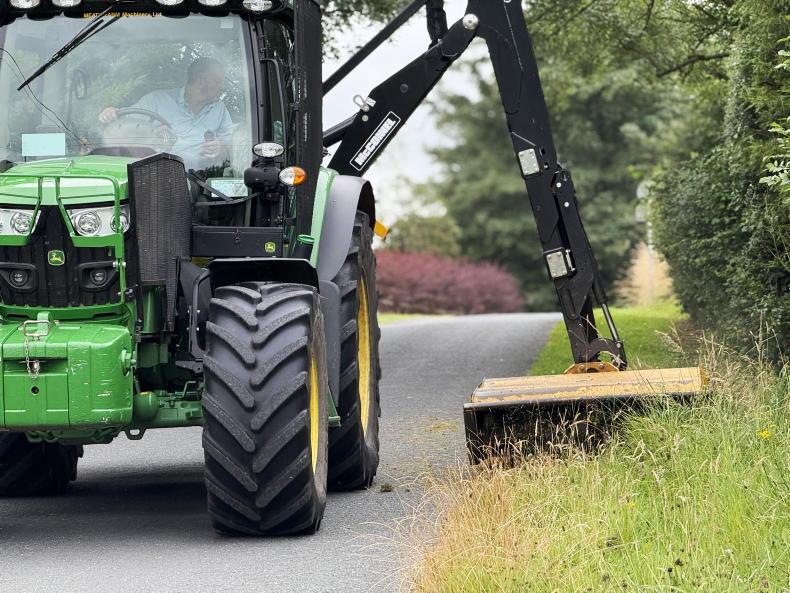
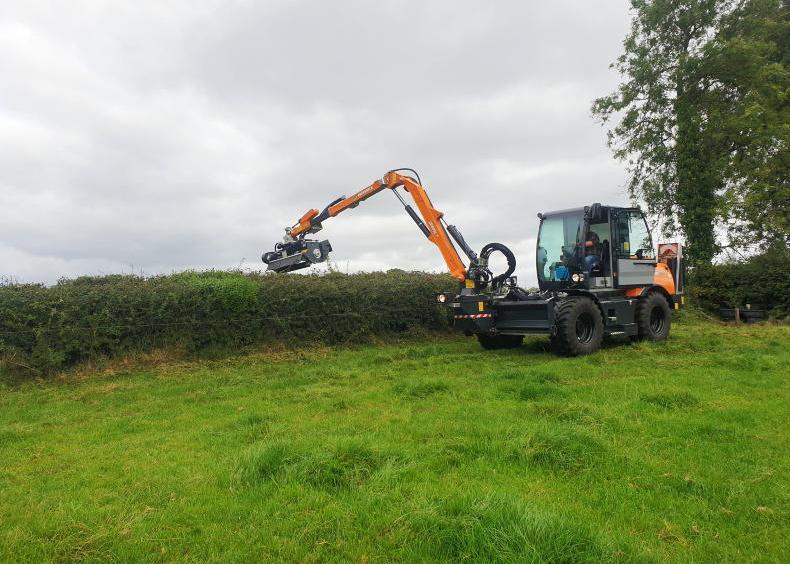
Craig Whiting, the sales and marketing director from Bomford Turner Ltd, went through some basic hedge cutter maintenance on the day. Firstly, he noted that the tractor has to be fit for the machine it is carrying, which is largely down to ballast. When tackling daily maintenance, Craig advises that the legs should be dropped down and that the arm of the machine should be placed on the ground, from a safety perspective.
He noted that daily and weekly maintenance checks and greasing will be the life of the machine. The most important tool in the toolbox is the grease gun, and the number one problem with these machines comes down to a lack of grease. Users need to follow up on any vibrations of cracks, which otherwise will lead to further problems.
With a new machine, Craig says the first oil filter(s) needs to be changed after 50 hours, and every 500 hours from there on. He advises that the oil is changed every one to two years, depending on use. When washing the machine, it’s important that no water gets into the hydraulic oil tank. Bomford recommends regular edging of the flails. A sharp flail will offer a clean cut, while blunt flails will mean the machine will run harder on itself, and will be also harder on the hedge. Bomford advises to sharpen the flails from the bottom, leaving just a small edge at the top of the flail.
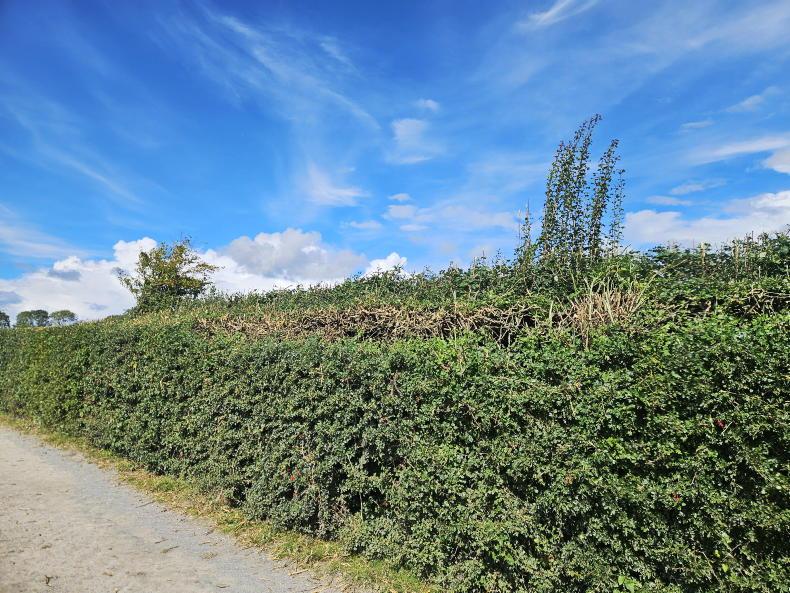
the left and right of the photograph.
Health and safety
Ciaran Roche, risk manager from FBD insurance, explained that hedge-cutting contractors by law need to be familiar with the Safety, Health & Welfare Act at Work, 2005, Safety, Health & Welfare at Work General Applications Regulations, 2007, Road Act, 1993 and the Road Traffic Acts. This includes for example, licensing, training, machine maintenance and scenarios such as if the contractors bring muck out on the road, they are responsible to clean this up.
Roche added that risk assessment needs to be carried out, where contractors perform an identification of hazards, machinery maintenance is up to date, operators are competent and the appropriate PPE is worn.
Before hedge-cutting is carried out, he advised that each site is assessed and where visibility is limited, specific traffic management measures are be put in place to warn motorists of the potential danger. He explained that signs should be erected in accordance with Chapter 8 of the Traffic Signs Manual.

Hedge-cutting season
The open period for hedge-cutting began on 1 September and remains open until 28 February. The cutting, grubbing, burning or destruction of vegetation growing on uncultivated land or in hedges or ditches is restricted between 1 March and 31 August under the Wildlife Act.
There is provision in the legislation for some restricted exemptions, which allow landowners and public authorities to address hedges for road safety reasons at any time of the year.


SHARING OPTIONS