



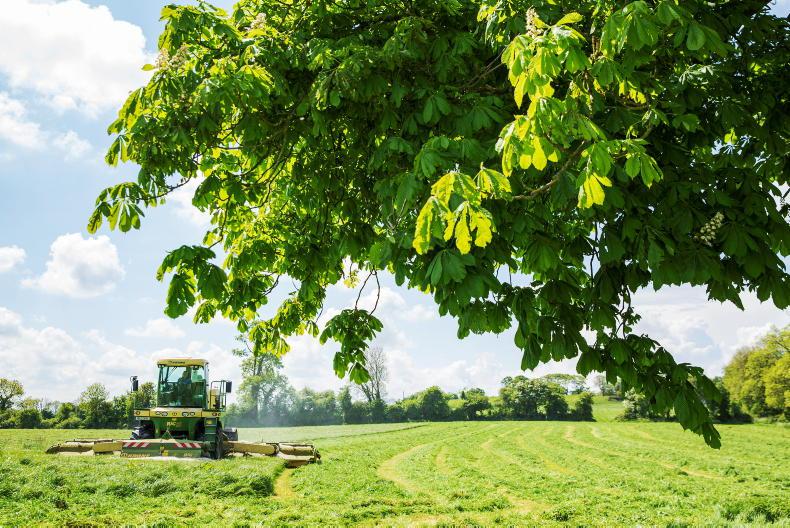
When making silage, how dry the grass is when we pick it up with a harvester, wagon or baler, impacts on costs, preservation, feed value and effluent production.
How we treat the grass at and after mowing determines its drying or wilting rate and, consequently, its quality, feed value and costs. But Ireland’s big grass yields and broken weather patterns are a particular challenge.
Wilting grass in variable weather conditions can be risky and disruptive.
We need to plan carefully to achieve the necessary wilt, but we also need to have back-up plans. Like many things in life and farming, there are pros and cons with wilting.
Advantages
This is particularly useful with highly digestible grasses cut at a younger growth stage before heading, grasses with higher nitrogen content, or swards with high levels of clover.
In fact, in many of these situations, wilting is often essential to ensure good preservation. It avoids the need for preservative-type additives.
Disadvantages
Research
Independent research on wilting was prominent in the 1980s and 1990s, where Irish research (Teagasc) focused on silage quality, animal performance and on wilting rates with different swath treatments.
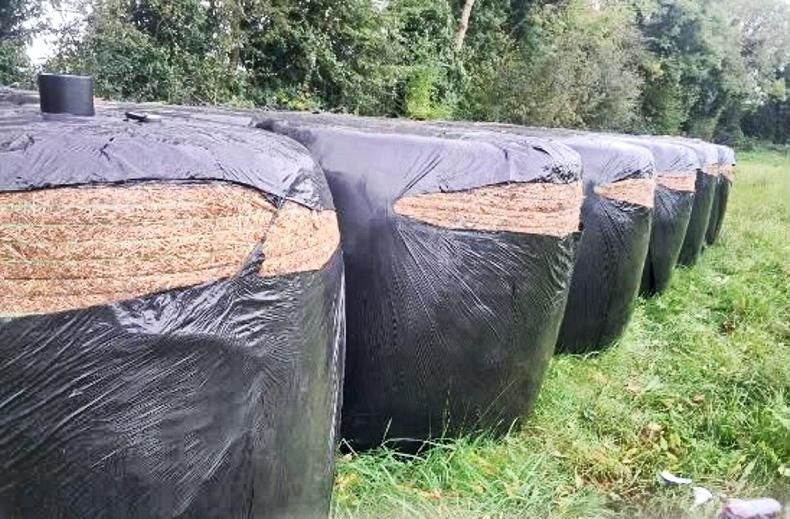
The need for wilting depends on the harvesting system, sward type and, particularly, whether high digestibility (high DMD) silage is being targeted. Baled silage will always benefit from significant wilting:
Clamp silage is a little different as it depends on the digestibility (DMD) being targeted.
In dairy systems, for example – in today’s spring-calving herds where cows are frequently grazing grass for some part of the day from immediately after calving – most of the clamp silage is fed to dry cows. In this case, the benefits from very high digestibility grass are fewer, allowing dairy farmers to cut silage at the start of heading, where rising sugar levels make it easier to preserve.
The extent of wilting needed is consequently less. On these farms, baled silage from younger grass harvested from surplus paddocks during the growing season often provides the high feed value (high DMD) grass needed by cows when they are milking.
But where winter milk is produced, or in all beef and sheep systems, high DMD silage is beneficial and wilting is more important on these farms, as it allows earlier cuts of high-quality, leafy grass to be more easily conserved.
Wilting targets
In simple terms, ‘the faster the wilt, the lower the losses’. Fast wilting reduces the time for the grass to respire and lose feed value (various loss processes), but it greatly reduces the risk of a weather break causing further increased losses. It is much easier get one or two dry days together than three. Dutch research suggests that cut grass should only spend one night on the ground to avoid losses and, consequently, the target for high-quality silage there is to ted quickly and often, if needed.
How does grass dry?
Growing grass can typically have a dry matter content of just 14% to 20%. In simple terms, moisture must first move out from leaves and stems, and then it must leave the structure of the swath. Access to dry air and the power of the sun are important.
For fast drying, spreading out the grass, to have as low a density as possible, is essential.
A loose, even swath with no lumps is best. Redistribution after drying – where the dry top material is mixed with wetter material will further improve the drying rate. Abrading the grass stems and leaves while mowing can also accelerate drying, but only if the grass is exposed to the drying elements of dry air and the sun.
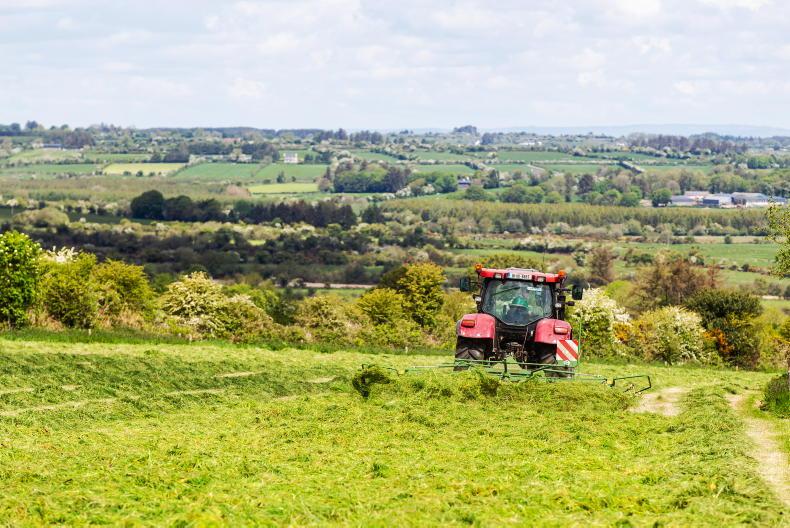
Weather has a huge impact, along with day length. Dry (low humidity) air, wind and sun all contribute to the drying rate. While mechanical interventions will help speed up drying – the drying rate will always be determined by weather.
How do we speed up wilting?
Many factors impact on grass drying rate, but we can control only some. These include:
Swath structure and drying rates
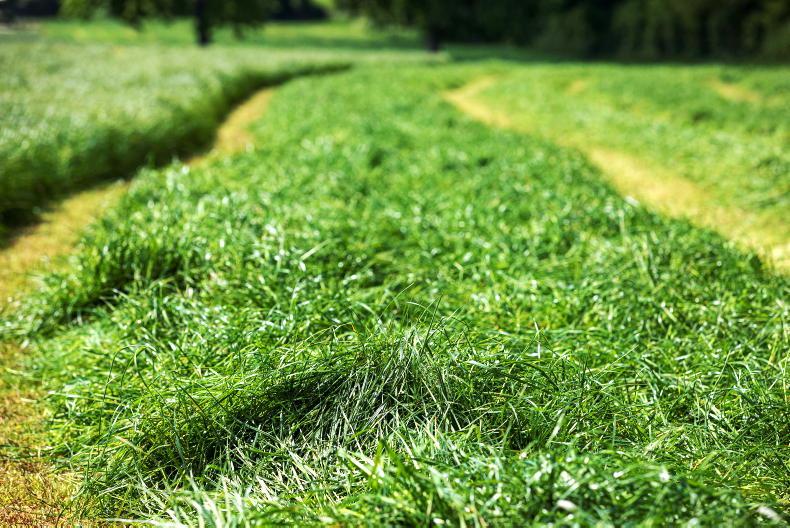
The impact of swath structure on percentage ground cover and the impact of various swath structures on the drying rate are shown in Table 1 and Figure 1 from Teagasc research. Grouped swaths hardly dry at all, even in good drying conditions, so should be harvested quickly to avoid respiration and other losses.
Conversely, spread swaths or those with high percentage ground covers, will rapidly lose moisture if weather allows, often allowing an effective wilt within a day or a day and a half.
Mower conditioners
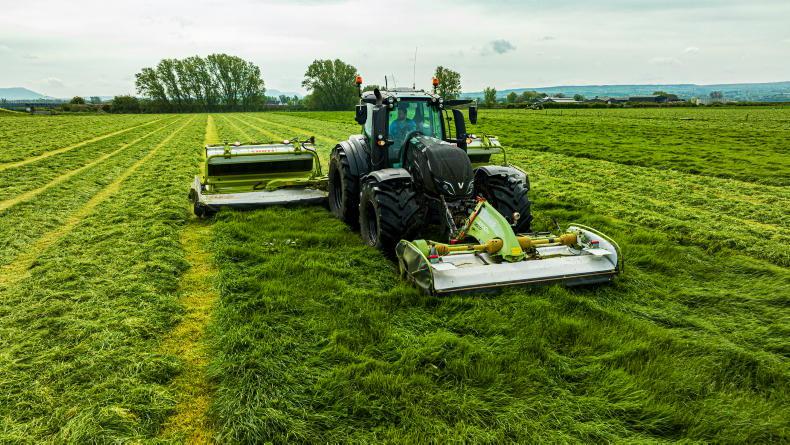
Conditioning can speed up the drying rate of the grass by abrading leaves and stems and by ensuring the grass is set up in an airy and even swath, but the speed of drying is still largely dependent on how well spread the grass is, ie the percentage of ground cover achieved. The aggressiveness of the conditioner can be altered by the clearance between the tines and the hood and the speed of the rotor.
Modern conditioners can be set to produce wide swaths, achieving 60% to 100% ground cover (grass covers the entire cut area at 100%). This 100% cover will give the fastest drying but will involve the tractor driving over the cut grass, which is not favoured in softer ground conditions.
Tedders: horizontal multi-rotor
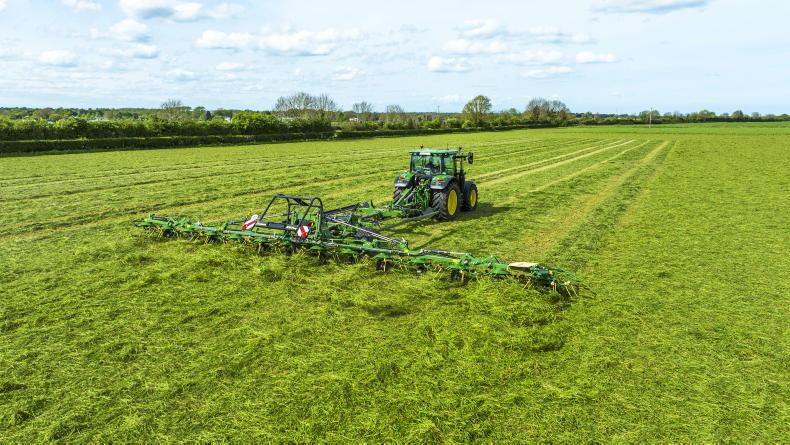
Over-the-top tedder
Over-the-top tedders (swath wilter/wuffler type) are often used in baled silage situations on conditioned swaths and they will redistribute the grass within an airy swath, usually without creating lumps. But the drying rate achieved will still be restricted by the percentage ground cover achieved. Wider units (2.7m to 3m) that can leave a swath the full width of the following baler pick-up will be better than narrower units.
Practical approaches



SHARING OPTIONS