




Climate Change Advisory Council (CCAC) chair Marie Donnelly has given a scathing review of the Government's progress in renewable energy and forestry.
Speaking at the IrBEA National Bioenergy Conference in Dublin last week, she stressed that policy planning, development, budgeting and implantation is not happening quickly enough.
Donnelly said that while it’s good to have targets in place, the country lacks many of the key policies needed to actually implementation and deliver on these targets, especially when it came to land use.
"It is imperative that we establish a comprehensive structure and approach to our land use," she stressed.
Biomethane
Donnelly said that the council is in favour of biomethane, but had concerns about achieving the target.
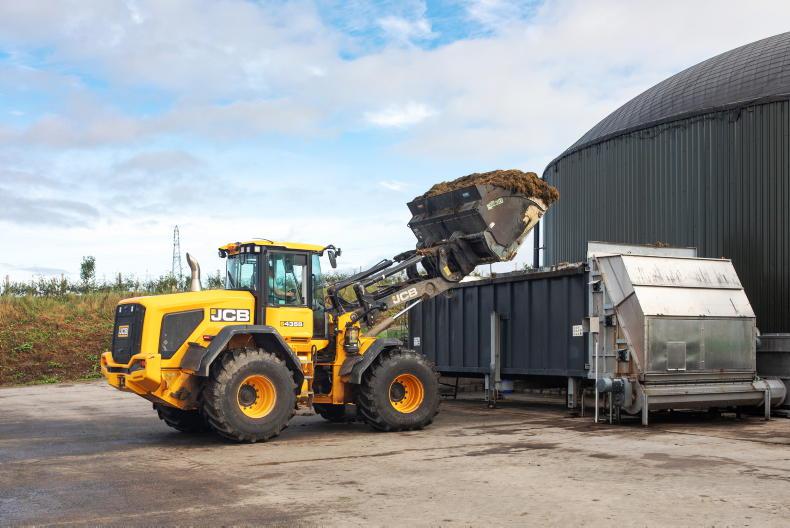
The 2030 target of 5.7 terawatt-hours (TWh) of biomethane will require the construction of 200 anaerobic digestion (AD) plants by 2030. “I challenge you to build 20 houses by then, much less 200 AD plants,” she told conference attendees.
Despite this significant target, the biomethane strategy still hasn’t come out, she says.
“This is an illustration of what I mean by implementation. It’s good to have a target, it’s good to have an objective, but we need to take that target and break it down into what needs to be done, by whom, where and when in order to deliver on it,” she said.
Failed forestry policy
Donnelly told attendees that we have a failed forestry policy in this country and that this wasn’t her - or the council’s - first time to say it.
She said that they are “irritating” their colleagues in the Department of Agriculture constantly on this and the country is so far behind its forestry target that it's “beyond a joke”.
"Our target is for 8,000ha per year; at best, we're doing 2,000 to 2,500 hectares per year," she said.
"From the council's perspective, it's a real problem as at the moment our forestry, which should be a sink and be absorbing emissions, is declining and it will move from being a sink to a source between now and 2030," she said.
"I cannot stress enough, it is a real problem in this country," she emphasised.
Biomass
She told conference delegates that they should also be concerned about progress in forestry since it will serve as their future raw supply to, among other things, assist in decarbonising the heat sector.
She went on to explain that decarbonising the 60TWh of heat used in this country will be a massive challenge, citing several key policies.
"We have the Support Scheme for Renewable Heat and are supposed to have the Renewable Heat Obligation, which will likely be delayed. We were also meant to have a national heat policy statement, which will probably be delayed," she said.
Politicians
She noted that local opposition poses a problem and can sway political opinion. When you enquire with a politician about bioenergy, they initially express support, saying: "Yes, we think it's a great idea."
However, as you delve into the specifics, the questions and concerns begin to emerge, she said.
"How many of my constituents will actually buy into this? Who will object to it? Can I actually defend it?" Donnelly stated.
"And suddenly you find that a lot of the political support that was there at the start starts to dissipate," she said.
District heating
Donnelly highlighted a significant opportunity for decarbonising heat in residential, commercial and industrial settings through district heating, emphasising that this technology is not new.
"It's so well established in parts of the world that they are already on the fourth generation of district heat," she remarked.
However, she again highlighted delays in following through: "The first policy paper on this came out in July this year.
"We're talking about building district heating for 10% of our heat supply from now to 2030, and we still don't have a structured policy for district heating or a plan for rolling it out."
To achieve this target, it would mean connecting 200,000 houses and 2,500 public or commercial buildings to a district heating system between now and 2030. “I’ll leave it to you to figure that out” she joked to the audience.
Future planning
In her closing remarks, Donnelly reiterated the issue of not having a strategy for using the country’s natural resources, beginning with land.
She also emphasised the urgency of phasing out fossil fuels from our energy sources and called on the Government to speed up this transition.
"We must establish interim dates for discontinuing the use of fossil fuels," she urged. "Electricity, I would suggest, by 2035, heating by 2043, and transport by 2046 at the latest."
She said that some people will be damaged by this transition, and we need to support them, while some people will benefit and that’s ok too.



SHARING OPTIONS