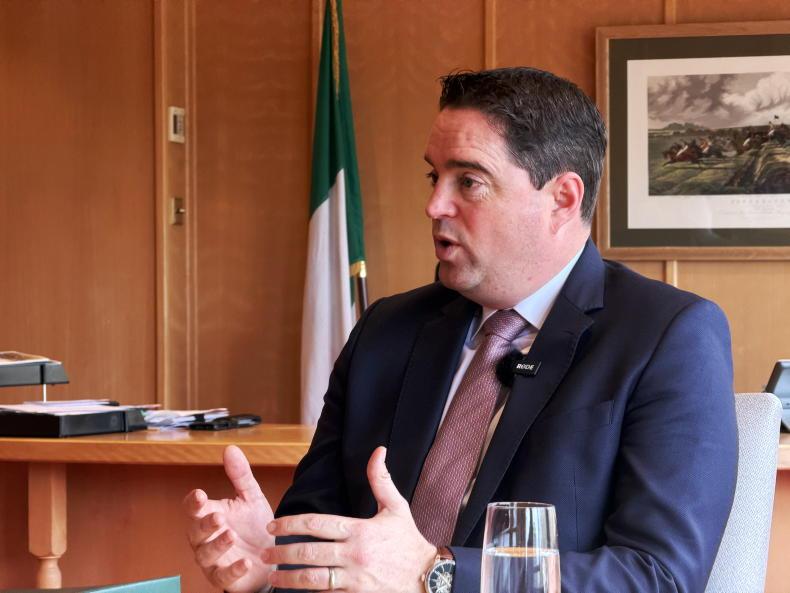
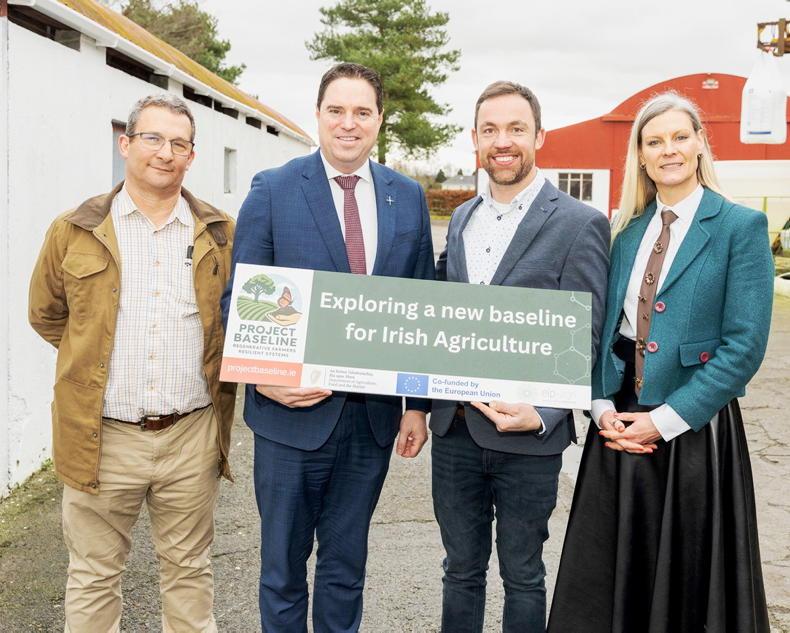
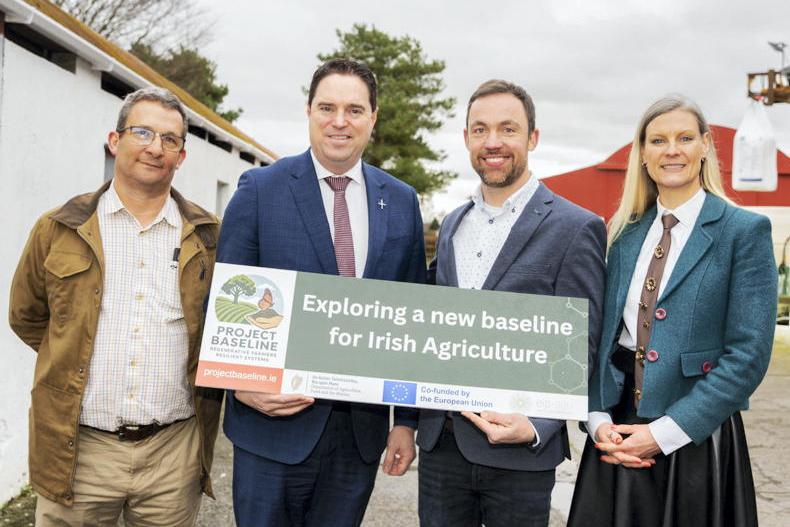
Minister for Agriculture Martin Heydon has highlighted that “soil is a precious, non-renewable resource” while attending a Biodiversity, Agriculture, Soil and Environment (BASE) European Innovation Partnership (EIP) event - titled BASE-Line EIP.
The third BASE Ireland soil dependence event took place on the farm of member Norman Dunne, which was supported by farmers, exhibitors, National Organic Training Skillnet and other EIPs from across Ireland.
Regenerative agriculture is considered a sustainable farming approach which emphasises farming practices that mimic natural processes, increase carbon sequestration in the soil and work to improve water quality.
Minister Heydon said soil is rising on the policy agenda on a European level.
“In 2021, the European Commission presented its long-awaited soil strategy for 2030, which is aligned with the EU Biodiversity and Farm to Fork strategies.
"A key element of this is the proposed soil monitoring law, which aims to establish a framework for healthy soils,” he said.
“In recent years, we have made significant investments in research and innovation to bridge knowledge gaps and empower farmers with the tools they need to manage their soils sustainably.”
Event
Regenerative agriculture generally involves reducing or eliminating tillage, integrating livestock, diversifying crops and minimising synthetic inputs.
“Many of these projects focus on biodiversity, climate resilience and sustainable land use. These EIP projects vary from small-scale community and farmer-focused projects,” added Minister Heydon.
“Soil is a precious, non-renewable resource and ensuring we sustainably manage our soils is key to strengthening the resilience and the regeneration of our soils.
“As we face the dual challenges of climate change and biodiversity loss, regenerative agriculture and sustainable soil management offer a path forward. One rooted in nature, resilience and renewal.”
Support
Those in attendance were welcomed to the event by Cork farmer Rob Coleman, project lead with the BASE-Line EIP and chair of BASE Ireland.
Coleman welcomed the funding support of €1.45m from the Department of Agriculture this year.
“The farmers who will be involved in the BASE-Line EIP have been working with nature through the implementation of regenerative agriculture practices, using techniques such as no-till farming, cover cropping, agroforestry and reducing their fertiliser use through holistic grazing, and integrated pest management,” Coleman said.
“This EIP is centered on a renewed emphasis on soil health as the cornerstone of sustainable agriculture. Over the next four and a half years, our EIP will utilise the extensive practical experience that BASE Ireland farmers have gained over the past 20 years.
“The EIP will assess and monitor work by participants to develop a robust scientific foundation supporting the practical experiences of farmers to improve soil structure, increase carbon sequestration, improve local water quality and restore biodiversity.”
Read more
Irish Distillers launches three-year regenerative agriculture project
Almost €18m allocated to new farm sustainability EIPs
Minister for Agriculture Martin Heydon has highlighted that “soil is a precious, non-renewable resource” while attending a Biodiversity, Agriculture, Soil and Environment (BASE) European Innovation Partnership (EIP) event - titled BASE-Line EIP.
The third BASE Ireland soil dependence event took place on the farm of member Norman Dunne, which was supported by farmers, exhibitors, National Organic Training Skillnet and other EIPs from across Ireland.
Regenerative agriculture is considered a sustainable farming approach which emphasises farming practices that mimic natural processes, increase carbon sequestration in the soil and work to improve water quality.
Minister Heydon said soil is rising on the policy agenda on a European level.
“In 2021, the European Commission presented its long-awaited soil strategy for 2030, which is aligned with the EU Biodiversity and Farm to Fork strategies.
"A key element of this is the proposed soil monitoring law, which aims to establish a framework for healthy soils,” he said.
“In recent years, we have made significant investments in research and innovation to bridge knowledge gaps and empower farmers with the tools they need to manage their soils sustainably.”
Event
Regenerative agriculture generally involves reducing or eliminating tillage, integrating livestock, diversifying crops and minimising synthetic inputs.
“Many of these projects focus on biodiversity, climate resilience and sustainable land use. These EIP projects vary from small-scale community and farmer-focused projects,” added Minister Heydon.
“Soil is a precious, non-renewable resource and ensuring we sustainably manage our soils is key to strengthening the resilience and the regeneration of our soils.
“As we face the dual challenges of climate change and biodiversity loss, regenerative agriculture and sustainable soil management offer a path forward. One rooted in nature, resilience and renewal.”
Support
Those in attendance were welcomed to the event by Cork farmer Rob Coleman, project lead with the BASE-Line EIP and chair of BASE Ireland.
Coleman welcomed the funding support of €1.45m from the Department of Agriculture this year.
“The farmers who will be involved in the BASE-Line EIP have been working with nature through the implementation of regenerative agriculture practices, using techniques such as no-till farming, cover cropping, agroforestry and reducing their fertiliser use through holistic grazing, and integrated pest management,” Coleman said.
“This EIP is centered on a renewed emphasis on soil health as the cornerstone of sustainable agriculture. Over the next four and a half years, our EIP will utilise the extensive practical experience that BASE Ireland farmers have gained over the past 20 years.
“The EIP will assess and monitor work by participants to develop a robust scientific foundation supporting the practical experiences of farmers to improve soil structure, increase carbon sequestration, improve local water quality and restore biodiversity.”
Read more
Irish Distillers launches three-year regenerative agriculture project
Almost €18m allocated to new farm sustainability EIPs






SHARING OPTIONS