Concentrate levels should be increased gradually to ad-lib levels over a period of 10 to 14 days.
ADVERTISEMENT
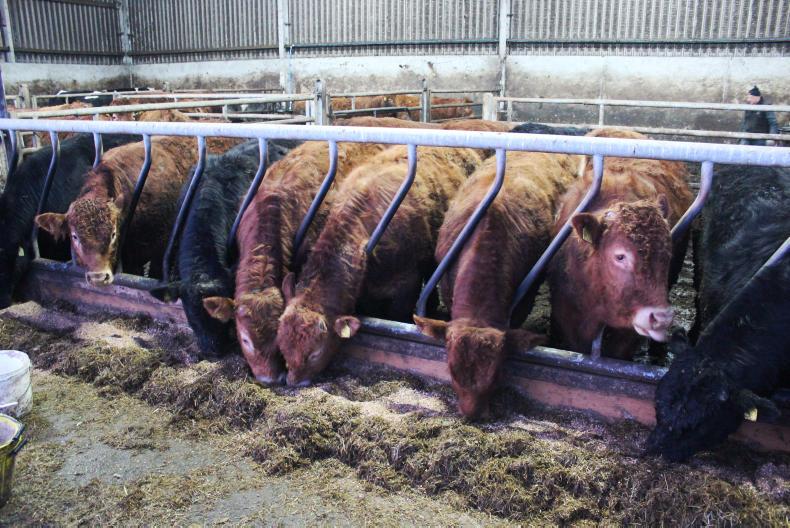
Concentrate feed is the biggest cost associated with finishing cattle, so it is important to get the most out of every kilo fed.
When building up finishing cattle to higher levels of concentrate feeding, it is important to do so in steps over a period of 10 to 14 days.
This reduces the risk of cattle overfeeding on a ration and suffering from digestive problems. Once daily feed rates move above 3kg/head, split the feed into a morning and evening feed.
ADVERTISEMENT
Silage
Between feeds, make sure cattle always have access to silage or straw to avoid animals entering a fasted state prior to receiving their next allocation of concentrates.
When moving cattle on to ad-feeding, step up feed rates by 1kg/head every three days and monitor closely for signs of acidosis, which include cattle becoming dull, losing their appetite and scouring.
If any of these symptoms appear, pull back on the feed rates and offer plenty of fresh straw or good-quality haylage for a few days. Once cattle recover, gradually build feed levels back up again.
This content is available to digital subscribers and loyalty code users only. Sign in to your account, use the code or subscribe to get unlimited access.
The reader loyalty code gives you full access to the site from when you enter it until the following Wednesday at 9pm. Find your unique code on the back page of Irish Country Living every week.
CODE ACCEPTED
You have full access to the site until next Wednesday at 9pm.
CODE NOT VALID
Please try again or contact support.
Concentrate feed is the biggest cost associated with finishing cattle, so it is important to get the most out of every kilo fed.
When building up finishing cattle to higher levels of concentrate feeding, it is important to do so in steps over a period of 10 to 14 days.
This reduces the risk of cattle overfeeding on a ration and suffering from digestive problems. Once daily feed rates move above 3kg/head, split the feed into a morning and evening feed.
Silage
Between feeds, make sure cattle always have access to silage or straw to avoid animals entering a fasted state prior to receiving their next allocation of concentrates.
When moving cattle on to ad-feeding, step up feed rates by 1kg/head every three days and monitor closely for signs of acidosis, which include cattle becoming dull, losing their appetite and scouring.
If any of these symptoms appear, pull back on the feed rates and offer plenty of fresh straw or good-quality haylage for a few days. Once cattle recover, gradually build feed levels back up again.
If you would like to speak to a member of our team, please call us on 01-4199525.
Link sent to your email address
We have sent an email to your address. Please click on the link in this email to reset your password. If you can't find it in your inbox, please check your spam folder. If you can't find the email, please call us on 01-4199525.
ENTER YOUR LOYALTY CODE:
The reader loyalty code gives you full access to the site from when you enter it until the following Wednesday at 9pm. Find your unique code on the back page of Irish Country Living every week.






SHARING OPTIONS