Gaseous emissions from agriculture are very much an irritant to commercial farmers. Some see them as a handbrake on potential productivity and a barrier to commercial opportunity. But is this correct?
Emissions involve different types of gases, but only some of these relate to agriculture. Farmers will be aware of the debate around carbon and the associated climate change conversations. The main gasses here are carbon dioxide (CO2) and methane (CH4).
CO2 emissions come from many different sources, including the basic breathing by animals (including humans), insects, microorganisms, etc, as well as from the burning of fuels or other energy sources.

Source: David Wall, Teagasc
Methane (CH4) is the other carbon gas. It too can originate from many different sources, most of which relate to natural biological reactions. We think mainly of belching ruminants, but it is produced by many different biological processes, including the decay of organic material. It is also released when oil or gas are extracted from the earth.
Nitrogen gases
The other major emissions relate to gasses that contain nitrogen (N). These are ammonia (NH3) and nitrous oxide (N2O). If the first thing you notice here is that these represent a loss of nitrogen, then you have it in one. Tackling these losses is also about protecting some of your investment. Reducing these losses can help bring efficiency to farming, while reducing an environmental threat.
While these losses are as gases, which either cause air pollution or global warming, we can also lose nitrogen into water systems through leaching. We must also remember that nitrogen can be transformed from one N compound into another by nature and cause problems in different ways.
Does agriculture cause ammonia emissions?
Of all the emissions generated, agriculture is responsible for an estimated 98% of the total ammonia. The situation is even more serious in Northern Ireland, which has a greater intensity of intensive livestock production.
Ireland has been in excess of its ammonia limits for some years
Our obligation to reduce ammonia emissions will be tricky for farming, as ammonia emissions arise mainly from animal manures and the spreading of urea fertiliser.
Ireland has been in excess of its ammonia limits for some years, but so far we have remained largely below the radar. However, this will quickly come into focus and if we do not tackle these emissions, we will have difficulty maintaining our clean, green marketing image based on grazed grass, if it is associated with air pollution.
How do emissions occur?
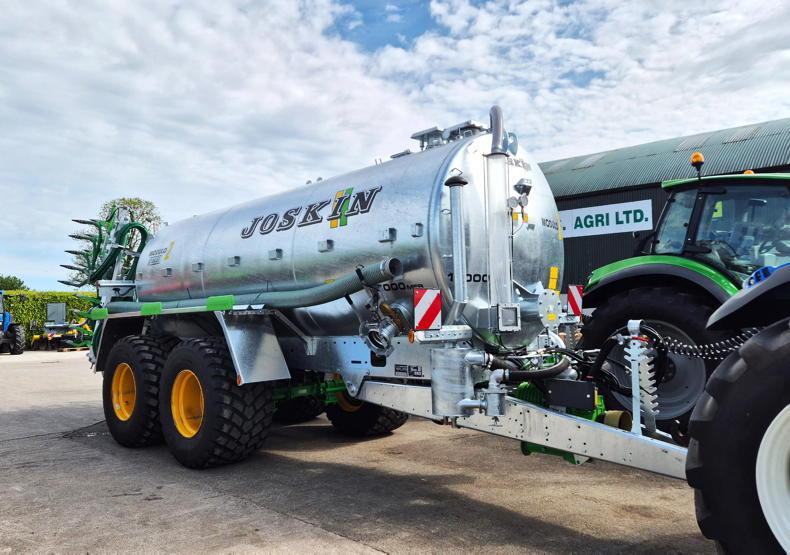
Ammonia gas is just one of many substances trapped in slurry or animal excrement. When slurry is stored, agitated, moved or spread, ammonia loss can occur to the atmosphere. Losses are increased when slurry is given more exposure to air and that is the principle behind the use of low emission slurry spreading systems – lower exposure, lower losses.
Losses also occur in grazing systems, especially in urine patches. The higher the concentration of total nitrogen, the higher the likelihood of ammonia loss.
Loss of ammonia can also occur following the application of chemical or artificial nitrogen
A urine patch could have a local N concentration of up to 800kg to 1,000kg N/ha. Again, the higher the N concentration, the greater the risk of ammonia losses. Having lower levels of N in the foliage is likely to result in lower levels in the urine and, consequently, lower ammonia loss.
Loss of ammonia can also occur following the application of chemical or artificial nitrogen. Each form of nitrogen differs in terms of its risk of ammonia loss. Of the different products we use, urea is by far the most likely to leak. However, once any N source gets into the soil, it can be transformed into other N types and this process is ongoing. One common transformation is from ammonium-N (from urea) to gaseous ammonia.
Soil pH is an associated factor. The higher the soil pH, the more ammonium is converted to ammonia gas and this process is accelerated by higher temperatures. Forms of nitrogen in the soil are in a constant state of change, but ammonia gas production always comes from ammonium and this is a common ingredient in many fertilisers, such as calcium ammonium nitrate (CAN).
Local pH has a significant impact on whether ammonium or ammonia is produced
Urea is particularly prone to ammonia volatilisation. When a urea granule is put in the soil, bacteria trigger its conversion from urea to ammonium (NH4+), or ammonia (NH3), plus bicarbonate (HCO3-), depending on the conditions. Local pH has a significant impact on whether ammonium or ammonia is produced. The normal conversion of urea to ammonium temporarily increases the pH immediately around a granule and this increase is the driver of ammonia production. The use of urease inhibitors considerably reduces ammonia production.
High temperatures and dry soils increase this risk, while rain after application and cooler temperatures reduce volatilisation.
All these factors combine to give increased risk of ammonia loss, as cow numbers increase and higher stocking rates intensify nitrogen usage. The higher the nitrogen usage, the greater will be the risk of ammonia loss.
Can ammonia levels be reduced?
The simple answer is yes. This week, Teagasc launched a highly technical report on how to reduce ammonia loss. It identifies 13 different measures as part of its new marginal abatement cost curve, but two in particular have the greatest impact.
These require a switch to protected urea and a move to low-emissions slurry spreading. These two are by far the most impactful and cost-effective measures to reduce emissions.
Other measures suggested by Teagasc to reduce ammonia emissions include greater use of clover, lower N rates and split timings
If both were implemented by all farmers, Teagasc estimates that ammonia emissions would be reduced by 10%, which is more than the level needed to meet our ammonia reduction obligation.
Other measures suggested by Teagasc to reduce ammonia emissions include greater use of clover, lower N rates and split timings, improved nitrogen use efficiency and lower crude protein levels in animal diets.
Ammonia and its consequences
Ammonia is a gas that contains nitrogen and hydrogen (NH3). It is colourless, has a pungent, suffocating odour and is highly soluble in water. It is also an air pollutant.
It is generally not a problem in soil and is used in many different chemical processes. Loss as gas is generally low when concentrations in the soil are low.
While ammonia is in the air, it is an air pollutant and it can cause other problems
However, volatilisation of ammonia can occur from agricultural land, as the concentration of N increases and when pH is pushed above 7.0. The local pH around a urea granule can rise above 8.5 and trigger significant ammonia production and loss, resulting in a loss and cost to farmers.
Ammonia is soluble in water. Once it is in the air, it can be blown around and come back down again in rain. While ammonia is in the air, it is an air pollutant and it can cause other problems in sensitive ecosystems when it returns in rain. It can add N to water, just like nitrate would.
It can also add to acidity and damage old historic structures, etc. It may also contribute to nitrous oxide (N2O) production and emissions, which is a greenhouse gas.
Emissions of ammonia into the atmosphere are controlled by legislation. If we are not actively get below this level, we risk being fined as a country and having severe controls placed on us.The main sources of ammonia loss relate to animal manures and urea. Reducing nitrogen losses as ammonia means lower costs.
Gaseous emissions from agriculture are very much an irritant to commercial farmers. Some see them as a handbrake on potential productivity and a barrier to commercial opportunity. But is this correct?
Emissions involve different types of gases, but only some of these relate to agriculture. Farmers will be aware of the debate around carbon and the associated climate change conversations. The main gasses here are carbon dioxide (CO2) and methane (CH4).
CO2 emissions come from many different sources, including the basic breathing by animals (including humans), insects, microorganisms, etc, as well as from the burning of fuels or other energy sources.
Source: David Wall, Teagasc
Methane (CH4) is the other carbon gas. It too can originate from many different sources, most of which relate to natural biological reactions. We think mainly of belching ruminants, but it is produced by many different biological processes, including the decay of organic material. It is also released when oil or gas are extracted from the earth.
Nitrogen gases
The other major emissions relate to gasses that contain nitrogen (N). These are ammonia (NH3) and nitrous oxide (N2O). If the first thing you notice here is that these represent a loss of nitrogen, then you have it in one. Tackling these losses is also about protecting some of your investment. Reducing these losses can help bring efficiency to farming, while reducing an environmental threat.
While these losses are as gases, which either cause air pollution or global warming, we can also lose nitrogen into water systems through leaching. We must also remember that nitrogen can be transformed from one N compound into another by nature and cause problems in different ways.
Does agriculture cause ammonia emissions?
Of all the emissions generated, agriculture is responsible for an estimated 98% of the total ammonia. The situation is even more serious in Northern Ireland, which has a greater intensity of intensive livestock production.
Ireland has been in excess of its ammonia limits for some years
Our obligation to reduce ammonia emissions will be tricky for farming, as ammonia emissions arise mainly from animal manures and the spreading of urea fertiliser.
Ireland has been in excess of its ammonia limits for some years, but so far we have remained largely below the radar. However, this will quickly come into focus and if we do not tackle these emissions, we will have difficulty maintaining our clean, green marketing image based on grazed grass, if it is associated with air pollution.
How do emissions occur?
Ammonia gas is just one of many substances trapped in slurry or animal excrement. When slurry is stored, agitated, moved or spread, ammonia loss can occur to the atmosphere. Losses are increased when slurry is given more exposure to air and that is the principle behind the use of low emission slurry spreading systems – lower exposure, lower losses.
Losses also occur in grazing systems, especially in urine patches. The higher the concentration of total nitrogen, the higher the likelihood of ammonia loss.
Loss of ammonia can also occur following the application of chemical or artificial nitrogen
A urine patch could have a local N concentration of up to 800kg to 1,000kg N/ha. Again, the higher the N concentration, the greater the risk of ammonia losses. Having lower levels of N in the foliage is likely to result in lower levels in the urine and, consequently, lower ammonia loss.
Loss of ammonia can also occur following the application of chemical or artificial nitrogen. Each form of nitrogen differs in terms of its risk of ammonia loss. Of the different products we use, urea is by far the most likely to leak. However, once any N source gets into the soil, it can be transformed into other N types and this process is ongoing. One common transformation is from ammonium-N (from urea) to gaseous ammonia.
Soil pH is an associated factor. The higher the soil pH, the more ammonium is converted to ammonia gas and this process is accelerated by higher temperatures. Forms of nitrogen in the soil are in a constant state of change, but ammonia gas production always comes from ammonium and this is a common ingredient in many fertilisers, such as calcium ammonium nitrate (CAN).
Local pH has a significant impact on whether ammonium or ammonia is produced
Urea is particularly prone to ammonia volatilisation. When a urea granule is put in the soil, bacteria trigger its conversion from urea to ammonium (NH4+), or ammonia (NH3), plus bicarbonate (HCO3-), depending on the conditions. Local pH has a significant impact on whether ammonium or ammonia is produced. The normal conversion of urea to ammonium temporarily increases the pH immediately around a granule and this increase is the driver of ammonia production. The use of urease inhibitors considerably reduces ammonia production.
High temperatures and dry soils increase this risk, while rain after application and cooler temperatures reduce volatilisation.
All these factors combine to give increased risk of ammonia loss, as cow numbers increase and higher stocking rates intensify nitrogen usage. The higher the nitrogen usage, the greater will be the risk of ammonia loss.
Can ammonia levels be reduced?
The simple answer is yes. This week, Teagasc launched a highly technical report on how to reduce ammonia loss. It identifies 13 different measures as part of its new marginal abatement cost curve, but two in particular have the greatest impact.
These require a switch to protected urea and a move to low-emissions slurry spreading. These two are by far the most impactful and cost-effective measures to reduce emissions.
Other measures suggested by Teagasc to reduce ammonia emissions include greater use of clover, lower N rates and split timings
If both were implemented by all farmers, Teagasc estimates that ammonia emissions would be reduced by 10%, which is more than the level needed to meet our ammonia reduction obligation.
Other measures suggested by Teagasc to reduce ammonia emissions include greater use of clover, lower N rates and split timings, improved nitrogen use efficiency and lower crude protein levels in animal diets.
Ammonia and its consequences
Ammonia is a gas that contains nitrogen and hydrogen (NH3). It is colourless, has a pungent, suffocating odour and is highly soluble in water. It is also an air pollutant.
It is generally not a problem in soil and is used in many different chemical processes. Loss as gas is generally low when concentrations in the soil are low.
While ammonia is in the air, it is an air pollutant and it can cause other problems
However, volatilisation of ammonia can occur from agricultural land, as the concentration of N increases and when pH is pushed above 7.0. The local pH around a urea granule can rise above 8.5 and trigger significant ammonia production and loss, resulting in a loss and cost to farmers.
Ammonia is soluble in water. Once it is in the air, it can be blown around and come back down again in rain. While ammonia is in the air, it is an air pollutant and it can cause other problems in sensitive ecosystems when it returns in rain. It can add N to water, just like nitrate would.
It can also add to acidity and damage old historic structures, etc. It may also contribute to nitrous oxide (N2O) production and emissions, which is a greenhouse gas.
Emissions of ammonia into the atmosphere are controlled by legislation. If we are not actively get below this level, we risk being fined as a country and having severe controls placed on us.The main sources of ammonia loss relate to animal manures and urea. Reducing nitrogen losses as ammonia means lower costs. 







SHARING OPTIONS