Three weeks ago we brought you the first details of a major new food industry-led initiative, Project Clover.
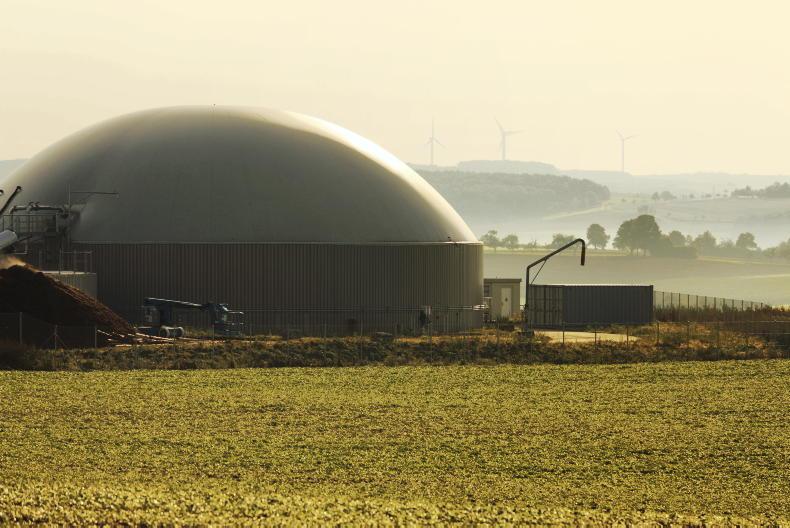
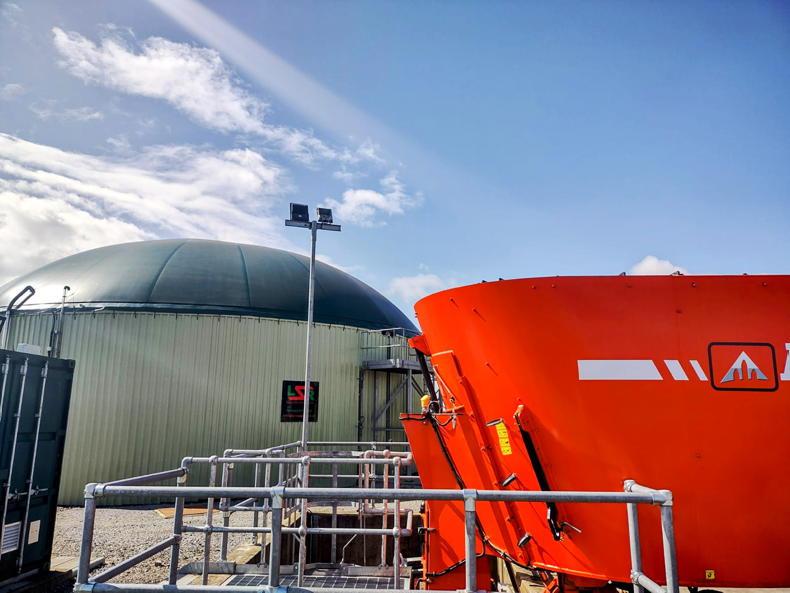
The vision for the project is simple – to reduce carbon emissions and improve the sustainability of Irish agriculture through the development of a large scale, farm-based anaerobic digestion (AD) sector, producing biomethane and biofertiliser [digestate].
However, the details of how this will be achieved are complex, with many moving parts.
Project Clover
Project Clover is led by food processor Danone and includes Wyeth Nutritional, Dairygold, Glanbia Ireland, Carbery, Tipperary Co-Op and Lakeland Dairies. It is supported by KPMG, the Renewable Gas Forum of Ireland, Devenish Nutrition and Gas Networks Ireland.
Each food company in the group recognises that switching from natural gas to fully renewable biomethane for thermal/drying facilities in their milk processing plants is key to reducing their carbon emissions. However, while years of background work have gone into the project, it is important to say that it is still only at Phase I, the feasibility stage.

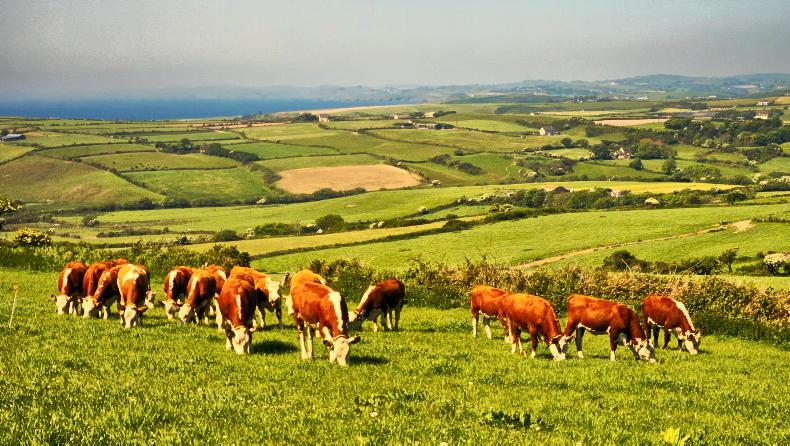
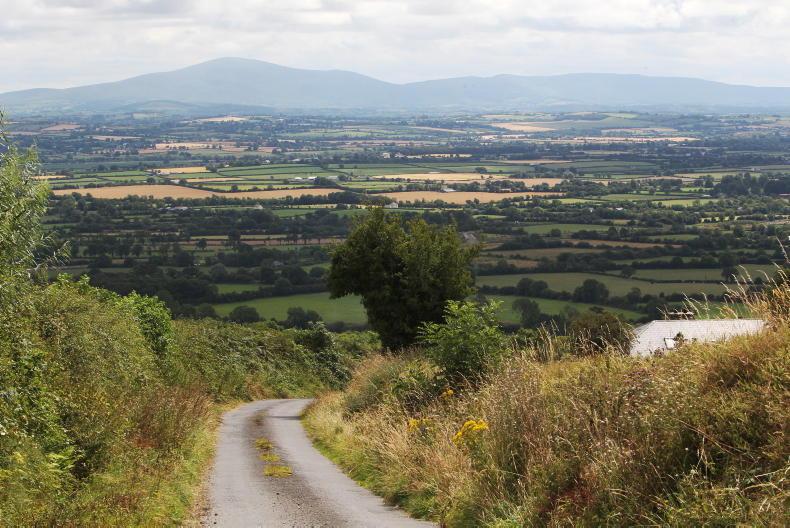
Ireland's grass growth potential puts it in a better position than most countries to comply with the new EU sustainability rules when it comes to biomethane
Three key elements
Project Clover involves three key elements – using biomethane to displace natural gas, using digestate to displace chemical fertiliser and enabling soil carbon sequestration.
1 Biomethane: Biogas is produced when organic materials, such as slurry, crops and wastes, are broken down in an anaerobic (oxygen-free) environment, such as in a purpose-built AD plant. Biogas contains around 55-60% methane, with most of the remainder made up of CO2 and other gasses. Biomethane is made when this CO2 and other gases are stripped from the biogas, increasing methane purity to around 99%.
The resulting gas is then technically identical to natural gas and can be used as a renewable substitute for thermal heat generation and transport fuel.
In most cases, biomethane will be injected directly into the national gas grid from the AD plant, or transported via road to the nearest grid injection point.
In the case of industrial end-users who operate under the Emissions Trading Scheme (ETS), ie all of the project’s members, they will purchase the biomethane from the producer via a shipper/supplier and also purchase the Certificates of Origin which allow them to avoid the purchase of EU ETS credits.
2 Digestate: For many existing plant operators, digestate can be a headache and a big cost. However, the use of digestate is vital to Project Clover. It is higher in nutrient density, is more uniform and is stripped of GHG gases such as methane when compared to raw slurry. Its correct application and use on farms can help reduce chemical fertiliser usage. In the case of the project’s participant dairy suppliers, by reducing chemical fertiliser use on farm this can reduce the carbon footprint of their upstream Scope III emissions. Under the EU Green Deal Farm to Fork strategy, it is proposed that carbon labelling will capture the Scope III emission reductions and in time be accounted for under a company’s GHG emissions profile.
3 Soil carbon sequestration: Project Clover is part-modelled on a similar French collaborative soil carbon sequestration initiative called 4P1000. The initiative, launched in 2015, is strongly supported by the French government and operates under the principles of the Intergovernmental Panel on Climate Change (IPCC) and United Nations Framework Convention on Climate Change. It allows French farmers to measure the reduction in agricultural emissions and potentially monetise soil carbon credits through increasing soil organic matter levels. Project Clover aims to replicate this French model on Irish farms.
Opportunities
for farmers
Since introducing Project Clover, we received lots of correspondence from farmers. Many were positive, some were sceptical, others were concerned. In all cases they wanted to know more of the details.
The project would create additional income opportunities for farmers alongside current farming enterprises, through direct/shared ownership of AD plants, or by providing new markets for feedstock or services.
If the companies involved with this project do switch to using biomethane, this will create demand for 2.5TW of biomethane by 2030. This equates to the output from 125 farm AD plants.
To be clear, the project members are not seeking to build 125 AD plants themselves. They want to create suitable market conditions to provide confidence and certainty to allow these plants to be developed.
Most farmers will see opportunity to develop long-term feedstock supply contracts. Feedstock mix is no longer governed solely by economics. From 2021, new sustainability criteria contained in the EU Renewable Energy Directive II will come into effect. This means that for biomethane to be classed as renewable, it must reduce GHG emissions by at least 70% compared with natural gas. This increases to 80% in 2026.
This means all emissions generated in the production of biomethane, from transporting slurry, to harvesting silage, to heating tanks, will all be measured. The Irish Green Gas Certification Scheme will monitor and verify these emissions.
As a result, these new criteria severely limit what can be used as feedstock. For example, a plant fed on 100% grass or energy crops will not meet the emissions criteria. A plant fed on 100% slurry will comfortably meet the criteria but may not be economical. So a balance must be found between economics and emissions reductions.
Feedstock supply
Due to the high costs involved with upgrading biogas to biomethane, farm-based plants in Ireland may need to be twice as big as those in Northern Ireland, which mostly produce electricity. To put this in context, a typical farm-based plant in Ireland will be around 20 GWh/yr in size (rated on output). In order to meet the sustainability criteria, this plant would need to be fed with 16,000t of slurry from within a 3-5km radius and 22,000t of grass within a 10km radius. Other feedstocks, such as whole crop or beet, can also be used but they may make it harder to meet the sustainability criteria.
A key objective of Project Clover is to drive the increased sustainable productivity of land to supply the silage/crop requirements. The team outlined that, currently, the average field in Ireland produces 6t DM/ha of grass. With improved agronomy, productivity can comfortably increase to over 12t DM/ha. They say this increase in output is vital to ensure the industry will not compete with existing enterprises for feedstock.
Under the current business model, the AD plants will pay a fixed price of €30/t of grass for silage.
To be continued
The 5 December edition of the Irish Farmers Journal will carry a Renewables Focus and will feature the policy drivers behind Project Clover, as well as the proposed funding model. Big policy changes are on the way which will serve to change the economics of AD biomethane.
Three weeks ago we brought you the first details of a major new food industry-led initiative, Project Clover.
The vision for the project is simple – to reduce carbon emissions and improve the sustainability of Irish agriculture through the development of a large scale, farm-based anaerobic digestion (AD) sector, producing biomethane and biofertiliser [digestate].
However, the details of how this will be achieved are complex, with many moving parts.
Project Clover
Project Clover is led by food processor Danone and includes Wyeth Nutritional, Dairygold, Glanbia Ireland, Carbery, Tipperary Co-Op and Lakeland Dairies. It is supported by KPMG, the Renewable Gas Forum of Ireland, Devenish Nutrition and Gas Networks Ireland.
Each food company in the group recognises that switching from natural gas to fully renewable biomethane for thermal/drying facilities in their milk processing plants is key to reducing their carbon emissions. However, while years of background work have gone into the project, it is important to say that it is still only at Phase I, the feasibility stage.
Ireland's grass growth potential puts it in a better position than most countries to comply with the new EU sustainability rules when it comes to biomethane
Three key elements
Project Clover involves three key elements – using biomethane to displace natural gas, using digestate to displace chemical fertiliser and enabling soil carbon sequestration.
1 Biomethane: Biogas is produced when organic materials, such as slurry, crops and wastes, are broken down in an anaerobic (oxygen-free) environment, such as in a purpose-built AD plant. Biogas contains around 55-60% methane, with most of the remainder made up of CO2 and other gasses. Biomethane is made when this CO2 and other gases are stripped from the biogas, increasing methane purity to around 99%.
The resulting gas is then technically identical to natural gas and can be used as a renewable substitute for thermal heat generation and transport fuel.
In most cases, biomethane will be injected directly into the national gas grid from the AD plant, or transported via road to the nearest grid injection point.
In the case of industrial end-users who operate under the Emissions Trading Scheme (ETS), ie all of the project’s members, they will purchase the biomethane from the producer via a shipper/supplier and also purchase the Certificates of Origin which allow them to avoid the purchase of EU ETS credits.
2 Digestate: For many existing plant operators, digestate can be a headache and a big cost. However, the use of digestate is vital to Project Clover. It is higher in nutrient density, is more uniform and is stripped of GHG gases such as methane when compared to raw slurry. Its correct application and use on farms can help reduce chemical fertiliser usage. In the case of the project’s participant dairy suppliers, by reducing chemical fertiliser use on farm this can reduce the carbon footprint of their upstream Scope III emissions. Under the EU Green Deal Farm to Fork strategy, it is proposed that carbon labelling will capture the Scope III emission reductions and in time be accounted for under a company’s GHG emissions profile.
3 Soil carbon sequestration: Project Clover is part-modelled on a similar French collaborative soil carbon sequestration initiative called 4P1000. The initiative, launched in 2015, is strongly supported by the French government and operates under the principles of the Intergovernmental Panel on Climate Change (IPCC) and United Nations Framework Convention on Climate Change. It allows French farmers to measure the reduction in agricultural emissions and potentially monetise soil carbon credits through increasing soil organic matter levels. Project Clover aims to replicate this French model on Irish farms.
Opportunities
for farmers
Since introducing Project Clover, we received lots of correspondence from farmers. Many were positive, some were sceptical, others were concerned. In all cases they wanted to know more of the details.
The project would create additional income opportunities for farmers alongside current farming enterprises, through direct/shared ownership of AD plants, or by providing new markets for feedstock or services.
If the companies involved with this project do switch to using biomethane, this will create demand for 2.5TW of biomethane by 2030. This equates to the output from 125 farm AD plants.
To be clear, the project members are not seeking to build 125 AD plants themselves. They want to create suitable market conditions to provide confidence and certainty to allow these plants to be developed.
Most farmers will see opportunity to develop long-term feedstock supply contracts. Feedstock mix is no longer governed solely by economics. From 2021, new sustainability criteria contained in the EU Renewable Energy Directive II will come into effect. This means that for biomethane to be classed as renewable, it must reduce GHG emissions by at least 70% compared with natural gas. This increases to 80% in 2026.
This means all emissions generated in the production of biomethane, from transporting slurry, to harvesting silage, to heating tanks, will all be measured. The Irish Green Gas Certification Scheme will monitor and verify these emissions.
As a result, these new criteria severely limit what can be used as feedstock. For example, a plant fed on 100% grass or energy crops will not meet the emissions criteria. A plant fed on 100% slurry will comfortably meet the criteria but may not be economical. So a balance must be found between economics and emissions reductions.
Feedstock supply
Due to the high costs involved with upgrading biogas to biomethane, farm-based plants in Ireland may need to be twice as big as those in Northern Ireland, which mostly produce electricity. To put this in context, a typical farm-based plant in Ireland will be around 20 GWh/yr in size (rated on output). In order to meet the sustainability criteria, this plant would need to be fed with 16,000t of slurry from within a 3-5km radius and 22,000t of grass within a 10km radius. Other feedstocks, such as whole crop or beet, can also be used but they may make it harder to meet the sustainability criteria.
A key objective of Project Clover is to drive the increased sustainable productivity of land to supply the silage/crop requirements. The team outlined that, currently, the average field in Ireland produces 6t DM/ha of grass. With improved agronomy, productivity can comfortably increase to over 12t DM/ha. They say this increase in output is vital to ensure the industry will not compete with existing enterprises for feedstock.
Under the current business model, the AD plants will pay a fixed price of €30/t of grass for silage.
To be continued
The 5 December edition of the Irish Farmers Journal will carry a Renewables Focus and will feature the policy drivers behind Project Clover, as well as the proposed funding model. Big policy changes are on the way which will serve to change the economics of AD biomethane.






SHARING OPTIONS