IFA receives clarifications on taxation of basic payment and milk quota
IFA has received clarification from the Department of Agriculture and the Revenue Commissioners on a number of tax issues of relevance to dairy farming and the abolition of milk quota in 2015.
IFA has received clarification from the Department of Agriculture and the Revenue Commissioners on a number of taxation issues of particular relevance to dairy farming and the abolition of milk quota in 2015.
IFA Farm Business Committee chair Tom Doyle said: “In 2015, in addition to the new Basic Payment Scheme, which the Minister provided clarification of recently, IFA identified that the abolition of milk quotas had taxation implications. IFA met the Department of Agriculture and Revenue Commissioners earlier this year to highlight these issues. The information now provided to IFA allows families and tax practitioners to have clarity in preparing 2015 tax returns.”
Revenue has reaffirmed that the superlevy is an expense of the trade of farming. Whether it is deductible in one year or over the three years will depend on the accounts prepared by each farmer. It is likely that most accounts will show the superlevy as an expense in the first year, and then the balance left outstanding as a debt to be repaid in future years.
ADVERTISEMENT
On that basis, the superlevy will be deductible in computing the profits chargeable to tax in the current year of assessment.
Milk quota purchase after 2000: Revenue has confirmed that the ending of a milk quota is a balancing event, meaning that farmers will have to calculate the balancing allowance, if any, due to them in the year in which the quota ends. Capital allowances cannot be claimed after the milk quota ends.
Milk quota purchased before 2000: Revenue has also confirmed to IFA that in the case of milk quota purchased prior to the introduction of capital allowances, ie prior to 1 April 2000, a ‘‘negligible value claim’’ can be made. Doyle said that the allowance of ‘‘negligible value claim’’ for quota purchased prior to 2000 was a fair outcome for a group of farmers who had invested in milk quota in the past, but who had been discriminated against by not being able to claim it as a business expense.
Contracting expenses
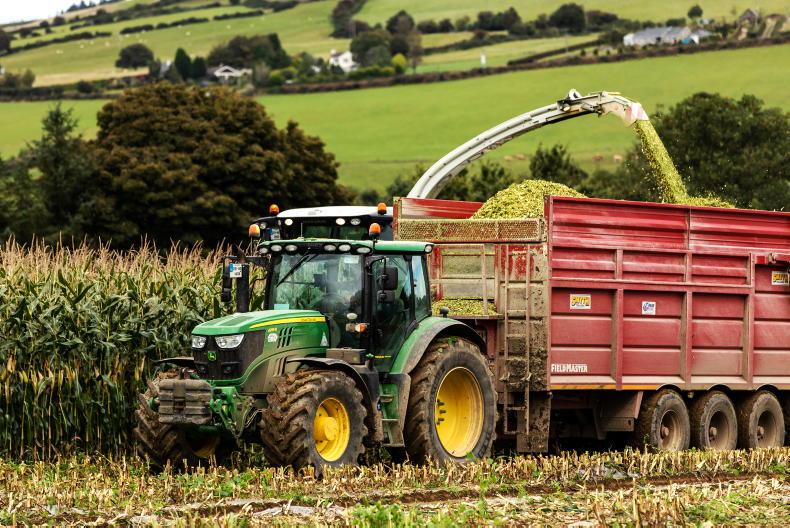
On a separate issue, Doyle said that, as silage season gets under way, farmers must be sure to get invoices or other suitable records of their payments to contractors. He advised: “Any business that claims a tax deductible expense for expenditure must have a satisfactory record of that expenditure. As reporting requirements have tightened in recent years, farmers must make sure that they get proper records of their business expenses, including contracting expenditure, to ensure they do not have any difficulties when filing end-of-year tax returns.”
Register for free to read this story and our free stories.
This content is available to digital subscribers and loyalty code users only. Sign in to your account, use the code or subscribe to get unlimited access.
The reader loyalty code gives you full access to the site from when you enter it until the following Wednesday at 9pm. Find your unique code on the back page of Irish Country Living every week.
CODE ACCEPTED
You have full access to the site until next Wednesday at 9pm.
CODE NOT VALID
Please try again or contact support.
IFA has received clarification from the Department of Agriculture and the Revenue Commissioners on a number of taxation issues of particular relevance to dairy farming and the abolition of milk quota in 2015.
IFA Farm Business Committee chair Tom Doyle said: “In 2015, in addition to the new Basic Payment Scheme, which the Minister provided clarification of recently, IFA identified that the abolition of milk quotas had taxation implications. IFA met the Department of Agriculture and Revenue Commissioners earlier this year to highlight these issues. The information now provided to IFA allows families and tax practitioners to have clarity in preparing 2015 tax returns.”
Revenue has reaffirmed that the superlevy is an expense of the trade of farming. Whether it is deductible in one year or over the three years will depend on the accounts prepared by each farmer. It is likely that most accounts will show the superlevy as an expense in the first year, and then the balance left outstanding as a debt to be repaid in future years.
On that basis, the superlevy will be deductible in computing the profits chargeable to tax in the current year of assessment.
Milk quota purchase after 2000: Revenue has confirmed that the ending of a milk quota is a balancing event, meaning that farmers will have to calculate the balancing allowance, if any, due to them in the year in which the quota ends. Capital allowances cannot be claimed after the milk quota ends.
Milk quota purchased before 2000: Revenue has also confirmed to IFA that in the case of milk quota purchased prior to the introduction of capital allowances, ie prior to 1 April 2000, a ‘‘negligible value claim’’ can be made. Doyle said that the allowance of ‘‘negligible value claim’’ for quota purchased prior to 2000 was a fair outcome for a group of farmers who had invested in milk quota in the past, but who had been discriminated against by not being able to claim it as a business expense.
Contracting expenses
On a separate issue, Doyle said that, as silage season gets under way, farmers must be sure to get invoices or other suitable records of their payments to contractors. He advised: “Any business that claims a tax deductible expense for expenditure must have a satisfactory record of that expenditure. As reporting requirements have tightened in recent years, farmers must make sure that they get proper records of their business expenses, including contracting expenditure, to ensure they do not have any difficulties when filing end-of-year tax returns.”
If you would like to speak to a member of our team, please call us on 01-4199525.
Link sent to your email address
We have sent an email to your address. Please click on the link in this email to reset your password. If you can't find it in your inbox, please check your spam folder. If you can't find the email, please call us on 01-4199525.
ENTER YOUR LOYALTY CODE:
The reader loyalty code gives you full access to the site from when you enter it until the following Wednesday at 9pm. Find your unique code on the back page of Irish Country Living every week.








SHARING OPTIONS