



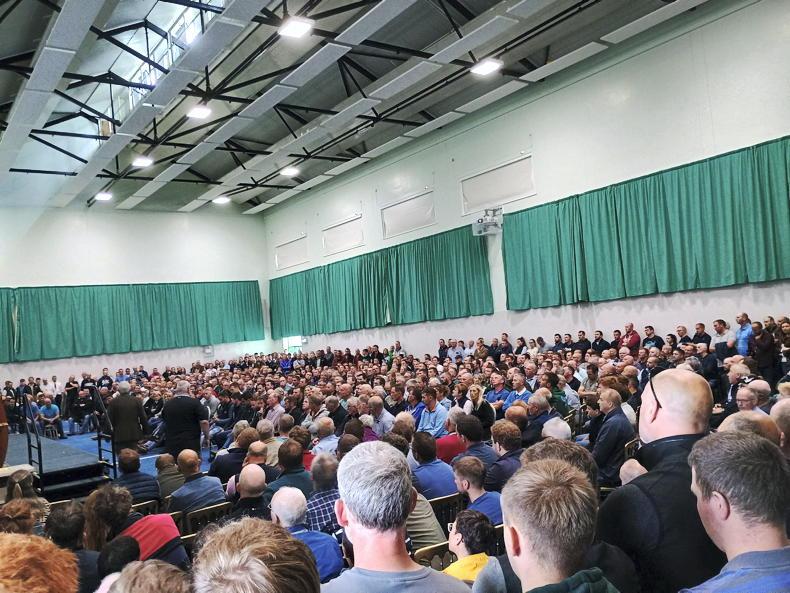
DAERA has confirmed that around 3,400 responses were received as part of a public consultation on the Nutrients Action Programme which closed on Thursday 24 July.
It is one of the largest ever responses to a consultation issued by the Department, with very detailed responses made by a number of industry stakeholders, including the Ulster Farmers’ Union (UFU). The main body of the UFU response runs to 70 pages.
In it, the union outlines its opposition to the majority of the changes proposed, while also hitting out at the lack of engagement by DAERA before the document was published, which led to a “poor quality and flawed consultation”.
Unworkable
That view was echoed by the chair of the NI Agricultural Producers’ Association (NIAPA) James Lowe, who said that as many members as possible had been encouraged to respond. “The proposals in the NAP consultation would lead to the ruination of local farms. They are unworkable,” he said.
Also commenting, AgriSearch chair Professor Gerry Boyle said that many of the proposed measures lacked robust scientific evidence.
Continued on page 4 See also pages 6-7
“In particular, the proposed reductions on nitrogen fertiliser limits are not supported by credible data and could reduce grass yields, increase reliance on imported feed, and paradoxically worsen phosphorus surpluses,” he said.
Included at the end of the UFU response is a scientific evaluation of evidence provided by AFBI to support new nitrogen (N) fertiliser limits within the NAP.
Those new limits take into account the N from slurry and would significantly reduce the amount of N fertiliser most farmers can apply. Under the proposals, a typical dairy farm would be limited to just 150kg N/ha (4.5 bags/ac) on silage ground, while a beef farm would be limited to just 82kg N/ha (2.5 bags/ac).
The evaluation of the AFBI data on grass yield responses to N fertiliser has been done by retired scientist Dr Sinclair Mayne. In his paper, he raises significant issues, including that relevant research was omitted from the AFBI analysis, while other studies quoted by AFBI used invalid data. In some studies, no account was taken of late season growth, while in others, lime was below optimum, thereby limiting grass yields. Dr Mayne also noted that AFBI quoted results from various research trials that are yet to be published.
“It is recommended that a new research programme should be established to examine grass production responses to chemical N fertiliser application under both grazing and silage production systems,” concluded Dr Mayne.
Next steps
Given farmer backlash to the initial NAP proposals, DAERA has previously confirmed that a new group will be formed to consider responses to the first consultation. This group will then come forward with another set of proposals to be subject to a further 8-week consultation. An economic impact assessment will also be done.


SHARING OPTIONS