



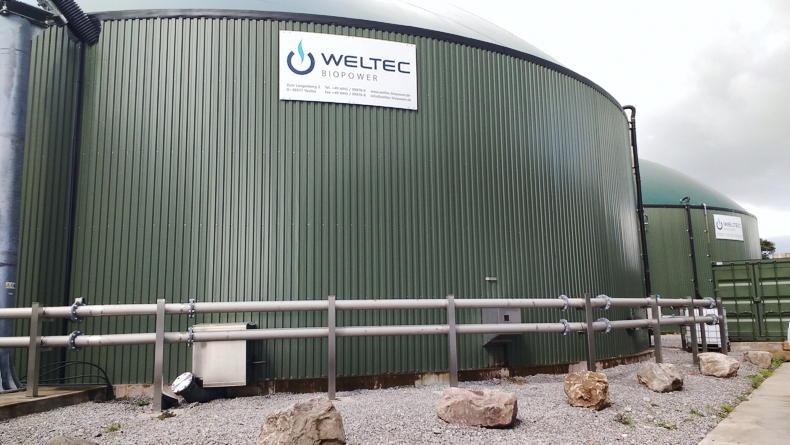
The separation of slurry into solid and liquid fractions, with the solid material used as a feedstock in anaerobic digestion (AD), is all part of a wider solution to lower carbon emissions and improve water quality in NI.
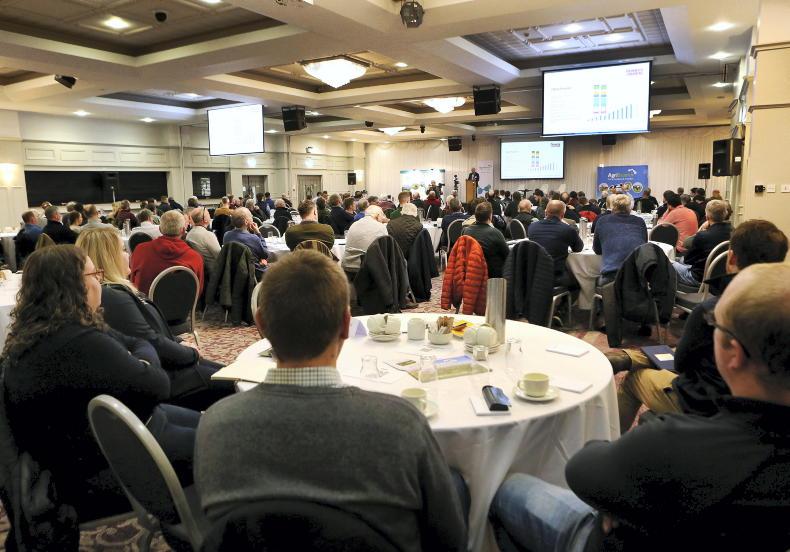
Outlining the vision at a conference organised by the Anaerobic Digestion and Bioresources Association (ADBA) in Belfast, Jonathan McFerran from DAERA highlighted innovative solutions developed by six local companies.
In January 2023, these six companies were each awarded £100,000 from government to primarily look at slurry separation and AD.
Final reports are due this month, with the output from the study helping to shape DAERA policy going forward, said McFerran.
The model involves slurry being separated on-farm. The liquid fraction retains much of the nitrogen and potassium, and can be easily spread via a dribble bar.
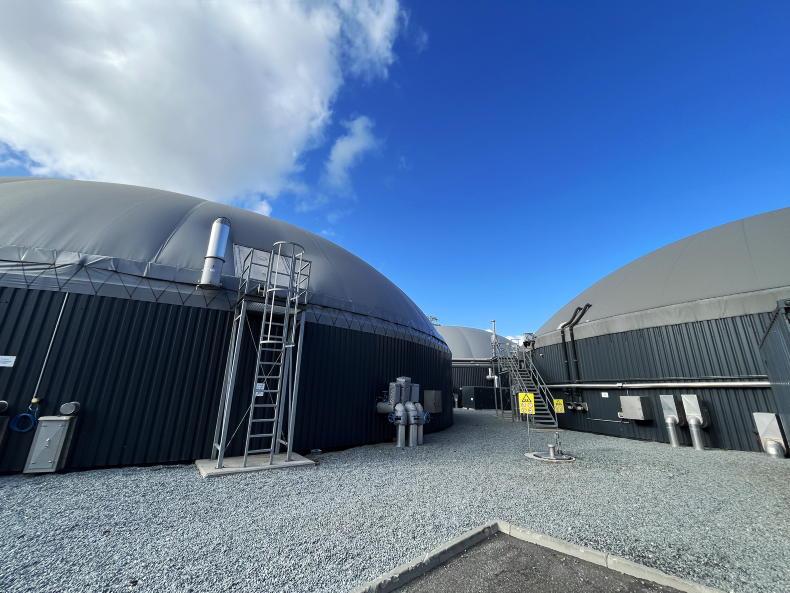
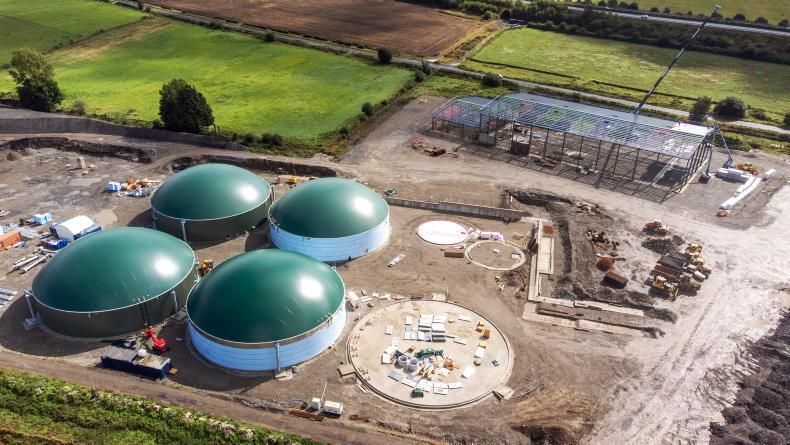
The solid fraction is taken to AD, where it is used as a feedstock to produce biogas and potentially also biomethane, lowering reliance on fossil fuels for heat and energy.
However, this is not the end of the process, with McFerran clear that resultant digestate must be managed in a sustainable way.
Removed
The solution involves digestate being processed, with phosphorus (P) removed.
Phosphorus is a major contributor to poor water quality in NI, with work by AFBI showing that in 2017 the NI agricultural industry had an excess 10,300t of P above what is required for production.
“Around 43% of our fields are above optimum for P. We must deal with this problem,” urged McFerran.
He said by harvesting off the nutrient, it will reduce our reliance on imported P fertiliser and opens up the potential to export it out of the country.
Working group
Back in 2021 DAERA established an inter-departmental biomethane group and since early 2023 there have been regular meetings between government and industry.
Despite all this effort, McFerran acknowledged that progress is currently being “hamstrung to an extent” by the lack of an Executive at Stormont.
During his presentation at the ADBA conference, UFU deputy president, John McLenaghan, hit out at the lack of joined up thinking in government around AD.
Despite it being clear that NI needs to rapidly embrace the technology, he maintained that a number of new plants are currently blocked in planning, while future controls around ammonia emissions could prevent all new development.
At the same time, NI is the only part of Europe with no government support for renewables.
“We are at the start of a 100m race, the gun has gone off, but our feet our glued to the starting blocks,” suggested McLenaghan.
Referring to his own AD plant, he said it has benefited his farming business.
“I am embarrassed when good farmers come to me looking to invest in AD. It has been good for my business and I know it would be good for their business, but the policy framework is not there,” he said.
Small-scale
He also wants any future support scheme to cover all sizes of AD, including small-scale development on-farm.
However, the view among policymakers seems to favour targeting support at large scale AD, with a recent study highlighting that 150 biomethane plants in NI, producing an average of 40GWh / annum (the equivalent of 2MW), could meet 82% of current NI gas needs.
“A centralised model of AD plants – we probably see that as the direction of travel – but it is only our lead thought at present,” commented Jonathan McFerran from DAERA.
An AD plant that upgrades biogas to biomethane has two options to inject into the NI gas grid, David Butler from network provider, Evolve, told the ADBA event.
For a plant that is close to the existing grid, they can connect directly. The other option is a hub injection site, with the gas compressed at the AD facility and transported to a central point. Longer-term, he maintained that a local gas storage site (a project is planned for Islandmagee) will be required, as we transition away from fossil fuels.
Of the 84 AD plants operational in NI, only two currently have the technology in place to upgrade biogas to biomethane.
One of those is the AD facility at Granville operated by Bio Capital. It is the largest facility in NI, processing food waste and set to be the first to inject gas into the grid.
Addressing the ADBA event, Declan McLaughlin from the company said the project should be complete by the end of 2023.
He also outlined how the company hope to capture carbon dioxide (CO2) produced when biogas is upgraded to biomethane via a separate project targeted for the end of 2024.
CO2 is widely used in the food industry.
Further expansion at Stream BioEnergy’s Tully Biogas plant in Ballymena is set to utilise most of the poultry litter in NI, potentially putting further pressure on feedstocks for AD.
However, according to David Porter from Realistic Agri, the response to that should be to improve both the yield and quality of grass silage.
“NI is a great grass-growing country, and if you make it good, you can produce a lot of gas,” said Porter. He is not a strong advocate of alternative crops such as maize, given the potential environmental cost when fields are left bare over winter. Porter estimates that if NI was to opt for 150 x 40GWh AD plants, each would require 30,000t of grass silage annually. At an average yield of 35t/ha, it would account for 12% of the total agricultural area of NI.
He maintained that under good management, annual grass yields of 50 to 60t/ha are possible – moving one third of the agricultural area from average to good would produce sufficient grass to meet the AD demand.
In addition, improving silage quality means less volume is required, while good practice such as using an effective additive and proper sealing technique also leads to cost savings.
To produce 30,000t of average-quality grass silage for each AD facility will typically cost up to £1.2m annually. But if yield and quality is improved, there are savings of up to £0.25m to be had, said Porter.
He also dismissed the “food versus fuel” debate typically associated with AD, pointing out that fuel security is equally important going forward.



SHARING OPTIONS