



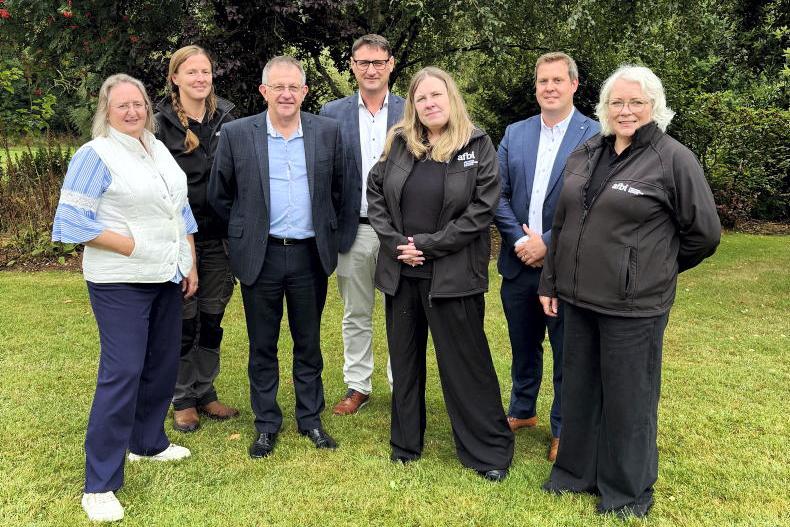
The Agri Food and Biosciences Institute (AFBI) has announced that DLF Seeds will be the new commercial partner for its forage grass breeding programme.
DLF is a global seed company headquartered in Denmark.
It has had a presence in the UK market since the early 2000s and has been active in the Irish market since 2015.
The general manager of DLF Ireland, Lee Wilson, said the new partnership with AFBI will allow the company to offer “the best performing varieties” for local conditions.
“We see the AFBI programme as a real opportunity to focus on the market in the UK and Ireland, so we can bring genetics to farmers that will really add value on-farm,” he told the Irish Farmers Journal.
The grass breeding programme at AFBI, which takes place at its site in Loughgall in Co Armagh, has been running for over 70 years.
At present, there are 25 AFBI-bred perennial ryegrass varieties on recommended lists in the UK and Ireland.
The early stages of the grass breeding programme at AFBI Loughgall is supported by core funding from DAERA.
AFBI’s new partnership with DLF follows on from a long running commercial arrangement with Dutch seed company Barenbrug, which has recently ended.
New partnership
The new agreement will see DLF support the evaluation, production and commercialisation stages of the grass breeding process.
“This arrangement is focussing on the next generation of varieties which are coming through the pipeline and being produced to suit the conditions in farmers’ fields,” said Dr Gillian Young.
The AFBI scientist said new perennial ryegrass varieties have a strong focus on resilience to climate change within local conditions.
Multispecies swards are growing in popularity in certain quarters, and are seen as a potential solution for farmers who now regularly face drought conditions.
However, Young said the AFBI grass breeding programme is not looking to branch into breeding other types of grasses or herbs.
She points out that perennial ryegrass still makes up “the backbone” of most seed mixes for multispecies swards.
“High productivity and high quality is what perennial ryegrass brings to those mixtures,” she said.
Going forward, Young explained a range of “target traits” can help new perennial ryegrass varieties become better suited to changing weather patterns.
“It includes deeper rooting, more resilience to drought, more resilience to water logging, and keeping grass productive,” she said.


SHARING OPTIONS