



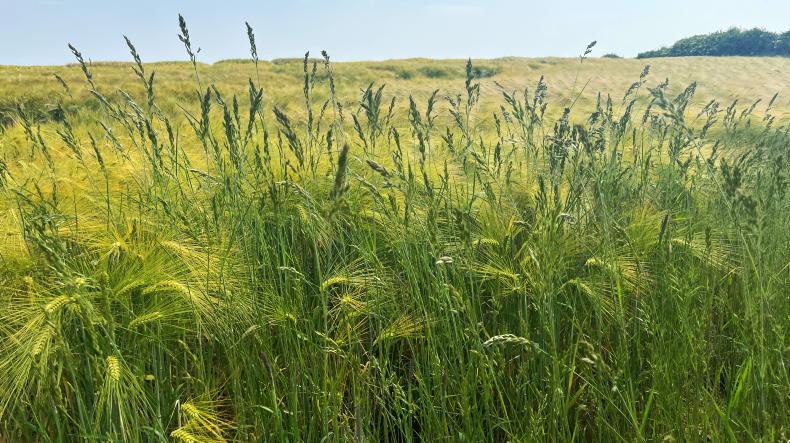
The decline in efficacy of spring post-emergence herbicides for grass-weed control has necessitated the use of autumn residual herbicides. Most residual herbicides are classified as relatively low resistance-risk.
Effective grass-weed control starts with the right residual herbicide applied at the right time.
They prevent germinated weed seedlings from becoming established, either by inhibiting root or shoot growth, or both. Moist soil conditions are essential for these herbicides to move through the soil and be absorbed by the roots and shoots of germinating weeds.
This residual activity can persist in the soil for several weeks, preventing weed emergence during this period and allowing the crop to provide a cover on the ground.
On most Irish tillage farms, residual herbicides are often applied at the early post-emergence stage. While this may provide useful control or suppression of easy-to-control weeds like meadow grasses, it may not be the right approach for more difficult-to-control species like blackgrass or Italian ryegrass.
Grass weeds with different ACCase (Axial) and/or ALS (Pacifica) sensitivity statuses were used to evaluate residual products in glasshouse trials at Oak Park during winter 2025/2026.
Testing new and old chemistry
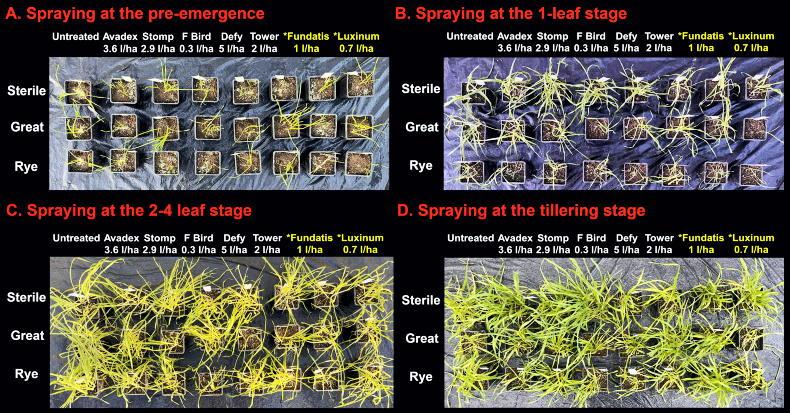
Seven residual products were tested at recommended label rates. The commonly used products were: Avadex Factor containing tri-allate, Stomp Aqua containing pendimethalin, Firebird containing flufenacet + diflufenican (DFF), Defy containing prosulfocarb, and Tower containing pendimethalin + chlorotoluron + DFF. Two new residual products, yet to be registered for use in Ireland, were also tested: Fundatis* containing bixlozone + beflubutamid and Luxinum Plus containing cinmethylin. The herbicides were applied at different growth stages (Figures 1 to 4).
For the pre-emergence treatment, herbicide was applied directly to seeds placed on moist soil (9% organic matter) and immediately covered with soil, ensuring all seeds received the same exposure to the herbicide.
This is not a real scenario, but allows the products to be tested equally. In other treatments, residual herbicides were applied at the 1-leaf (GS 11), 2-4 leaf (GS 12-14) or tillering stage (>GS 21). Assessments were carried out 30 days post-treatment. Some products contained multiple active ingredients, while others contained a single active.
Actives like DFF and beflubutamid predominantly provide broad-leaved weed control when used alone. It is also important to note that flufenacet has been withdrawn, with December 2026 being the final date for use.
Residual herbicide efficacy varied between species, so results for one grass weed should not be used to predict responses in another.
Bromes
Wild oats
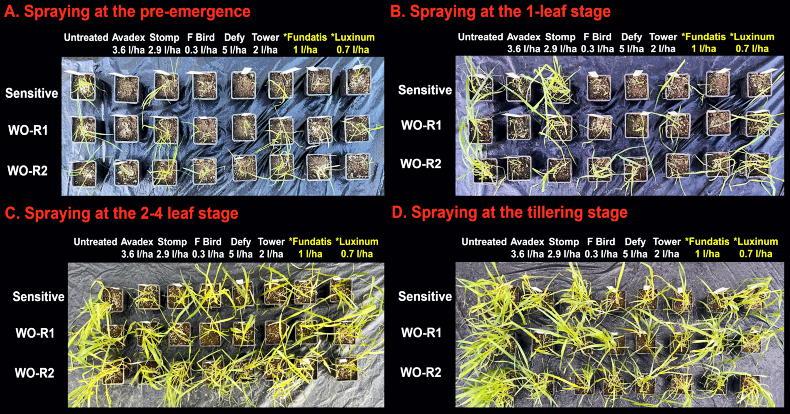
- Applications at the two to four-leaf stage or early tillering were largely ineffective, producing variable and incomplete suppression.
- Blackgrass populations responded similarly to the residual herbicides, and their sensitivity to ACCase/ALS herbicides did not affect how residuals worked on them (Figure 3).
Blackgrass
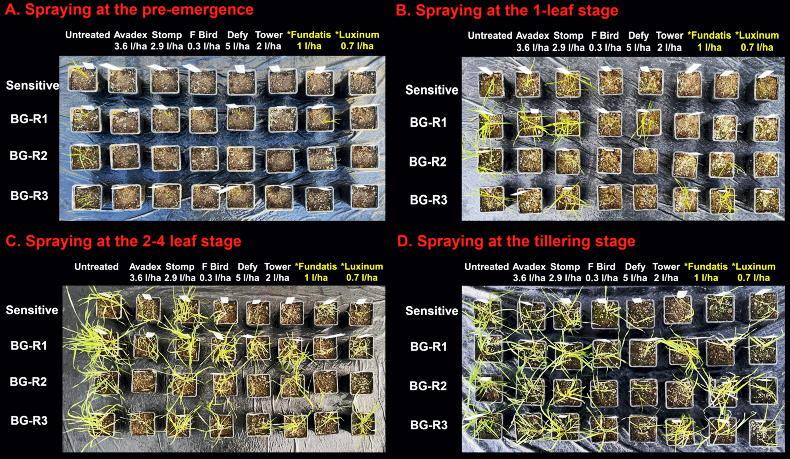
- Pre-emergence applications provided the best control across all products.
Italian ryegrass
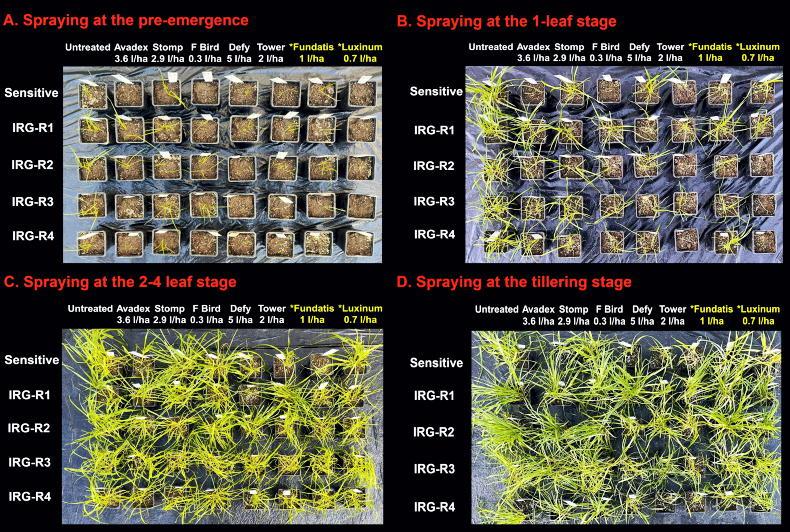
- Little to no control observed at the two to four-leaf or at tillering stages.
Herbicide applied pre-emergence
All of these results point to one important message: residual products should be applied at true pre-emergence, ideally 24 to 48 hours after drilling, to achieve maximum efficacy. When combined with strong crop competition, this can greatly improve overall grass weed control.
Product choice should reflect the target weed and field history. Most residual products are not applied alone, so stacking products, for example, Stomp Aqua + Defy and applying them at the correct pre-emergence timing is essential.
Where necessary, applications can be sequenced to target later-germinating weeds, ensuring the later application remains pre-emergence for those weeds, while having some growth-checking effects on emerged weeds.
Even at true pre-emergence, none of the current residual products provided effective control of bromes or Italian ryegrass, although control was better than when applications were made after weed emergence.
New products such as Fundatis and Luxinum, which are not registered in Ireland, show promise against difficult-to-control grass weeds, like blackgrass and Italian ryegrass. However, they are only one part of an integrated weed management (IWM) programme and are not a complete solution on their own. These weeds require drastic IWM actions.
Appropriate soil conditions and correct application are essential to maximise performance. Residual herbicides can help minimise or delay resistance by reducing reliance on high-resistance-risk ACCase/ALS herbicides. With resistance increasingly reported in grass weeds, getting residual programmes right has never been more critical.


SHARING OPTIONS