



Storm Amy – which struck last Friday – might not have been as brutal as storm Éowyn in January, but it still left its mark on farms across NI.
In particular, farmers are again faced with gathering up more trees and branches, which have been left lying across fields and on top of wire fences.
In some cases, the damage done is worse than expected, perhaps because most trees are still in-leaf and also because there are a lot of trees weakened from the January storm.
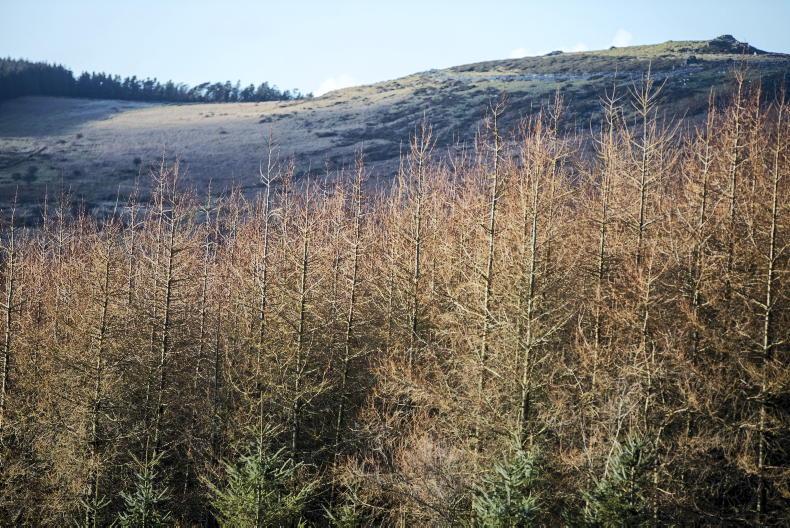
Add in the enormous number of dead trees across our farmland due to ash dieback, it is a pretty depressing picture.
Gathering up large trees is hard work, especially in wet conditions, while extra care should be taken when cutting dead material.
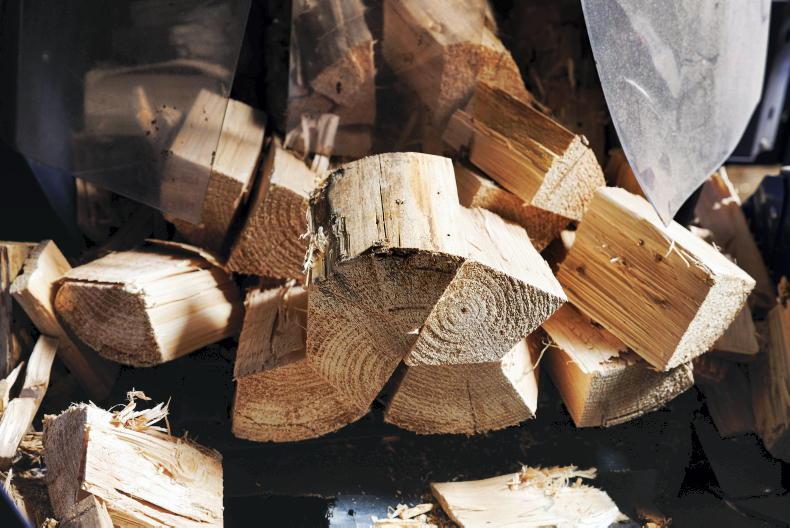
The countryside is awash with firewood for this winter and beyond.
Given the severity and frequency of recent storms, it is difficult to see there being much appetite among farmers to plant farmland trees within future agri-environment schemes.
But at a much wider level, it is also questionable whether NI will achieve future tree planting targets set by government.
NI only has around 8% of land in forest, which is well behind the UK average of 13% and the Republic of Ireland’s cover of close to 12%, so it is important that we look to encourage more planting.
In recent years, thanks to various schemes, around 425ha of land in NI has been planted annually in trees. DAERA Forest Service hopes to increase this to 600ha annually by 2027.
However, that is still nowhere near the target laid out in the expert advice from the UK Climate Change Committee (CCC) as part of reaching net zero greenhouse gas emissions by 2050.
The CCC talk about needing to get to a point where we are planting 2,800ha of trees annually by 2036. The pathway for that to happen is impossible to envisage at present.


SHARING OPTIONS