



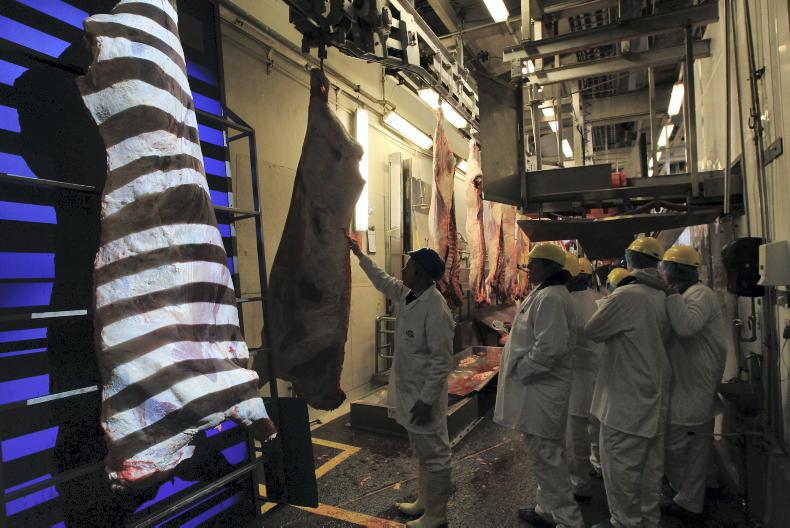
Back in 2011 mechanical grading of beef carcases using visual imaging analysis (VIA) equipment became operational across the seven major slaughterhouses in NI.
Prior to that, grading was undertaken by manual classifiers employed by the Livestock and Meat Commission (LMC). Cattle were graded on a five-point scale, which inevitably meant graders came under pressure from farmers when borderline cases reached the weigh bridge.
For much of the 2000s, beef was priced below 200p/kg, so a 6p difference between a U and an R-grade was a significant amount of money. It was only human nature that the benefit of the doubt went to farmers, even if that attracted the ire of factory owners and DAERA inspectors who were ultimately responsible for standards.
Pretty quickly after VIA machines were introduced, farmers realised there was little point going to see their cattle being graded, or complaining about an R which might have been a U. In fact, cattle grading is now rarely ever mentioned.
Scale
Rather than grade on a five-point scale, the machines grade on a 15-point scale across both conformation and fat.
That created the option of introducing a new payment system, with 2p gaps for each step down from a U+ to an R- and 6p gaps thereafter. That was done in an attempt to reward higher conformation cattle, as there is a significant difference in meat yield between a U+ and a U- animal or an R+ and R-, yet under the previous system, both animals were paid at the same price per kg.
However, as John Egerton pointed out in his article last week (edition dated 31 January), the current payment grid in NI is complicated, especially when you add in bonuses for Angus cattle.
But perhaps there is another factor worth considering. If it was correct to have a 6p difference down each of the five main conformation grades when beef was 180p/kg, surely at prices well over 600p/kg these gaps should be at least 20p/kg.
There is a valid argument that suckler farmers producing R and U grading cattle are not being properly rewarded at present.






SHARING OPTIONS