



There has been a sharp increase in the number of bluetongue cases which have been detected in Britain in recent weeks.
The UK government’s chief vet Christine Middlemiss said the BTV-3 strain of the disease is being found across England, with outbreaks confirmed on 130 farms to date this season.
She said bluetongue is now much more prevalent in the livestock dense areas in the southwest, whereas in 2024 and 2025 it was mainly found in arable regions in the east.
The viral infection has also been confirmed on four farms in Wales so far in the 2026 season, but as yet, there have been no cases confirmed in NI or Scotland.
However, given that bluetongue was first detected in NI last year, the virus is likely to be established in the midge population here.
Speaking to reporters on Wednesday, Middlemiss explained that the level of infection among midges directly influences how many cattle and sheep become infected.
“It is logical to think that NI is on this journey but some time behind [Britain] just because they haven’t got the density of midge infection,” she said.
Bluetongue was initially detected in Britain back in November 2023, two months after it was first confirmed in the Netherlands.
Middlemiss said that while the spread of the disease in Britain had initially been slower than expected, the situation has changed significantly this summer.
“We have had very warm weather through June, July and into August across England, especially in the south, so there has been lots of midge activity and therefore an uptick in clinical cases [in livestock],” she said.
The UK chief vet explained that, of the 134 confirmed cases in Britain so far this year, 95 have been on sheep farms, 37 are cattle farms, one farm detected it in both sheep and cattle, and one premises had camelids.
Middlemiss said there has been “a whole myriad” of the clinical signs seen on bluetongue infected farms in Britain.
“Some infections do not have any clinical signs, and there are animals that have a temperature, are not eating well and are not moving around,” she explained.
More severe clinical signs are caused by blood vessel damage and include lameness, lesions, facial swelling, drooling and infertility.
“Because of those clinical signs, it can lead to deaths. We are not seeing sudden deaths as such. It is more clinical signs, but that is not to say there are no deaths,” she said.
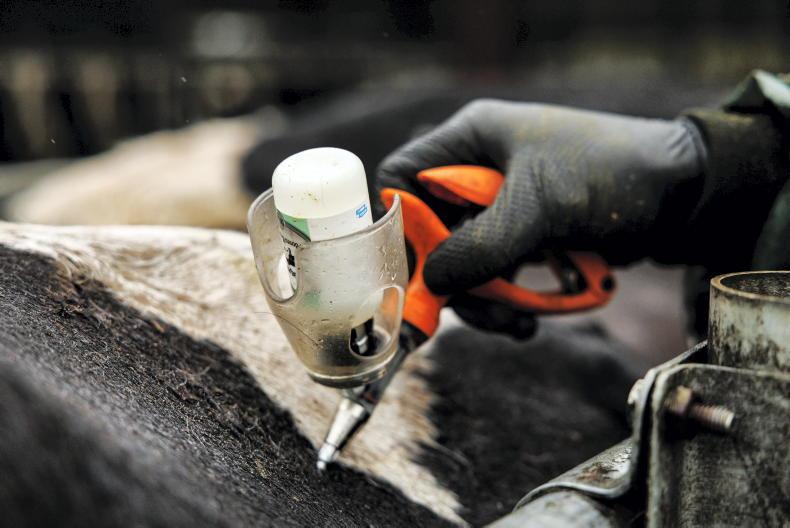
Livestock farmers have again been urged to consider vaccinating against the BTV-3 strain of bluetongue, especially ahead of the upcoming sheep breeding season.
“This is a virus and the only way to prevent a virus is to vaccinate. I strongly urge concerned farmers to vaccinate,” Middlemiss said.



SHARING OPTIONS