


Even if NI is able to limit the spread of bluetongue virus (BTV) in the weeks ahead, it is inevitable we will be facing a fresh outbreak during 2026, a leading vet has said.
“I promise you, come the spring, it will re-emerge again,” Mike Reynolds, who heads up the CVS veterinary business in NI, told a farmer meeting organised by Ballygawley Vets.
He said BTV was always going to reach NI and while it is currently serotype 3 of the disease, other serotypes will make it here in the years ahead, including serotype 8, now been confirmed in south west England.
However, he pointed out that because we are moving into a period when it is very unlikely that midges will be able to spread the virus, it creates a window of opportunity to get on top of the disease before next spring.
“There are many issues, but the predictability of it does allow us to put controls in place,” he said.
Reynolds believes that farmers with ruminant animals should seriously consider vaccinating in the weeks ahead, especially given that NI is relatively highly stocked with both cattle and sheep.
However, he accepted that in England and Wales vaccine uptake among farmers remains low, with the best estimate at 20 to 30%. He suggested that part of the issue was that most BTV-3 cases in 2024 were in relatively low livestock areas of east and southern England, so the impact was not that severe.
But in recent weeks, the disease has moved into the higher-stocked areas in the west of England and that may result in many more clinical cases.
He said that sheep tend to be the most severely impacted as they are the primary target for midges because their skin is easier to penetrate than cattle. On farms in Holland, mortality rates have been as high as 70%, although nothing like that has been reported in England, to date.
However, Reynolds maintained that one of the main issues noted by colleagues in England this year has been significantly higher barren rates in cows. Cattle in general show low to no clinical signs of infection.
Vaccines work and are safe to use
Of the three BTV-3 vaccines that can be administered in NI, the Bultavo-3 vaccine from Boehringer Ingelheim Animal Health is the one being sold by CVS veterinary practices in NI.
According to Mike Reynolds, it is the most popular of the three vaccines, with 15m doses sold across Europe since May 2024 and zero reports of any negative side-effects and zero deaths due to bluetongue in animals that were vaccinated.
“Those figures are very, very good – it is working and not causing problems,” he said.
However, there are some issues still to be resolved around product labels, including that the safety of the vaccine is not established in breeding males. It has led to some suggestions of fertility issues in breeding bulls and rams.
“The bad press around fertility is false,” countered Reynolds.
Bultavo-3 can be given to pregnant animals, although it is always recommended to avoid stressful events in the first few weeks of pregnancy. However, none of the vaccines have yet been able to establish duration of immunity, although it is widely expected they should give 12 months of cover.
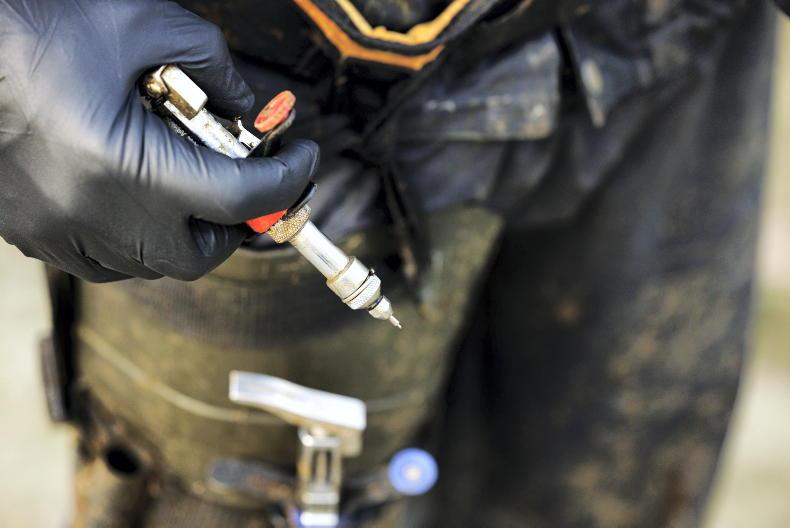
In sheep, it is a single 1m shot administered under the skin, while cattle require two 1ml shots given intramuscularly, three weeks apart. Each dose costs around £2.50. Bultavo-3 comes in a 50-dose pack.
“In a moderate or severe outbreak on a farm, there is a huge payback on that investment,” suggested Reynolds.
The BTV-3 vaccines are not marker vaccines, so any vaccinated cattle or sheep that are subsequently tested by DAERA, will look like they have had the disease. As a result, farmers must supply DAERA with the tag numbers of all vaccinated animals.
The life cycle of midges explained
Bluetongue is not passed from animal to animal, except potentially from a mother to its unborn offspring or in germinal products such as semen and eggs. Instead, the main cause of spread is biting Culicoides midges, which are common throughout Britain and Ireland.
Only the female midge bites as it requires a blood meal to produce eggs. If the midge bites an infected host if acquires the virus.
However, it takes time for the virus to pass through the midge from its gut to its saliva glands – once in its saliva gland it is then able to pass on BTV to a susceptible ruminant. These midges are now infected for life.
The process of the virus passing from the gut to saliva glands is known as the Extrinsic Incubation Period (EIP). It lasts anything from four days in warm weather to over 20 days when it is cool.
It is thought that the replication process can only occur when air temperature is over 12ºC.
Even though there might be some days in December when that is reached, it is very unlikely that mild weather could persist long enough at this time of year to allow the EIP to complete.
Midges are still active down to 4ºC, but a hard frost kills off most adults, so they generally disappear in late December or early January and don’t re-emerge again until April.
Persist
One question not fully understood is if the midges die off, how does the disease persist from one year to the next. One theory is that a few midges are able to survive in the likes of a building where the temperature doesn’t drop too low. Alternatively, the disease may persist via a calf, infected in the womb the previous autumn.
Peak midge activity occurs in May and September.




SHARING OPTIONS