



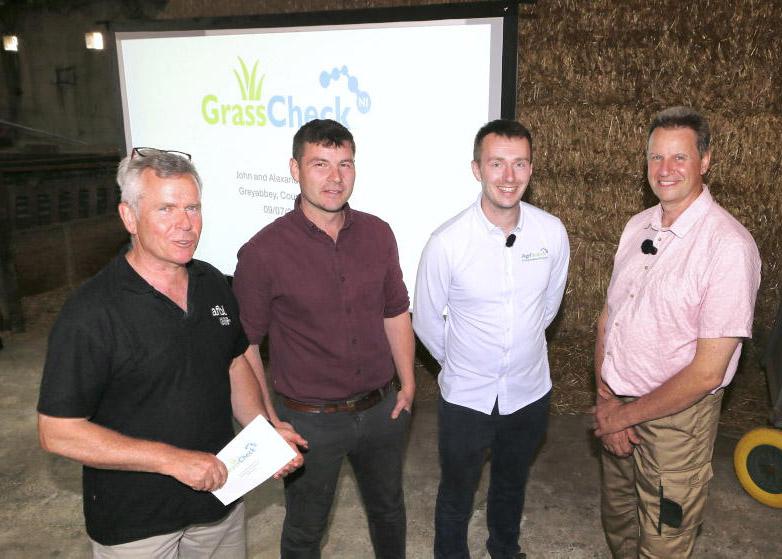
It is looking like 2026 will be another good year for clover, with the plant now growing strongly just as perennial ryegrass takes its traditional summer break, a grassland researcher at the Agri-Food and Biosciences Institute (AFBI) has said.
Speaking at an on-farm event, Dr David Patterson suggested grass is currently going through “a mid-life crisis” which normally happens after the plant heads out, before it starts to grow again in August.
Dry conditions over the last 10 days have also contributed to lower grass growth.
However, clover can be slow to get going in the spring, so the “weakest link” for grass clover swards is early season production - the “compromise” is to go in with spring fertiliser to these swards, suggested the AFBI researcher.
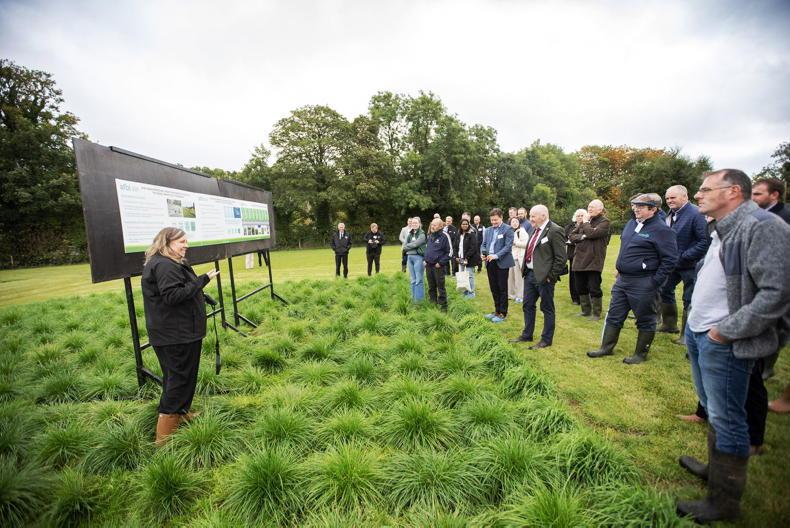
To illustrate the point, he presented data from plots at AFBI Hillsborough showing total growth to the end of June across a range of treatments.
The plots are cut every three weeks to four weeks to mimic grazing, with fertiliser nitrogen (N) going on in the form of protected urea.
Some plots receive zero N fertiliser, with others getting 67.5kg N/ha (the equivalent of 2 bags per acre of CAN), 135kg N/ha (4 bags CAN/acre) and 270kg N/ha (8 bags CAN/acre) over the growing season.
As shown in Table 1, grass clover plots which are to receive 67.5kg of N/ha (the fertiliser is skewed towards the spring) have yielded as much forage to date, as grass-only plots getting 270kg N/ha.
Looking ahead to future research work, Patterson said AFBI will investigate whether “perennial ryegrass is the right partner for clover” with 180 plots initially established, to include a complete range of available grasses and clovers.
The grass clover plots are significantly ahead of the other grass-only treatments.Looking ahead, Patterson said new work will investigate whether “perennial ryegrass is the right partner for clover” with 180 plots initially established, to include a complete range of available grasses and clovers.
There is also a study which will look at growth and performance of traditional multi species swards (two grass varieties, red and white clover, plantain and chicory) at eight different sites right across NI.
One of the sites is at the Greenmount hill farm at Glenwherry, while there will also be sites “west of Enniskillen” and “in the foothills of the Sperrins,” as well as Down and Antrim, said Patterson. “It will test MSS once-and-for-all,” he added.
He also pointed out that new technology and artificial intelligence innovations coming forward could help change how we manage grass.
Having attended the Groundswell event in England last month, he noted two particular products:



SHARING OPTIONS